
Introduction
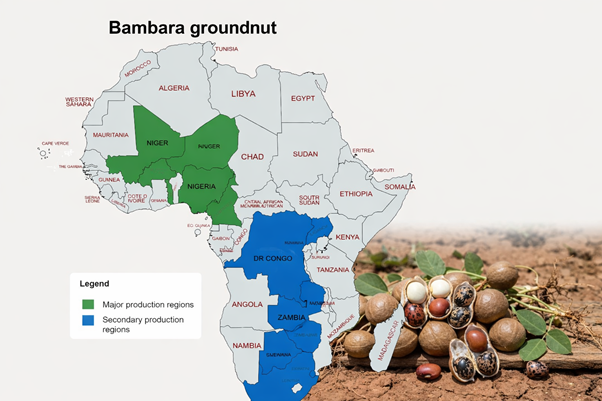
Bambara groundnut (Vigna subterranea) is an African legume that has been grown for centuries in West Africa. It is one of the continent’s most promising but underused crops for climate-resilient agriculture. The crop is widely cultivated in countries such as Mali, Burkina Faso, Ghana, and Nigeria. It is known for its ability to withstand drought, provide good nutrition, and improve soil quality through nitrogen fixation. According to the Food and Agriculture Organisation of the United Nations, neglected and underutilised species (NUS) such as Bambara groundnut are gaining greater attention for their potential to diversify diets, enhance resilience, and make food systems more sustainable as climate change intensifies (Muir et al., 2026)
Despite its benefits, Bambara groundnut is still mostly ignored in global agricultural research, policy, and investment. This neglect is linked to deeper problems, such as the lasting effects of colonialism and current agricultural priorities that often overlook indigenous crops. (Anchirinah et al., 2001)
What Makes Bambara Groundnut so Important?
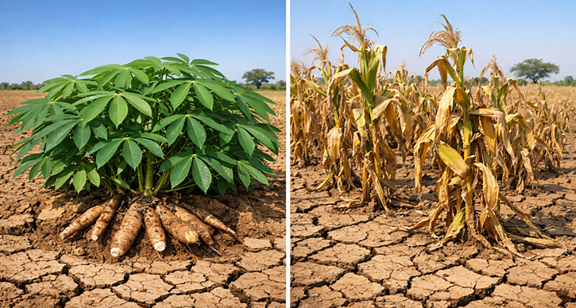
Bambara groundnut is notable for its strong agricultural and nutritional qualities. It can grow in poor soils and with little rainfall, where major crops like maize and soybeans often do not survive. The comprehensive studies by Muringai et al. (2022) and Tan et al. (2020) show that Bambara groundnut has high protein (18-24%), a well-balanced amino acid profile, dietary fibre, and important micronutrients, making it especially useful for fighting malnutrition in communities with limited resources.
As a legume, Bambara groundnut naturally fixes nitrogen to the soil, which improves fertility and reduces the need for chemical fertilisers. This is particularly important for small farmers who face high costs for farming inputs (Tan et al., 2020). These features make Bambara groundnut a good example of a climate-smart crop for drought-affected, unpredictable-rainfall areas.
Colonial Agriculture and the Rise of Cash Crops
The neglect of Bambara groundnut began during colonial times, when policies focused on growing export crops like groundnuts, cocoa, and cotton. Colonial governments in West Africa built infrastructure and research or market systems mainly to support their own economic interests, paying little attention to local food crops (Austin, 2009).
This historical bias still affects today’s agricultural research and funding. As a result, crops like Bambara groundnut have largely remained in small-scale subsistence farming, often tended by women who preserve traditional knowledge and seed varieties. Recognising this colonial legacy is key to understanding why promising local crops still get little policy support today. (Anchirinah et al., 2001).
Climate Change and Agricultural Resilience
Climate change is causing higher temperatures, longer droughts, and unpredictable rainfall in the Sahel and West Africa. This makes the need for resilient crops urgent. Bambara groundnut can still give good harvests even when water is scarce, which makes it especially valuable. Recent research identifies it as an exemplar underutilised legume with strong drought-tolerance mechanisms, making it highly valuable for climate-resilient agriculture on marginal lands (Mayes et al., 2019).
Bambara groundnut requires very few additional inputs, which suits the realities of small farmers, who often have limited access to irrigation or fertilisers. Supporting crops like this is not just good farming practice—it is also an important way to make food security stronger in regions vulnerable to climate change. (Ariom et al., 2022)
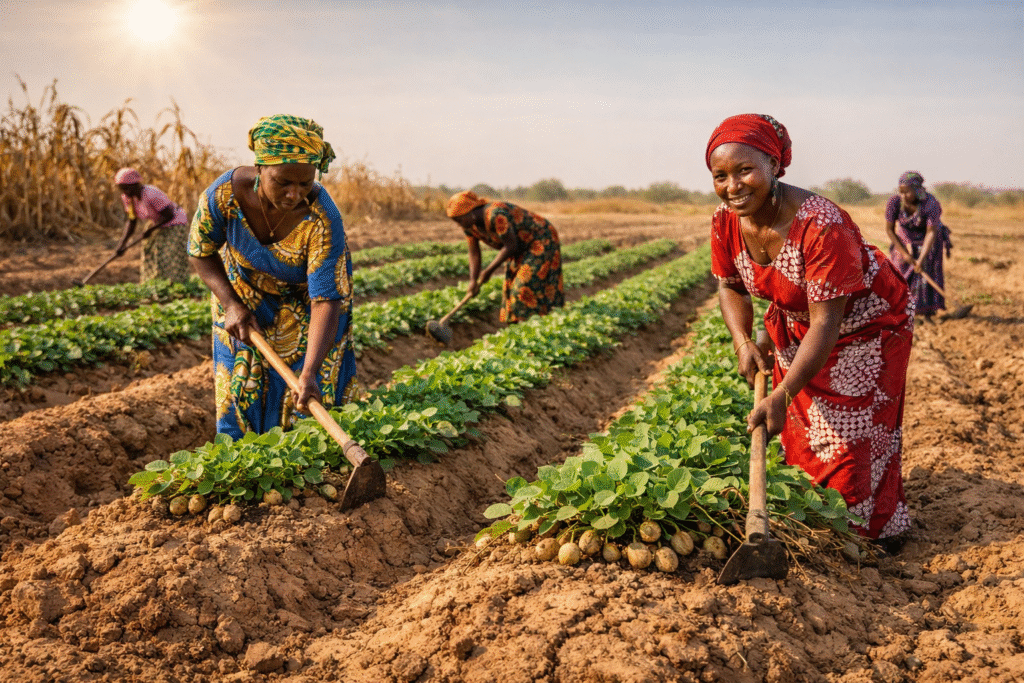
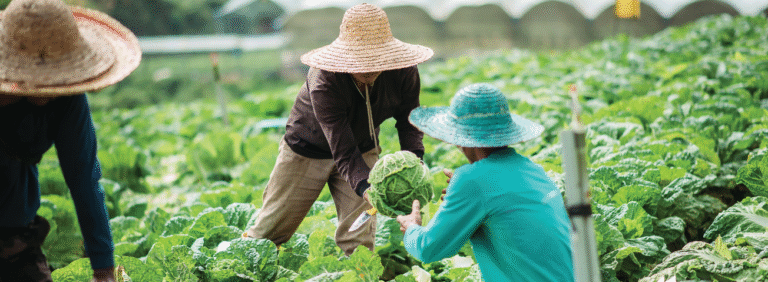
Figure 1: Women farmers harvesting Bambara groundnut in West Africa.
Why Bambara Matters Today?
Today, there is growing global recognition of the need to diversify agricultural systems beyond a few dominant staple crops. Bambara groundnut exemplifies how indigenous crops and local knowledge can contribute to climate adaptation and improved nutrition. As a drought-tolerant legume well-suited to marginal lands, it supports resilient food systems in the face of climate change (Soumare et al., 2022).
Beyond primary production, Bambara groundnut has strong potential for value addition. Its seeds can be processed into flour, roasted snacks, baked goods, and plant-based products. These activities create important income opportunities for rural communities, particularly for women who traditionally play a central role in processing and marketing the crop (Alliance Bioversity, 2017).
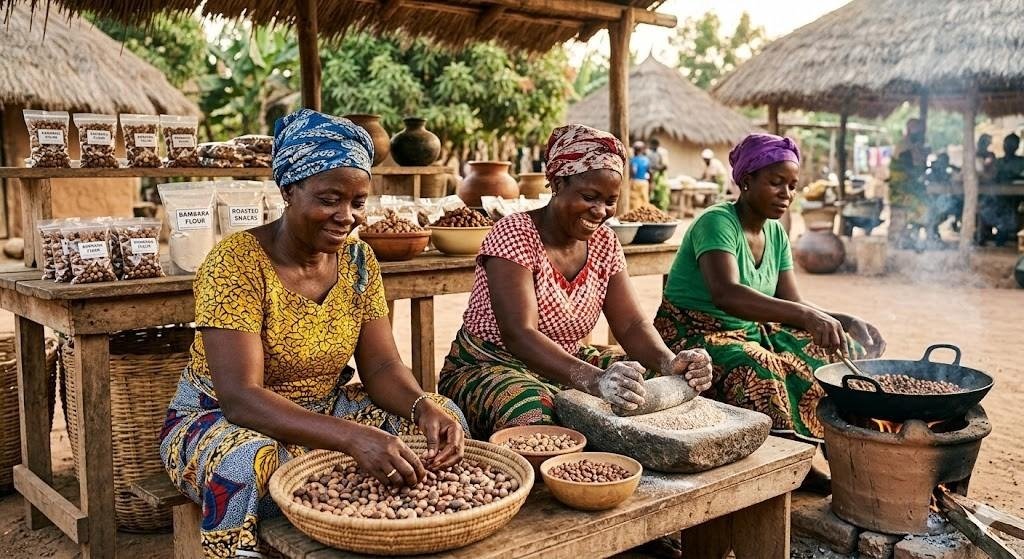
Figure 2: Women processing and marketing Bambara groundnut into snacks and flour at a local market
Conclusion
Bambara groundnut demonstrates how traditional African farming knowledge can help improve food security and climate resilience worldwide. Bringing this crop back into focus needs more than just scientific research. It also needs supportive policies, more investment, and clear communication between farmers, scientists, and policymakers. By recognising and supporting crops like Bambara groundnut, African countries and the global community can work towards fairer, more sustainable, and climate-resilient food systems.
Keywords: Bambara Groundnut, Climate-Resilient Crops, Neglected and Underutilised Species (NUS), Indigenous African Crops, Climate-Smart Agriculture, Food Security and Resilience.


 Reston Dennis Juah
 Noor Ul Ain
 Hassan Barrie
 Hoby Nasandratra Andriamiandrisoa
+ There are no comments
Add yours