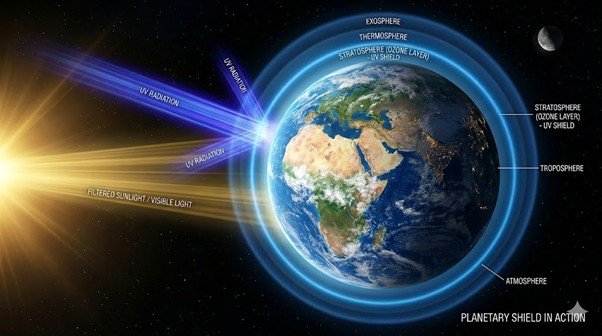

In many spiritual and ethical traditions, the concept of stewardship represents a foundational principle guiding humanity’s relationship with the natural world. In Islamic theology, humans are described as khalifah (vicegerents or stewards) on Earth, entrusted with maintaining balance (mizan) and protecting creation for future generations (Faisal, 2024). Parallel ideas of responsible care appear in Christian notions of dominion, Jewish tikkun olam (repairing the world), and various indigenous worldviews that emphasise reciprocity and harmony with nature. These traditions collectively assert that humans are not owners of the planet but caretakers accountable for its well-being. This ethical framework offers a culturally resonant and morally compelling lens through which to address the climate crisis.
The Scientific Reality of Planetary Stress
The Earth’s protective systems — particularly the atmosphere and the stratospheric ozone layer — function as natural safeguards that make complex life possible. The ozone layer absorbs harmful ultraviolet radiation, while the broader atmosphere regulates global temperatures and maintains the delicate balance necessary for ecosystems to thrive. For millennia, these systems have operated as a planetary shield. However, since the Industrial Revolution, human activities have placed unprecedented pressure on this protective veil (IPCC, 2021).
The burning of fossil fuels, widespread deforestation, and industrial processes have dramatically increased atmospheric concentrations of greenhouse gases, especially carbon dioxide (CO₂). The Intergovernmental Panel on Climate Change (IPCC) has stated with high confidence that human influence has warmed the atmosphere, ocean, and land by approximately 1.1°C above pre-industrial levels (1850–1900), with the decade 2011–2020 already recording this average rise (IPCC, 2021). This warming is driving more frequent and intense heatwaves, altered rainfall patterns, accelerating sea-level rise, and increasing the frequency and severity of extreme weather events.
The Unequal Burden of a Shared Planet
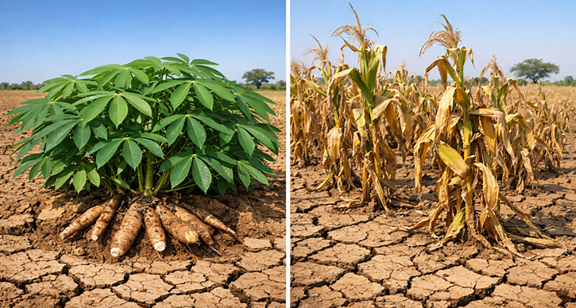
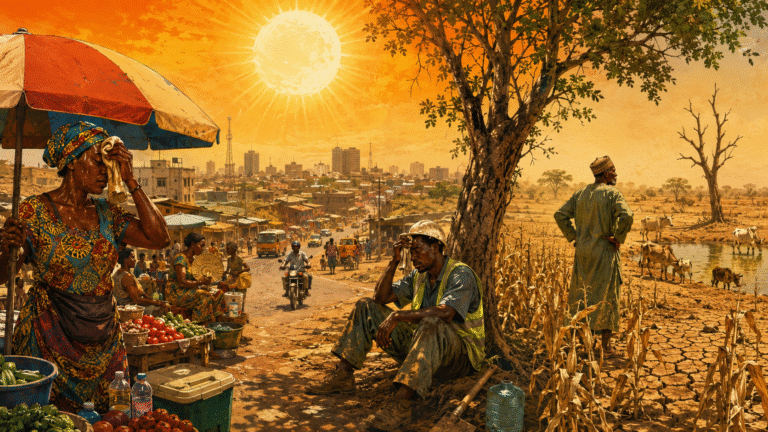
The consequences of this planetary stress are profoundly unequal. Developed nations in the Global North bear the greatest historical responsibility for cumulative greenhouse gas emissions and resulting economic damages (Beusch et al., 2022). In contrast, countries in the Global South — particularly across Africa, South Asia, and small island developing states — face severe consequences despite contributing far less to the problem. Many of these nations depend heavily on climate-sensitive sectors such as rain-fed agriculture, fisheries, and pastoralism, while possessing limited financial and institutional resources for adaptation (Zougmoré et al., 2016; IPCC, 2022).
This climate injustice directly challenges the stewardship principles embedded in religious traditions. The Qur’an repeatedly warns against israf (excess and waste) and emphasises the importance of balance and moderation. Comparable teachings on responsible care for creation exist across Christian “till and keep” (Genesis 2:15), Jewish, Buddhist, and indigenous spiritual frameworks (Khan et al., 2025).
Faith-Based Action in Practice: Indonesia, Malaysia, Pakistan, and Sudan
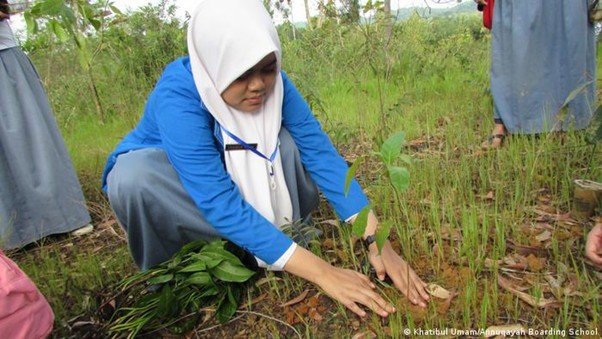
Source: Ekopesantren
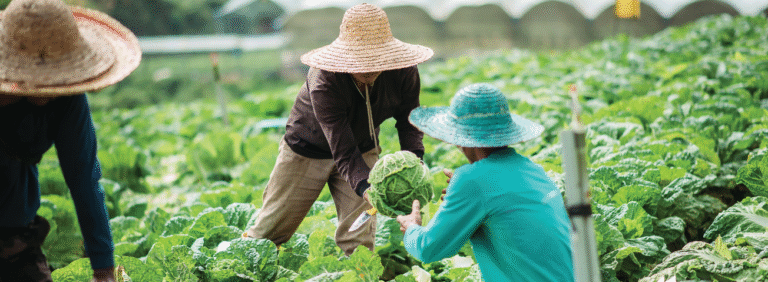
Countries with large Muslim populations demonstrate how stewardship ethics can translate into tangible climate action. Indonesia, the world’s largest Muslim-majority nation, faces acute risks from rising sea levels, intensified monsoons, and deforestation. Islamic boarding schools (pesantren) have responded with large-scale environmental education and tree-planting programs rooted in Islamic teachings (Boorse & Jablonski, 2024). Malaysia similarly contends with coastal erosion, flooding, and rainforest loss, where faith-based organisations promote renewable energy initiatives and sustainable land management.
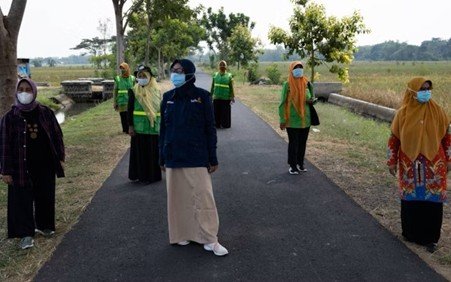
Source: Eco-Business
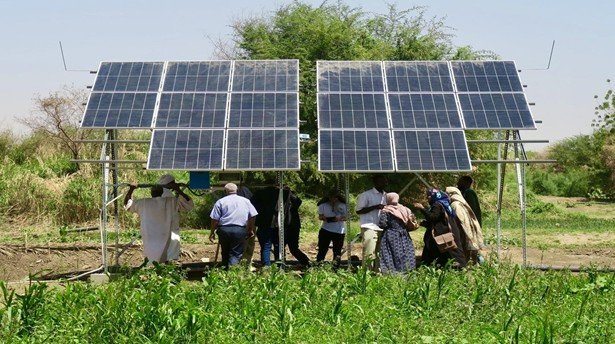
In Pakistan, scholars have called for stronger integration of core Islamic principles — Tawhid (Oneness of God), Khalifah (stewardship), and Amanah (trust) — into national environmental policies to address the country’s extreme vulnerability to floods, droughts, and pollution (Aftab et al., 2024). In Sudan, community-based environmental management programs draw upon local cultural and religious traditions to promote sustainable resource use amid ongoing challenges (UNEP).
Stewardship in Climate Diplomacy
The ethical principles of stewardship are increasingly relevant in international climate diplomacy. The Paris Agreement (2015) enshrines the principle of “common but differentiated responsibilities and respective capabilities” (CBDR-RC), acknowledging different historical contributions and capacities (UNFCCC, 2015). However, the current COP negotiation system remains constrained by Western-centric, anthropocentric models that marginalise Indigenous knowledge systems and alternative worldviews (Caporale, 2025).
Caporale (2025) argues that despite formal commitments to inclusivity, the UNFCCC process continues to reproduce colonial legacies and epistemic hierarchies. He highlights successful legal innovations, such as Ecuador’s constitutional Rights of Nature and Bolivia’s Law of Mother Earth, as models for a “more-than-human” approach to climate governance that recognises nature as a rights-bearing subject and elevates Indigenous stewardship.
Pathways Toward Responsible Stewardship
Translating stewardship into effective action requires concrete measures at multiple levels:
- Accelerated mitigation by high-emitting nations, including a rapid and just transition to renewable energy.
- Substantially scaled-up climate finance and technology transfer to support adaptation in vulnerable countries.
- Strengthened regional and international cooperation on transboundary issues such as water resources and biodiversity.
- Greater integration of ethical, cultural, and Indigenous knowledge systems into climate communication and diplomatic processes (Zuhdi et al., 2024; Caporale, 2025).
Conclusion
Protecting the Earth’s life-supporting systems is ultimately an act of responsible stewardship — an extension of the ethical and spiritual principles that have guided human conduct across cultures and centuries. The climate crisis presents humanity with a profound test: whether we will live up to our role as caretakers or continue on a path of imbalance and excess.
By drawing upon the rich resources of faith, ethics, and cultural wisdom — as evidenced in initiatives across Indonesia, Malaysia, Pakistan, Sudan, and innovative diplomatic models from Latin America — societies can foster deeper public engagement and more effective global cooperation. In our interconnected planetary system, no community can truly thrive while others bear the brunt of environmental degradation. Faith-based ethics, scientific knowledge, and diplomatic innovation must therefore work in concert.
The question before us is not whether we should act as stewards of the Earth, but whether we will act with sufficient wisdom, justice, and urgency. Constructive dialogue across religious, cultural, scientific, and diplomatic perspectives will be essential as we navigate this defining challenge of the 21st century.
Keywords: Earth Stewardship, Faith-Based Climate Action, Islamic Environmental Ethics, Climate Justice, Religious Environmentalism

 Reston Dennis Juah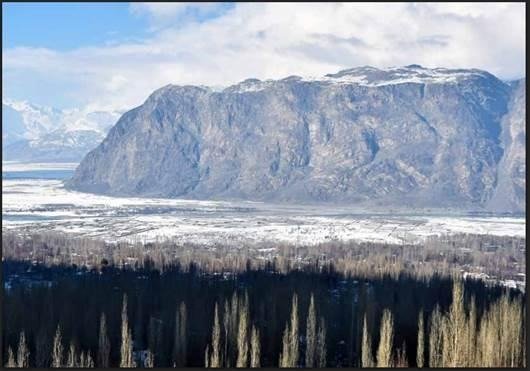
 Noor Ul Ain
 Hassan Barrie
 Hoby Nasandratra Andriamiandrisoa
Honestly, the variety of games here is insane. I spent the whole weekend exploring and I’m impressed by the stability. Highly recommend uk999game to anyone looking for some real fun.
The VIP experience is legit. I feel like a valued player every time I log in. Big thanks to 2uuu88viplogin for the amazing service.