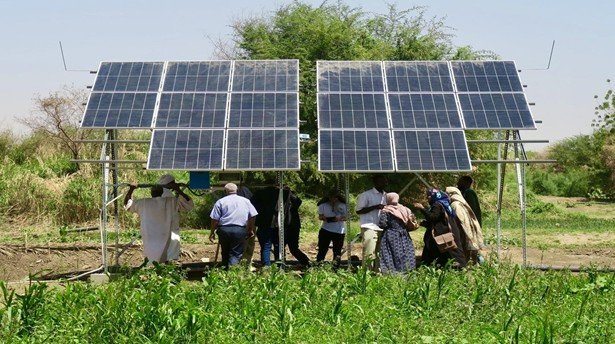

Despite having some of Africa’s highest solar irradiance, Sudan faces a severe energy crisis. Millions of citizens—especially in rural areas—lack reliable electricity and depend on traditional biomass or costly diesel generators (UNDP, 2020). Modern renewables, excluding large hydropower, account for only 0.78% of national electricity generation. Hydropower accounts for about 54.6%, with fossil fuels making up the remainder (Al-Rikabi, 2025). This ongoing gap results from entrenched structural, institutional, political, and diplomatic challenges.
Sudan’s Energy Crisis in Context
Sudan’s energy crisis is linked with inequality, poverty, climate vulnerability, and conflict. Access to electricity remains highly uneven: urban areas have better access, while rural electrification rates are much lower, as shown in Figure 1 below. Many households use firewood and charcoal, leading to deforestation, pollution, and gender disparities (UNDP, 2020).
The national energy system has long depended on large-scale hydropower and diesel generation. This creates structural vulnerabilities to drought, fuel price shocks, and infrastructure damage. The civil war since 2023 has caused an estimated $3 billion in damages to the electricity sector. (UNDP, 2026)
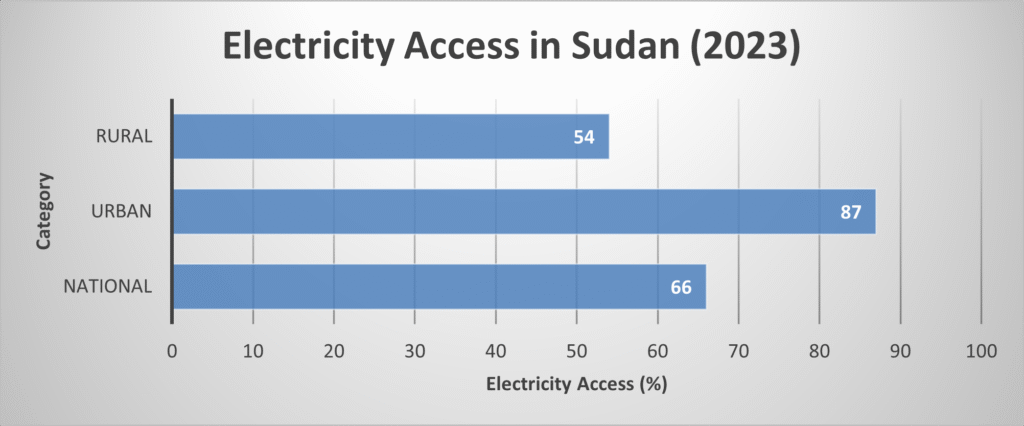
Figure 1: Visualising Sudan’s stark urban-rural divide in energy distribution. Data source: (World Bank).
The Human and Political Turning Point
Reliable electricity supply in major urban centres, such as Khartoum, remained relatively stable until late 2018. Prolonged blackouts became commonplace following the popular protests that led to the ouster of President Omar al-Bashir in April 2019. (Sikainga et al., 2026) These outages transformed daily life in one of the world’s hottest capital cities, where the lack of air conditioning during extreme summer temperatures intensified hardship (2026). The situation was further aggravated by disputes over the Grand Ethiopian Renaissance Dam (GERD) on the Blue Nile, which altered downstream flow patterns and affected the reliability of hydropower generation at Sudanese dams, especially during the reservoir-filling phase. Such developments highlight how political instability directly undermines energy security and resilience to climate extremes (Verre et al., 2026).
Why Renewable Energy Development Has Been Slow
The energy sector is highly centralised around state-owned monopolies, mainly the National Electricity Corporation (NEC) and its successors, which control generation, transmission, and distribution, with little room for private or independent producers. Regulatory tools such as feed-in tariffs and net metering have been discussed but have been poorly implemented (Otinov).
Since 2019, political instability and war have damaged infrastructure and significantly increased investment risk. This context has influenced energy planning, favouring centralised mega-projects over decentralised renewables suited to remote areas (Abdalla & Qarmout, 2023). Consequently, although there is a target of 2,190 MW of grid-connected solar by 2035, actual deployment remains minimal (Al-Rikabi, 2025).
Solar Energy: A Promising Opportunity in a Climate-Vulnerable Context
Sudan’s abundant solar resources, especially in the north and west, offer opportunities for decentralised solutions. Solar mini-grids, rooftop systems, and solar-powered irrigation can increase access in off-grid and conflict-affected areas. These are resilient to grid disruptions and support productive uses in schools, health centres, and agriculture (Logan et al., 2024).
However, challenges remain: high upfront costs, financing gaps, supply chain disruptions, and limited technical capacity. Although off-grid solar has grown following grid collapse, the sector remains fragmented (UNDP, 2026).
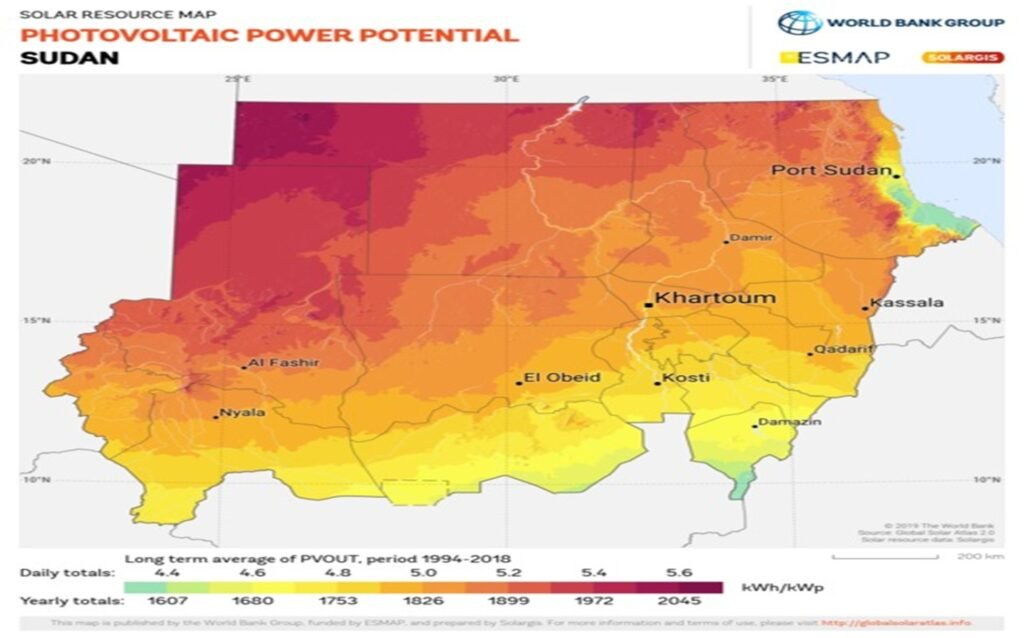
Figure 2: Solar resource map of Sudan showing high Global Horizontal Irradiation (GHI) across much of the country. (Solargis)
Regional Diplomacy, the GERD, and Climate-Energy Linkages
Sudan’s energy challenges are inseparable from regional hydro-diplomacy. The GERD dispute with Ethiopia illustrates the intersection of energy security, shared water resources, and climate risks. While the dam offers potential for regulated flows and electricity trade, it has raised concerns over downstream hydropower reliability during filling and drought periods (Bulti, 2025). Post-2019 political shifts influenced Sudan’s negotiating position, highlighting the need for stronger Nile Basin cooperation and data-sharing agreements (Otinov, 2022).
Such water-energy-climate linkages demonstrate why effective diplomacy and strategic communication are essential for managing transboundary infrastructure projects amid changing rainfall patterns. Integrating regional diplomatic efforts and international climate finance into Sudan’s renewable energy planning is therefore critical for building long-term resilience and advancing the country’s energy transition.
What Policy and Institutional Changes Are Needed?
Progress requires targeted reforms:
- Market and regulatory opening: Implement feed-in tariffs, net metering, tax incentives, and transparent regulatory frameworks to attract private capital while systematically reducing fossil-fuel subsidies.
- Decentralised focus: Promote off-grid and mini-grid solar solutions in rural and remote areas to expand access quickly and support community development.
- Institutional strengthening: Address fragmentation in the state-dominated sector, build capacity, and involve local communities and women’s groups in the energy transition process.
- Diplomatic and climate integration: Advance regional cooperation on water and energy, and leverage international climate finance earmarked for post-conflict reconstruction alongside renewable projects.
Conclusion
Sudan’s renewable energy transition faces formidable obstacles — centralised state monopolies, weak policies, devastating conflict, and complex regional hydro-politics. Yet its exceptional solar potential offers a credible pathway to greater resilience and sustainable development. Achieving genuine progress requires coordinated policy action, institutional reform, inclusive planning, and proactive diplomacy that specifically address the interconnected structural and regional challenges outlined above. Without such cohesive efforts, the gap between potential and reality will persist, undermining national development and regional stability in a climate-stressed Nile Basin.
Keywords: Sudan Renewable Energy, Energy Transition Barriers, Solar Energy Potential, Hydro-Diplomacy, Climate-Energy Security, Sudan Energy Crisis


 Reston Dennis Juah
 Noor Ul Ain
 Hassan Barrie
 Hoby Nasandratra Andriamiandrisoa
+ There are no comments
Add yours