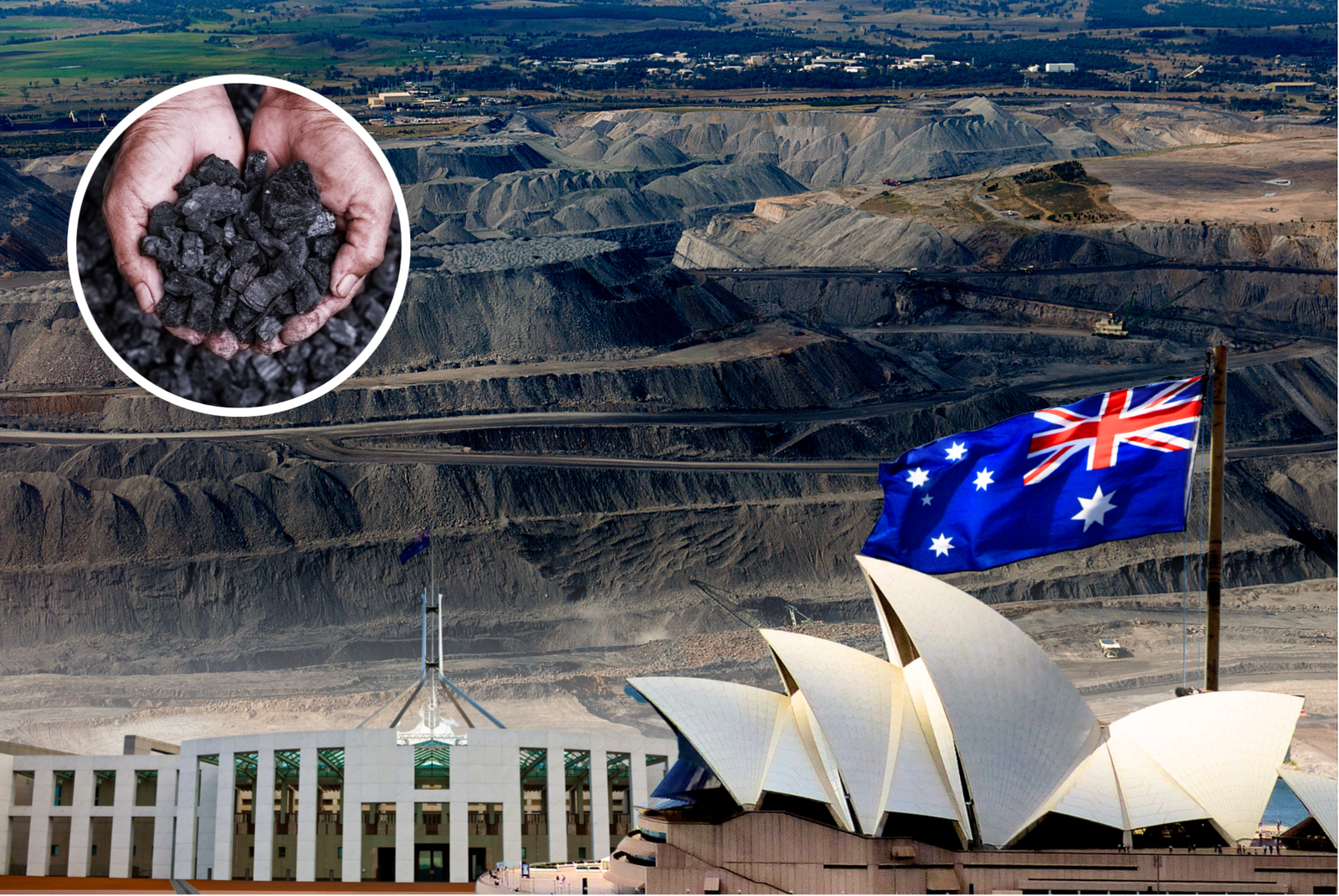

Australia is an interesting country when it comes to discussing the effectiveness of climate policy. For decades, Australia has been known as one of the worst-performing industrialized countries in handling climate change issues. In 2020, the country was included in the 10 countries with the lowest Climate Change Performance Index (CCPI) and was ranked 56th out of 61 countries. Five years later, there has not been much improvement, with Australia ranking 52nd out of 67 countries, making it the lowest-ranked nation within the “Low” performance category. Besides that, Australia was also the largest emitter of greenhouse gases (GHG) per capita among all G20 countries in 2021. Despite being among the top twelve countries with the highest GDP, it is ironic that Australia has not taken its climate commitments seriously.
A Laggard by the Numbers
In the year to June 2023, Australia emitted 465.2 million tonnes of carbon dioxide equivalent. The number increased by 0.8% compared to the previous year, which gives a bad signal to its climate commitment. Electricity generation and stationary energy are the two largest contributors to Australia’s carbon emissions, together accounting for approximately 55% of total emissions. Transport follows with 21%, and agriculture accounts for nearly 18%. Currently, fossil fuels (coal and oil) still dominate Australia’s energy mix as the main source of energy supply, sharing 63.4% of the total. The rest of the energy mix is supplied by natural gas, geothermal, solar power, wind, and other renewable sources of energy.
An Economy Built on Extraction
Australia’s high GDP is significantly driven by its export of minerals and fuels, which account for over 50% of the country’s total exports, or about A$245.8 billion. The main commodities are iron ore, coal, and natural gas. Currently, Australia is the world’s second largest exporter of coal, with a 33.7% share, and the largest exporter of liquefied natural gas (LNG), with a total export volume of 81.2 million tonnes (Mt). Moreover, Australia has also become the largest lithium exporter, supplying around 46% of the world’s lithium. This type of metal is essential in making batteries for electric vehicles (EVs) and solar panels. Based on these figures, the mining and fossil fuel industry clearly plays a crucial role in Australia’s economy, making it unlikely that the country will easily transition away from this carbon-intensive industry. However, if Australia keeps relying on this sector as its primary income, the country may be contributing to the slowing of global efforts to reduce emissions. An exception to this could be if the extracted minerals are used to support renewable energy initiatives, such as lithium in the production of batteries for clean energy storage.
Paying the Price
Despite being one of the world’s preeminent climate laggards, Australia is highly vulnerable to the effects of climate change. Some of the threats include heatwaves, drought, bushfires, cyclones, rising sea levels, and others, which can negatively impact every sector, from agriculture and health to socio-economics. Around 2019–2020, one of the most catastrophic and severe bushfires occurred in Australia and lasted for around six months. The bushfire was so terrible that people called it the Black Summer. Because of this devastating event, 33 people lost their lives, more than 3,000 homes were destroyed, and more than 17 million hectares of land were burnt. More than 1 billion animals were estimated to have died, and some species were thought to be facing extinction. In terms of economic loss, it was estimated that the bushfires may have cost around A$100 billion, making it Australia’s costliest natural disaster. Besides bushfires, Australia’s Great Barrier Reef is also experiencing severe damage due to coral bleaching caused by marine heatwaves and ocean acidification. In 2016 and 2017, 93% and 83% of coral in the reef experienced bleaching, respectively. Severe or long-term bleaching can kill corals, which can lead to habitat degradation for marine life and the collapse of coastal fishing industries. Furthermore, coastal tourism economies will be threatened, with knock-on effects for the wider society. If Australia continues to delay serious mitigation and adaptation to climate change, more catastrophic events will happen. These events will cause not only economic losses but also human, psychological, emotional, environmental, and even cultural losses.
Policy on Paper, Coal in Practice
Responding to the climate change issue, Australia has actually set the target to achieve net zero greenhouse gas emissions by 2050, with a medium-term goal of reducing emissions by 43% below 2005 levels by 2030. In September 2025, the government went further, committing to cut emissions by 62–70% below 2005 levels by 2035. In order to achieve these goals, the Australian government designed several climate-related policies, including the Safeguard Mechanism (a baseline-and-credit scheme that effectively puts a price on excess emissions) and the 82% Renewable Electricity Target. The Safeguard Mechanism sets limits on emissions for large facilities in industries like mining, transport, and manufacturing. Facilities must reduce their emissions over time or offset any excess by buying or earning carbon credits. According to Climate Action Tracker (CAT), it is too early to assess the Safeguard Mechanism since it was just reformed in 2023. However, many facilities under the Safeguard Mechanism are using offsets instead of reducing their emissions directly on-site, making this policy seem ineffective in lowering emissions.
Moreover, the inconsistency in the government’s approach remains a significant concern. Despite its climate commitments, the Australian government approved seven new coal mine projects in 2023 and 2024, extending coal mining and exports for decades. In September 2024, then-Minister for the Environment and Water, Tanya Plibersek, approved three coal mine expansions. These included extending Whitehaven Coal’s underground mining operations by 13 years, Mach Energy’s operations by 17 years, and Yancoal’s Ravensworth mine by 8 years. This inconsistent behavior reinforces Australia’s reputation as the world’s preeminent climate laggard when it comes to climate action. Until the gap between what Australia pledges and what it approves is closed, its climate policy will remain too weak to deliver on the ambitious goal of net zero by 2050.
Keywords: Australia, climate policy, coal mining, net zero, greenhouse gas emissions, energy transition, climate laggard






 Reston Dennis Juah
 Noor Ul Ain

 Hassan Barrie
 Hoby Nasandratra Andriamiandrisoa
Signing up was a breeze and the welcome bonuses are actually worth it. If you are looking for a fresh start, jiliplay888register is the way to go.
A fantastic spot for anyone looking for excitement and big wins. The atmosphere is just right. Give pkbajee999 a try.
The app performance is amazing. No lag and very easy to navigate. It makes the whole experience so much more enjoyable. Download bdck4444comapp
If you are looking for a place with a great community and exciting games, this is it. The overall vibe is just right and it feels very trustworthy. Join phfun999login