
Have you ever wondered where your lovely shirt will be gone when you dispose it as it is no longer fit with you? Imagine 11 million people do the same. It is the same as the entire Jakarta population in 2024. The global fashion industry is a major contributor to climate change and environmental pollution (United Nations Environment Programme, 2017). The textile and fashion industry is at a critical point. Identified as one of the world’s most polluting industries, it is responsible for 10% of global greenhouse gas (GHG) emissions (Boykoff, 2021) and of and 20% of global wastewater (Andreadakis & Owusu-Wiredu, 2023). This environmental footprint is largely a product of the fast fashion trend that, to put in a simpler sense, has conditioned in a system that makes consumers to expect a constant flow of new, cheap clothes, leading to a one-time-wear culture. In a major urban center like Jakarta, the trend of fast fashion brands in malls and online marketplaces is a visible symbol of modern consumer culture.
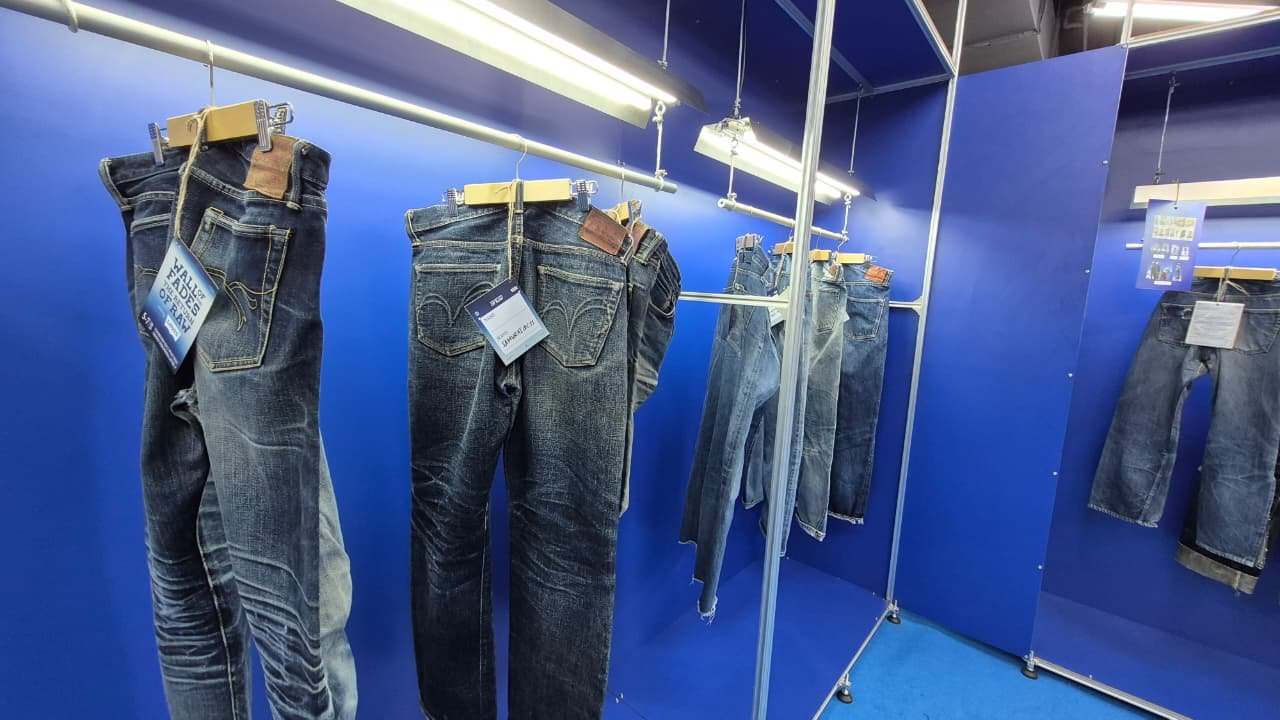
However, there are trends that, running contrasts to this mainstream trend, a growing counter-movement in a way. Slow fashion concept is based on sustainability within the fashion industry and design incorporating high quality, small lines, regional productions, and fair labor conditions (Pookulangara & Shephard, 2013). The concept of slow fashion is leaning towards a more considered approach, in which emphasizing quality, longevity, and could be stretched on ethical production length. While often discussed in broader terms, the principles of slow fashion find concrete expression within specific communities. We could take a look at two such communities in Jakarta: “denim heads,” enthusiasts of raw and selvedge denim, and adherents of workwear style, who value utilitarian, durable garments.
This is where subcultures become a counter of fast-fashion. For denim heads, a pair of jeans is not a disposable item but an investment and for some, a project of ‘art’. Raw denim is unwashed and untreated, allowing the wearer to create unique fading patterns (“fades”) through prolonged wear. This process, which can take months or years, imbues the garment with personal value and identity (Rahmandani & Sari, 2020). As Rahmandani & Sari (2020) note in their study of an Indonesian denim community, the material becomes a medium for self-expression, with the fades serving as a “diary” of the wearer’s life. This philosophy directly opposes the anonymity and disposability of mass-produced, pre-distressed jeans. The writer found similarity in workwear enthusiasts which value garments originally designed for manual labor, like canvas jackets, sturdy twill trousers, and rugged boots. The aesthetic appeal lies in their functionality, durability, and timeless design. The value proposition is longevity; these are items built to last, not to be replaced by the next trend.
However, this slow-fashion trend could also lead to the most significant challenge: social equity. For many low-income individuals and families in Jakarta, fast fashion is not a choice but a necessity. The writer cannot say that buying highly durable fashion is affordable. The high cost of a new, ethically-made garment is unmistakeably barrier for most people. The solution, therefore, cannot be to simply eliminate low-cost options. Instead, the focus must be on making sustainable choices more accessible. The most powerful tool for this is not new production, but the second-hand market. Thrifting is the most inherently sustainable and affordable option, keeping clothes from landfills while providing access at low cost. A key positive effect of denim and workwear culture is its celebration of “worn” items, which can help destigmatize second-hand clothing for a wider audience. This suggests that policy support should focus on incentivizing textile recycling, or even supporting community thrift stores and formalizing the second-hand trade. The “replacement” isn’t about producing a billion sustainable t-shirts to replace a billion fast-fashion t-shirts. It’s about a systemic shift where consumers buy one durable, repairable t-shirt instead of ten disposable ones over the same period. The replacement happens at the level of consumer demand and behavior, not production volume.
Keywords: fashion, trend, denim, pollution, behavior

 Reston Dennis Juah
 Noor Ul Ain
 Hassan Barrie
 Hoby Nasandratra Andriamiandrisoa
I’ve been playing here for a few weeks now and the experience is smooth. The payouts are quick and the games are top notch. Definitely recommend gy777game to anyone looking for a fun time.