
Do the bakers makes cakes because they want profit, or purely contribute to society as not everyone could make it? Currently, the world has to face various impacts of the global uncertainty due to conflicts and trade wars, such as unstable prices in almost every aspect and social inequality, whose differences are increasingly more visible. Poverty, as the result, is a long-standing, complex, and multidimensional problem, which has become even clearer in accordance with the global conditions. Due to its complex nature and encompassing various social aspects, poverty is closely related to social exclusion. Social exclusion itself is a concept popularized by Lenoir (1974), who linked social exclusion to the phenomenon of marginalization that occurs among social groups in French society. Exclusion is the process (and also the result) of individuals or groups being separated from broader relationships, characterized by minimal participation in public-scale activities. In social exclusion, isolated individuals or groups are limited in their participation in societal activities such as consumption, saving, production, politics, and other social activities.
In the context of national development adopted by Indonesia, one aspect of development that has a significant influence is Micro, Small, and Medium Enterprises (MSMEs). The correlation between the level of country’s development and MSMEs is the level of prosperity and sustainability of the business. Problems and various deviations happened because of lack of awareness in various aspects of society regarding social capital, which significantly affects the contribution of society itself. In efforts to improve community welfare and empowerment, including in the study of micro-enterprises, the concept of social capital is closely related. Social capital, in empowering a community, requires a specific contribution, which can be manifested in various forms, to improve the well-being and sustainability of their lives and businesses. Furthermore, social capital can develop the economy of microfinance institutions.
To maintain social integration, bonding is needed between groups or individuals within society. Strong social capital is shown by community involvement and contributions, which acts as a ‘glue’ that unites various aspects of society. Strong social capital can also result in strong integration and continuity within communities. Social capital in MSMEs will significantly impact how MSMEs position themselves within the community. Strong social capital, characterized by MSME contributions, will provides positive responses from the community. In other words, the continuity requires win-win on both sides, as the stronger and greater the contributions made by MSMEs, both personally or through the business, the more positive the community’s response to their efforts will be.
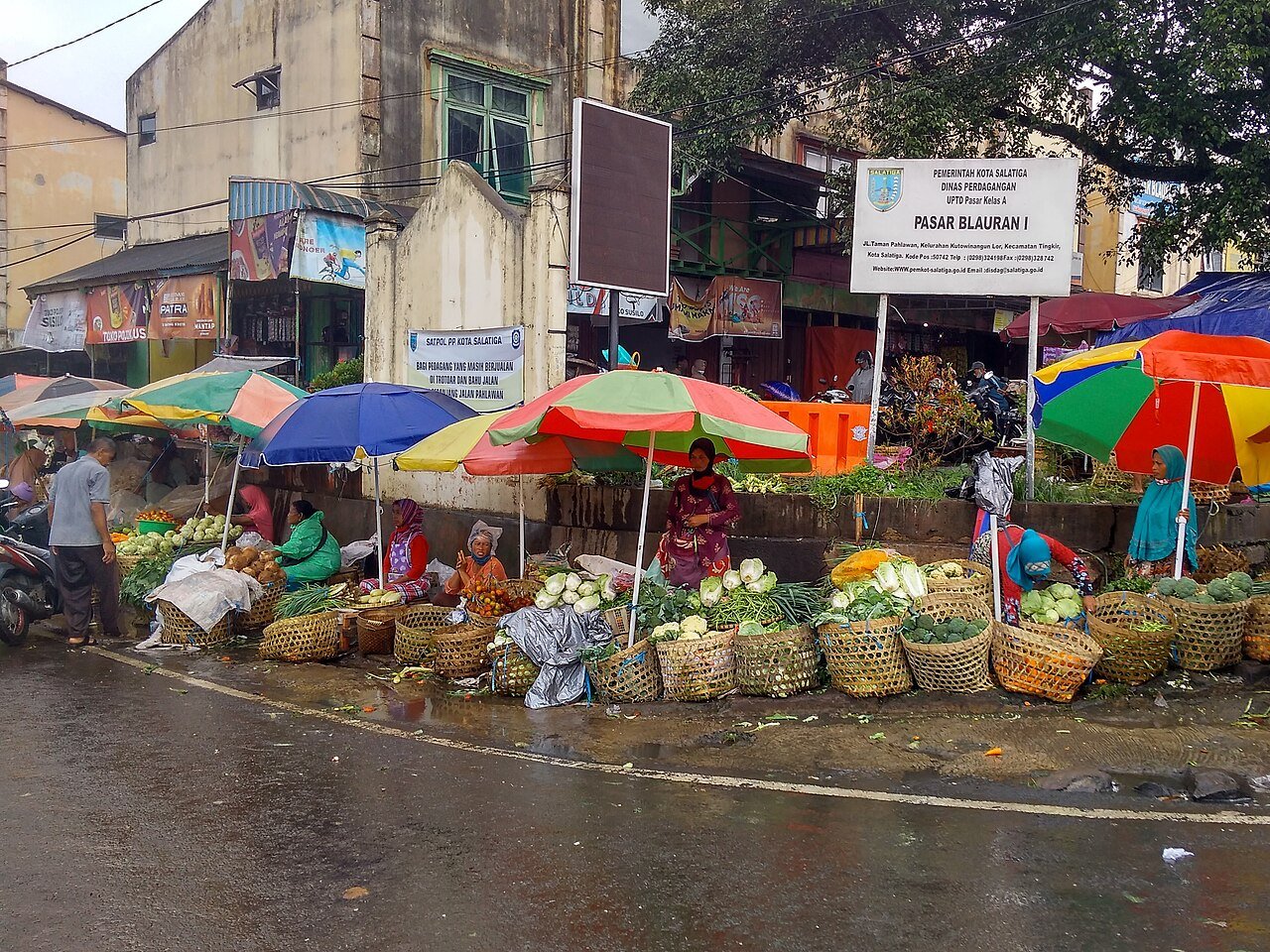
Take street vendors at Blauran Market in Salatiga, where every vendor must follow rules and agreements, whether between vendors, market regulations, or government regulations. The continued existence of Blauran Market to this day shows that the continuity between aspects of society and their contributions are very important for both social and economic sustainability. On the other hand, Salatiga only has one mall which caused by numerous objections from smaller vendors resulting in the inability or difficulty of even planning for the mall’s development in Salatiga. This indicates that social capital, in addition to being a means of unifying and amplifying the community’s voice, is also crucial for any business.
The implementation of social capital as a social bridge can be seen in the reopening of Blauran Market following restrictions imposed during the pandemic. Salatiga reopened the market in April 2020, when mass social restrictions were in place across Indonesia. Blauran Market, with permission from City Mayor Yulianto, has even become a successful example of how markets operate during the pandemic. This reflects how social capital acts as a social bridge, where its implementation involves collective voices and interests being connected and effectively applied, resulting in the realization of public hopes and desires. If the economy could survive in the middle of pandemic, then it could possibly thrive in the middle of economic instability and uncertainty.
In this context social capital place itself as a form to unite society from various backgrounds and with various goals. Without social networks, social relationships will be difficult to form, which will lead to poor communication between communities. As the opposite, social capital could strengthen the business patterns of small and medium enterprises (MSMEs). The relationship between social capital and profit levels is significant and qualitatively identified, as MSMEs experience benefits or ease of doing business due to good relationships with family, fellow entrepreneurs, and users or buyers of products and services.
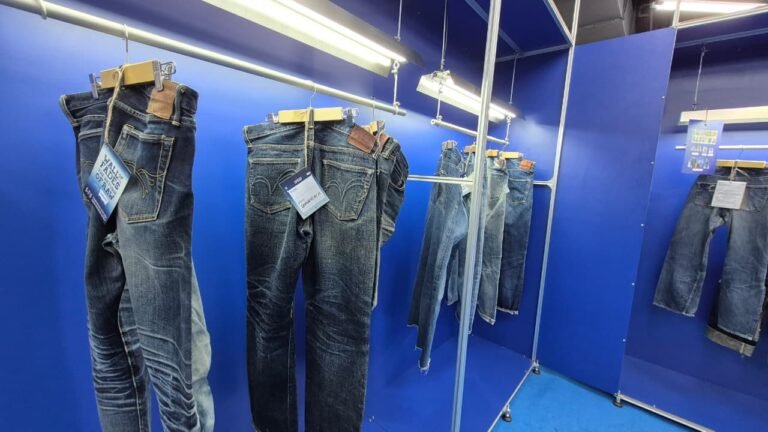
In the context of national development, MSMEs, or Micro, Medium, and Small Enterprises (MSMEs), are also included in development aspects. Via ‘local pride’ movement and ‘cintailah produk dalam negeri’ (love locally-made product) promoted by both the government and the customers alike, the level of well-being experienced by MSMEs will impact the extent and effectiveness of Indonesia’s development. Examples of successful social capital implementation can be seen at Blauran Market and the Thinkleather Goods leather craftsman in Salatiga. This is because such bond ‘plays’ a role in business aspects, such as customer relations, business acceptance in the community, cooperation between businesses and the community, relationships with workers or employees, and building trust in various community bodies.
Keywords: social, capital, community, economy
 Reston Dennis Juah
 Noor Ul Ain
 Hassan Barrie
 Hoby Nasandratra Andriamiandrisoa
Really impressed with the bonus offers here. It feels like they actually care about the players. I am sticking with inyono7777 from now on.
The app version is a game changer. I can play on the go without any lag and the login is seamless. 18winpkrloginapp makes everything so much easier.
The graphics on these slots are top notch. It feels much more immersive than other sites I’ve tried. ph20jili is definitely my new favorite spot.
Just what I was looking for. Easy navigation and very responsive on all my devices. I’ll be coming back to bd7c7775 for sure