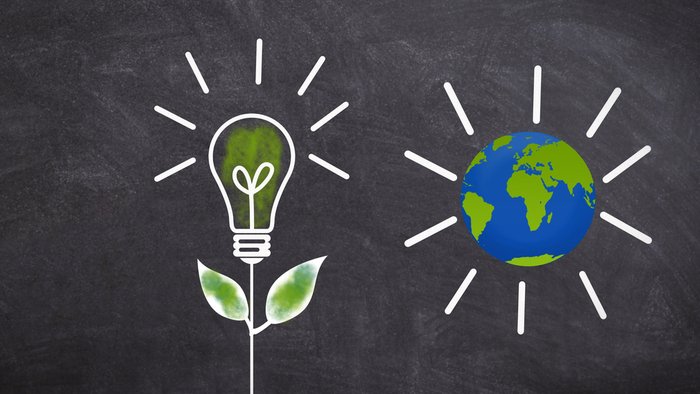

Lack of information is no longer a barrier to climate communication. Over the last few decades, scientists, politicians and campaigners have produced ever more publications, campaigns and media material warning of environmental disaster. Emissions are still increasing even though this is a saturated market and behavioural change is limited. These perpetual gaps, otherwise referred to as the knowledge action gap, pose another significant question: What happens when it is not awareness itself that is the problem, but how awareness is created and used? The images of climate change have undergone a subtle shift in recent years. In recent times, it’s become more and more prevalent for people to use AI-generated graphics on social media, student forums, advocacy campaigns, and even in academics. These images feature melting ice caps under dramatic skies, woods engulfed in stylized flames and abstract images of a burning planet, all with the primary objective of being fast, visually striking and shareable. They provide an easy approach to communicate urgency in an attention-saturated digital environment.
In the initial stages, this development appears to be beneficial. Climate messages that are appealing to the eye can capture attention and amplify the spread of messages. But this is a sign of greater communication changes. There is a growing trend toward consuming, rather than engaging with, climate content, and information is being scrolled through, liked and shared but not necessarily retained. In this respect, the rise of AI-made photography is not a testament to technological progress, but a sign of an emerging disconnect between visibility and action: concern performance may be the new replacement for action.
Additionally, there is an anomaly when it comes to the use of AI-generated graphics that has not received much critical examination. Climate activism, trying to raise awareness of the environment’s costs of carbon-intensive systems, is more and more depending on technology constructed in those systems. Artificial intelligence is powered by massive, energy-intensive infrastructures such as data centres, which consume a lot of electricity, generate heat, and require constant cooling. The material realities contradict the idea of AI as a neutral and immaterial technology. Integrating AI-generated graphics into climate communication is not just a aesthetic refinement, it’s a significant paradox. It’s a bigger conundrum of message vs medium, where the tools being employed to send the environmental message can paradoxically perpetuate the patterns being condemned.
The Hidden Costs of AI Visuals
At first sight, AI-generated images seem harmless, but programs like DALL-E provide refined outputs with just a few prompts compared to locating genuine photos. However, the production of these costs a high price on the environment that is not often mentioned by climate communicators. Making one AI image is equivalent to the amount of electricity a smartphone would use to charge all the way up to 70 to 200 times in a day, depending on the image quality and complexity. Creating a single AI image can require as much electricity as a microwave does in an hour, and in some cases more than a smartphone charges in a day. The data centres behind these models are energy consumers: in the world, they already use 1-1.5% of the electricity, and this figure is expected to reach 8% by 2030, due to the growing demand for AI. AI electricity demand in the U.S. is expected to double by 2026, as a result of both the training and inference of generative models. Every request to create a picture emits CO₂, the equivalent of the emissions of a gas-fuelled car running for 10-20 meters on the roads based on the ‘cleanliness’ of the grid.
In addition to energy, water consumption puts another pressure. The amount of water needed to cool servers within data centres is huge, as Mytton, (2021) indicates, up to 2 litters per kilowatt-hour of water consumed. For instance, 100 images from the AI could be generated using hundreds of litters that come from a limited supply in regional areas where a lot of facilities are located, such as in Arizona or Saudi Arabia, both of which are arid regions. Microsoft, another major AI firm, reported it used 1.7 trillion litres of water only in 2022 for cooling purposes, which is a 34% rise from the previous year, in keeping with its AI initiatives. The popularity of these footprints increases with the spread of climate posts and their accompanying unintended emissions. The more these climate posts are spread, the more unintentional emissions from the graphics of these posts.
Many climate activists who post these photos do not get this. A student using a tool for Twitter to post a message about deforestation can end up with a huge rainforest blazing, unaware that her server farm has just used up as much electricity as a typical home consumes in a day.
From Polar Bears to AI Clichés: The Evolution of Visual Failure
Although visual imagery has long been a part of climate communication, its past highlights a number of caveats. By the early 2000s, with the polar bear losing its habitat, through ice melting and diminishing in extent, it had become the iconic emblem of fragility and loss, of climate change. Showing up in newspapers, magazines, and featuring in Al Gore’s film, An Inconvenient Truth, the photo helped make an abstract scientific issue one that resonated with the emotions. This seemed to increase the public anxiety during this period, as these pictures provided a recognisable and affective “face” to climate change. This visual approach did not last long though. As time passed, it was found to have many weaknesses. By focusing the crisis in the Arctic, polar bear images gave the impression that climate change was remote, both physically and psychologically. The (Lehman et al., 2019) study found that such depictions reinforce the interpretation of climate change as a remote problem, which takes the focus off short-term human impacts, such as flooding, droughts and heatwaves. These visuals often stifled the engagement, and were mostly based on the idea of ‘loss’ rather than giving opportunities for engagement.
This is a general trend in climate communication. When a famous visual symbol or an environmental catastrophe or huge scientific announcement makes its way to the media, the public is likely to have a short-term reaction that fades quickly. Although visuals may be good at grabbing attention, they often lack the depth necessary to lead to a deeper understanding. Rather, they can become so emotionally saturated, fatigued or disengaged that audiences will feel overwhelmed or powerless. AI-generated images mark a new milestone in this progression, exacerbating some of these limitations in many ways. These graphics are becoming more prevalent in social media, advocacy and digital pubs and are quick to create, easy to use and pleasing to the eye! They are, however, influenced by the training data used which is based on decades of previous media. Consequently, they tend to rely on the same images that have been predominant in the climate communications landscape for a long time: melting icecaps, forest fires, and apocalyptic sky-lines.
Hopke, (2025), States that this means ‘automated aesthetic conservatism’, which offers diversity but not innovation. The uniqueness that seems to be there is merely a combination of standard cliches, on a more massive level, and with less thought. Photography, at least, has a reference point to reality through specific events, circumstances, etc., but AI-generated images lack a direct link to reality. They are not evidence but they are a synthesis. This shift presents both visual and conceptual issues. If the visuals no longer refer to something that can be seen in the real world, the distinction between representation and fabrication becomes less clear. This confusion could have a negative effect on the credibility of the information on climate change in the already crowded and less trusted media landscape. If a wildfire or hurricane is generated, the image may seem realistic, but it can raise as many questions as it answers.
Last, but not least, the many AI-generated images reveal that there is a fundamental problem in climate communication: seeing is not enough, understanding is not enough, awareness is not enough, action is not enough. When imagery did not get the message across, AI-generated imagery has the potential to do so in a subtler manner, by making representation and reality completely separate. In this regard the evolution of polar bears to AI cliches is akin to the same failure of the image.
The Paradox in Practice
When you navigate through professional networks, social media threads, university climate forums such as Mankind Planet Pioneers run by students from the Master in Public Policy (MPP) program focusing on Climate Change at Universitas Islam Internasional Indonesia (UIII) and a pattern quickly becomes visible. An AI-generated smokestack with an apocalyptic sky is matched with a post about coal emissions. Even among students and early-career professionals engaged in climate discourse, convenience often takes precedence over consistency.
It shows a challenging paradox that is hard to miss. The tools used for climate communication are increasingly dependent on infrastructure and footprints that are not aligned with the information that is communicated. There are many ways to get images, including using public domain photos or image libraries, but sometimes they are faster, more versatile, and have a greater aesthetic appeal. The end result is not only a technical fit, it’s a symbolic fit as well: The message of raising awareness is absorbed by the systems the message seeks to critique.
The gap is attributed to more problems with communication about climate change. As the word suggest, a representation of climate change as a problem in the distant or future decreases motivation, particularly when immediate threats appear to be under control. Remote or stylised problems can actually decrease urgency, which can be highlighted by visual methods. The images produced by AI, which seem to have a knack for making things look dramatic but abstract, have the potential to further this trend, turning crises into entertainment instead of engagement. AI-generated graphics are easy, creating graphics with AI is simple. Users can easily craft the attention-grabbing graphics in a short amount of time and without much effort, and they can quickly share them. In this way, the narrative about the knowledge-action gap does not stop there, but rather can be amplified by the sheer number of AI-generated images. The rapidness of the message’s appearance, its dissemination, and its superficial absorption, lead to superficial visibility cycles. When it comes to engagement, the show is more of an act than the reality.
Communication that is authentic and impactful.
Solving these problems does not require giving up on visual communication or on technology. Instead, it calls for more intentional delivery of climate messages in their construction and delivery. First of all, communicators need to carefully evaluate their visual resources. Special attention should be focused on photographs that are based on what we see, for example, photos from scientific institutes that are in the public domain or ethically sourced photos from archives. These visualisations are not simply eye-catching, but also highlight the tangible and evident nature of climate change. Second, climate narratives need to be more context specific. By focusing on local impacts, like Indonesian farmers adapting to floods, changes in rainfall and reduced production, the gap between what happens in the world and what happens to people can be bridged. This removes the psychological distance and puts climate change into the hands of decision makers. Third, there should be more focus on solutions when communicating. However, balancing the catastrophic imagery can be achieved by visualising renewable energy, ecological restoration and community adaption measures. If there are no avenues for progress, ongoing consumption of crisis stories might perpetuate fatalism instead of inspiring action.
The role of trusted messengers is also of the utmost importance. Abstract institutions or influencer content are not always trusted but scientists, local leaders or community voices are. Effective framing also requires moving away from distant futures and towards present agency that makes the future relevant and brings a sense of ‘doing to the future’ into the here and now, thereby inspiring ongoing involvement.
Beyond Consumption
The question is not about AI-generated graphics or the use of graphics in climate communications, but rather the type of graphics and the way they are used. Their widespread adoption tells something about the nature of interaction. When images are created, disseminated, and consumed without consideration, climate communication risks becoming performative. Metrics like visibility likes, shares and impressions may make it seem like people are interacting with you, but they’re not really engaged or learning. The challenge is not on the level of the communication, but on the strategy of communicating. Climate communication should move from consumption to comprehension, awareness to long-term engagement and from representation to transformation. It is not enough to judge its success just by the number of people reached or its artistic merit. It needs to be assessed in terms of its implications, or if it affects thinking, decision making and action. When the message becomes widespread and does not impact underlying patterns and systems, it is not doing what it’s most designed to do. This continuity is illustrated through the shift from polar bear photos to AI-generated images. There are basic limitations with the tools, but they are still present. Even the most powerful technologies will duplicate attention patterns without action if they are not reflected.
Key words: Artificial intelligence, climate communication, AI ethics, visual narratives, environmental messaging
Bibliography
Born, D. (2019). Bearing Witness? Polar Bears as Icons for Climate Change Communication in National Geographic. Environmental Communication, 13(5), 649–663. https://doi.org/10.1080/17524032.2018.1435557
Hagen, B. (2015). Public Perception of Climate Change (0 ed.). Routledge. https://doi.org/10.4324/9781315758558
Hopke, J. E. (2025). Visualizing Climate Change in an Era of A.I. Slop: How Chatbot Image Generator Models Distort the Climate Crisis in Public Imagination(s). Emerging Media, 3(4), 645–663. https://doi.org/10.1177/27523543251398769
Lehman, B., Thompson, J., Davis, S., & Carlson, J. M. (2019). Affective Images of Climate Change. Frontiers in Psychology, 10, 960. https://doi.org/10.3389/fpsyg.2019.00960
Mytton, D. (2021). Data centre water consumption. Npj Clean Water, 4(1), 11. https://doi.org/10.1038/s41545-021-00101-w


 Reston Dennis Juah
 Noor Ul Ain

 Hassan Barrie
 Hoby Nasandratra Andriamiandrisoa
+ There are no comments
Add yours