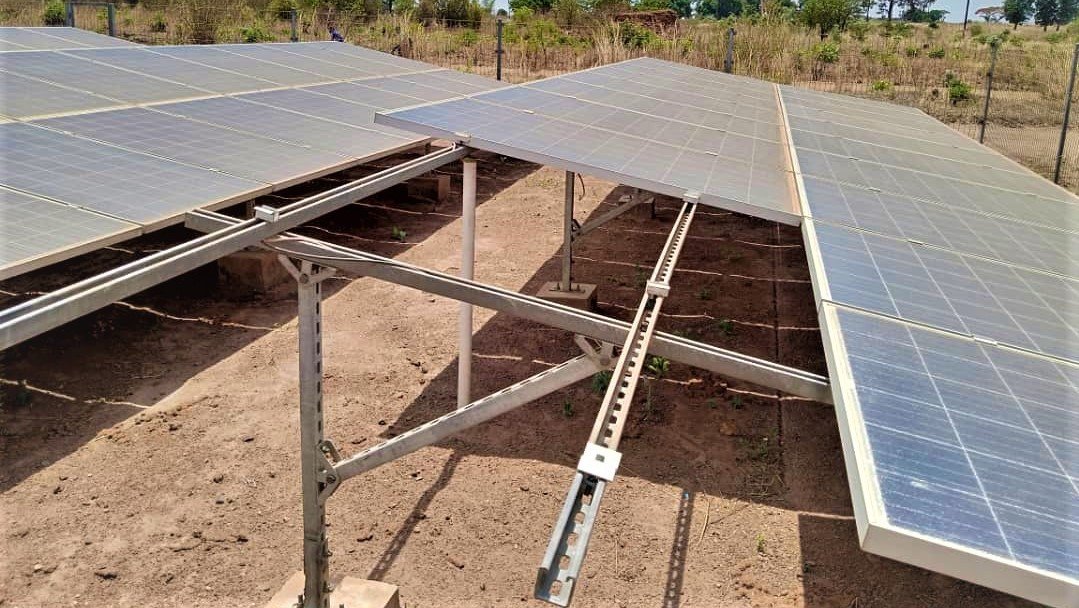

The energy transition narrative that has been used across Africa is just install more solar panels, build mini-grids, install solar irrigation systems, and rural development follows. International lenders see renewable energy as a route to climate resilience; governments recognize green infrastructure as evidence of modernisation and donors consider installations as tangible development achievements. But behind the narrative is a truth often many, in fact that many green energy initiatives end up becoming expensive statements instead of working systems. Politicians love the visible infrastructure, can be photographed, launched and defended during election campaigns. Donors require quantifiable outputs; it is easier to count the number of solar panels than the number of years of maintenance results. Of course, citizens want immediate assurances of lower cost food, better electrical services and economic opportunities. The installation is beneficial to all but not many are rewarded for their efforts in maintenance. This means that more and more green white elephants: renewable energy projects that have been technically built but are practically abandoned are springing up. An example is Zambia’s solar-powered hammer mills. The introduction of the mills was an emblematic project of rural transformation, offering cheap mealie meals, employment and energy self-sufficiency, they were a new green future and a big Chinese loan was provided. Many have subsequently become dormant and some solar panels are stolen, spare parts are unavailable, batteries have gone and communities can no longer use them. Infrastructure is there, but potential for development has diminished. This is not limited to Zambia. The same patterns can be seen in Africa with solar irrigation projects, mini-grids, pilot concentrated solar projects and even in the evolving solar crisis. The continent’s predicament is not only the absence of investment in renewables, but also a political economy focused on short-term, readily observable, debt-financed solutions, rather than sustainable solutions.
Metrics and the Illusion of Progress
Donor institutions have an important role in shaping Africa’s energy transformation and often judge success by the number of visible installations, rather than the performance of the energy system over time. Solar mini-grids, irrigation pumps, and off-grid solar systems are attractive to donors because of the tangible outcomes of the project that can be quickly reported as development milestones. However, these indicators often lack detail on whether or not the systems are still working, low cost, or locally managed once the project is finished. While sustainability requires maintenance funds, appropriately trained technicians, spare parts procurement systems, and institutional ownership, these are rarely prioritized due to their more intangible nature and lack of clear metrics. This does not just apply to investment in renewable energy, but a study of a donor-funded project in Mali revealed that, while implementation targets were met, few concrete steps were taken to ensure the project’s sustainability once the donors left, and long-term sustainability remains uncertain. Similarly , another study on development interventions found that physical development can be achieved but not the actual functionality, thus signifying a gap between project completion and development results. In this way, donor success is often defined in terms of installation, and not durability, and energy infrastructure becomes a short-term performance measure instead of an underpinning for a lasting change.
Politicians are often measuring energy progress by political cycles rather than by long-term energy system sustainability. Large renewable energy schemes like solar farms, hydropower schemes, rural electrification projects or the highly publicised mini-grid installations have an immediate political relevance because they can be inaugurated, photographed and then presented as tangible progress before the next election. Electoral-cycle studies also indicate that voters will reward visible project start-up and project completion, pushing incumbents to initiate new projects near elections, typically through ribbon-cutting and ground-breaking events that they hope to use to take credit for. Politicians focus on the projects that they view as being highly visible because they enhance political legitimacy and bring in electoral support. Infrastructure investment is often seen as apparent and tangible and its benefits can be more easily visualised for leaders of project developments to show commitment to growth and public good, thereby securing political support.
A study reveals that renewable energy (RE) projects in Sub-Saharan Africa often fail shortly after commissioning due to six recurring reasons. First, political agenda drives projects as symbols of progress or election promises; not energy solutions. Second, non-transparent procurement, nepotism and corruption jeopardise competence and accountability through the project award process. Thirdly, there is a lack of collaboration among stakeholders and responsibilities are not clearly defined, resulting in blurred ownership. Fourth, poor planning and implementation is a problem where there is a lack of design, unclear responsibilities and little follow-up. Fifth, a lack of mechanisms for maintenance, and poor mechanisms lead to rapid deterioration of infrastructure. Lastly, low public approval and involvement as communities are only engaged in labour donations and are not equipped to maintain or protect infrastructure.
The Hidden Cost of Climate Finance
The problems of green infrastructure projects do not just happen technically, it is also a problem of funds and politics with long-term consequences. Debt is rarely wiped out when renewable energy projects do not work out. Governments still pay back loans on resources that are no longer serving their purpose. Even if communities are not able to receive the promised services, public funds are used to pay for them. This is detrimental in countries already in debt crisis and fiscal pressure. It is often said that climate funding is a moral obligation for developing nations and that’s a good thing. Africa contributes little to global emissions, but is highly vulnerable to climate change. Yet, the problem with climate finance is that it is impractical to pay first and design later. Loans pertaining to projects that are not performing well have the potential to become a climate debt trap in which countries borrow for sustainable purposes, but end up with unsustainable debt.
This also erodes public faith. If a community has a negative history with solar projects, they may be hesitant to invest in additional solar projects. If the solar grid malfunctions, people are not exactly excited about the next climate project. Renewable energy is associated with disappointment and not development. Failing projects erodes trust in future climate policies and help perpetuate the idea that green transitions are imposed experiments and not development initiatives that can be useful at local level. Where poverty and unemployment are present, communities consider energy systems on the basis of reliability not carbon terms. Infrastructure failure by the climate policy will lead citizens to rationally choose using a diesel generator as the viable option, instead of solar installations that cannot be used.
There is a tremendous need for clean, reliable and affordable electricity in Africa. The answer: Stop thinking in terms of installing first, and start thinking in terms of maintenance first. Maintenance costs must be factored in first, not as an add-on to financing. There are too many projects that are funded for procurement and construction, but it is expected that maintenance will follow and it rarely does. The project design must take into account repair expenditure, battery replacement planning and technical servicing. Secondly, technology is not the only thing that matters; local technician ecosystems matter, too. Local training of repair networks helps to improve local ownership, reduce downtime and enhance resilience. Thirdly, there must be supply lines for spares, an inverter that fails should not result in a month’s long import delay. Replacement systems that are local, cheap and predictable are vital to the infrastructure. Fourth, the ownership of the community must be real, not symbolic. Decision-making authority, financial openness and accountability in operation are needed for cooperatives and users. Top-down projects often have no owners after the benefactors have gone. Fifth, smaller scalable solutions often prove to be more effective than politically attractive mega projects. Solutions implemented at the local level and subject to modification and repair could be more effective in making measurable gains than nationally-sponsored flagship programs. Lastly hardware should precede governance. The capacity of the institutions, accountability, and operational planning all affect the ability of infrastructure to foster growth.
Institutions, not panels are the key to Africa’s future in green energy. Installation is not the same as development, it is about the mundane work of maintenance, accountability, and repair. Solar panels can be imported. Institutions cannot. Africa is facing the danger of borrowing for the sunshine and paying for the darkness.
Key words: Renewable energy, infrastructure failure, energy transition, development finance, green investments,




 Reston Dennis Juah
 Noor Ul Ain
 Hassan Barrie
 Hoby Nasandratra Andriamiandrisoa
I’ve tried a few sites lately but this one really stands out. The interface is super smooth and the payouts are fast. Definitely worth a look for any serious player. Check out bjbaji888