
Despite contributing the least in the global Greenhouse Gas (GHG) emission and industrial pollution, the countries of the global South are suffering the most from the impacts of climate change, ranging from environmental issues to social and economic chaos. The Intergovernmental Panel on Climate Change (2023) states clearly that those risks are mainly driven by the rising atmospheric greenhouse-gas concentrations. Kikstra et. al. (2022) assert that Africa emits less that 4% of the GHG of the planet yet suffers an unfair share of the climate impacts it causes. Environmental problems such as the world’s most severe droughts and floods, as well as other extreme weather events are just a tip of the iceberg among the climate-degradation-related issues the continent suffers from. The intensity of those climate impacts varies significantly, showing variations in infrastructure resilience, financial resources, and institutional readiness among countries, hence influencing individuals’ experiences and reactions to climate risks (Seneviratne et al., 2021). Leichenko and Silva (2014), and Winsemius et al. (2018) further argue that people’s capacity to prepare for and adapt to climate shocks is further hampered by enduring socioeconomic issues like poverty, unemployment, and restricted access to basic services, which forces communities to put short-term survival demands ahead of long-term environmental sustainability. Boateng (2015) and Afrobarometer (2021a) also raise the issue of insufficient and inadequate climate change education worsen by inconsistent media coverage, which leads to significant gaps in public knowledge and makes coordinated action more challenging. Madagascar is not an exception to that matter. This blog highlights few chosen actions which already taken to mitigate the devastative effects of climate change in Madagascar.
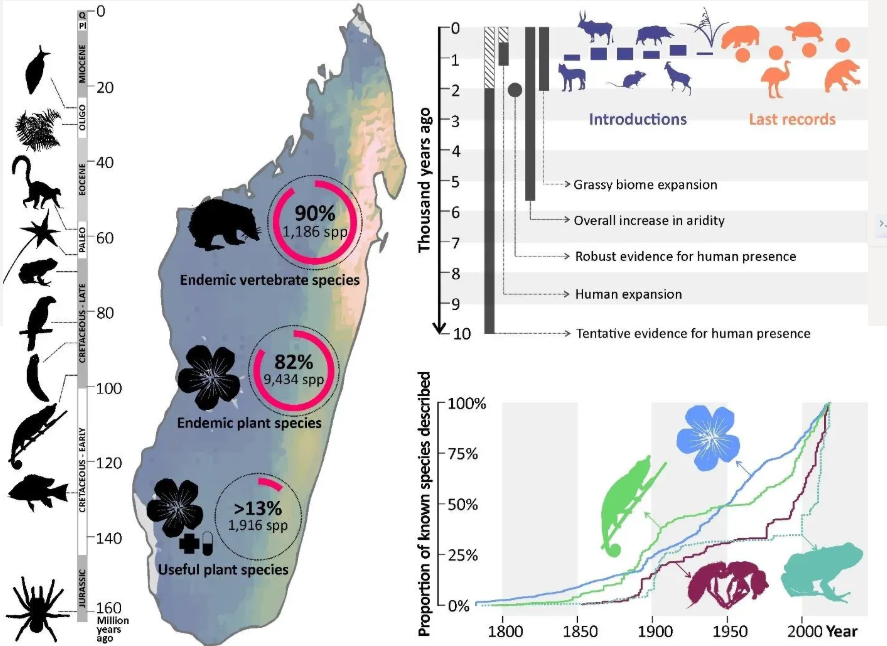
Known as the world’s largest oceanic island and the fourth largest island, Madagascar is also entitled a biodiversity hotspot in line with the conservation international’s definition of the latter term. It is home to a unique ecosystem which now faces the striking reality of existential threats driven by climate impacts (UN Environment Programme, 2025). A report from the World Bank Group (2025) shows that over the past 20 years the country’s unique ecosystem has been continuously threatened by extreme weather such as intense cyclones, floods, and severe droughts, which positions the island as highly vulnerable and emphasizes the cruciality of taking action and addressing climate change in Madagascar. The same report list the country as one of the most climate-impacted countries in the world, in spite of its low GHG emission which roughly reaches 0.09% of the global emission. In the case of Madagascar, it is essential to invest in climate resilience to make headway on improving the livelihoods and well-being of the most vulnerable, as the well-known statement says “Climate change hits the poorest the hardest”. In 2025, Madagascar officially launches a $7 million initiative aimed at enhancing climate resilience by restoring critical coastal ecosystems and improving livelihoods across vulnerable regions. The program is intended to be directly beneficial to four key coastal regions—Boeny, Menabe, Diana, and Atsimo Atsinanana—where climate impacts are already threatening both livelihoods and biodiversity.
In 2024, UNICEF along with the UN Development Programme highlight how changes in the way they are working are helping to reinforce resilience and sustainable development in Madagascar. They disclose that the country struggles against climate change, huge humanitarian needs, and persistent underdevelopment. They highlight how grassroots initiatives in Madagascar are driving climate and social resilience. Their method of action also involves coordination among communities, NGOs, and local leaders to tackle environmental and developmental challenges. It shows the effectiveness of convergence—different groups uniting around shared goals—and the importance of bottom‑up change rather than top‑down directives. Their main focus is the grand sud region as the development indicators in the south, for example, for health, education, nutrition, infrastructure, energy supply, are all weaker than they are in other parts of the island. Overall, this method frames local action as central to achieving climate resilience and sustainable progress in Madagascar.
A UNICEF policy brief (2024) on strengthening Madagascar’s Single Social Register (RSU) to support climate disaster risk reduction was also issued about how to coordinate a local strategy, applied to all 23 regions of Madagascar, to effectively tackle climate risks in the country based on the local contexts and needs of each region. It explains how geo‑referenced demographic and socio‑economic data from the RSU can improve early warning systems and vulnerability mapping. The brief highlights the role of Social windows—local extensions of the RSU—in providing decentralized data collection, service delivery, and early alerts. It emphasizes using shock‑responsive social protection systems to anticipate and respond to recurring crises like cyclones, floods, and droughts. The brief also recommends improving interoperability, data sharing, and coordination between RSU and disaster risk management actors, supported by digital reforms and capacity building.
Another environment and sustainable development program were established at the Centre Arrupe Madagascar (CA MDG) in 2019 that embraces the call for “a common home” through a deeper commitment and more action for the environment and climate justice. Apart from the destructive effects of the raise of GHG in the atmosphere, the centre’s programme (EDD) emphasizes on the numerous pressures on the environment in Madagascar such as overexploitation of natural resources, trafficking of rare species, deforestation, selective cutting, among others. Madagascar is one of the most burned regions in the world, to the point that it has been called the ‘Isle of fire’ or the ‘Burning Island’ (Fernandez et. al., 2024). The EDD program seeks to promote this ecological spirit and link to the UN Sustainable Development Goals (SDGs) and the environment and aims to raise collective awareness of the consequences of policies, individual choices, and production methods on our environment. A futuristic vision of the EDD program is an eco-responsible youth and who is aware of the seriousness of the climate issues and well-educated about the subject because climate change does not affect an individual person’s life only but also everyone else’s. CA MDG is dedicated in engaging in climate action through collaboration with the Thematic Climate Change Group (GT‑CC), a civil society platform founded in 2009 with 48 member institutions. GT‑CC supports government policy drafting, stakeholder consultations, and Madagascar’s representation in international climate conferences. CA MDG strengthens its involvement with GT‑CC, particularly in preparing Madagascar’s participation at COP meetings. This engagement aligns with the Centre’s broader vision of building “a fairer society, a more viable world, and a more livable environment” by promoting ecological responsibility and sustaining partnerships with organizations that share its mission.
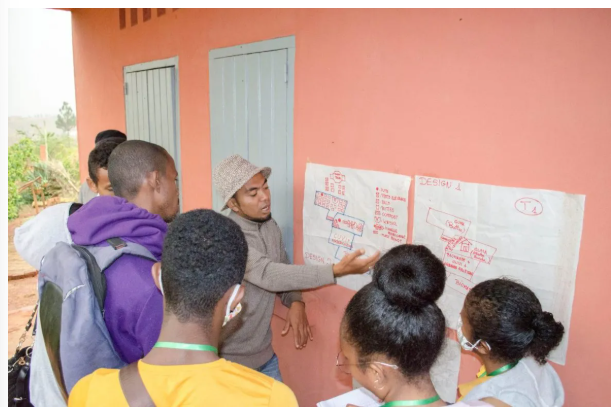
Developing the abilities of women to have their voices heard through advocacy efforts is of great importance for the country of Madagascar, which has a strong agricultural focus and features over 2.4 million agricultural holdings. This is essential for achieving climate, social, and economic justice. That is the stance of Rural Women Assembly Madagascar, a group of climate justice activists. Despite their status, women, and small-scale rural people, have been overlooked for years and are seen as second-class citizens. They are forced to deal with various challenges, including those caused by climate change, land grabbing, domination by transnational corporations, and a significant issue being the lack of awareness about their rights, even though they have specific needs. To address this issue, RWA argues about the importance of the establishment of a collaboration among different organizations that work to support the rights of rural women and from time to time, its members take part in training programs that advocates for human rights and climate justice. The topics covers and explores the connection between economic, social, and cultural rights and the concept of food sovereignty. The discussion includes how climate change affects the daily lives and means of earning a living for rural women. There is a strong emphasis on the need to launch a campaign promoting social and climate justice, as well as the importance of developing public policies to address climate change effectively. They demonstrate that is essential for ensuring sustainable and improved ways of living for future generations (RWA, 2024).
Some key points discussed so far are that Madagascar’s social justice, climate action, and Sustainable Development Goals (SDGs) are closely intertwined. The country’s climate vulnerability, coupled with its high poverty rates, makes it crucial to address these issues simultaneously. Madagascar should focus mainly on a few points of the SDGs, namely: reducing extreme poverty (SDG 1), climate change adaptation (SDG 13), zero hunger and responsible consumption (SDG 2 and 12), and quality education and health and well-being (SDG 3 and 4).
The country is already feeling the harsh impacts of climate change and is among the most climate-vulnerable countries, with extreme weather events significantly impacting its economy and society. As stipulated by the World Bank Group (2025), without taking action, an additional 1.68 million people in Madagascar could fall into extreme poverty by 2050. A multifaceted approach is essential to address these issues and should include climate resilience, social justice, and sustainable development, which should be implemented locally rather than nationally.
Keywords: Climate vulnerability. Climate adaptation. Madagascar resilience, local climate action
References
Afrobarometer, 2021a. Africa’s first continent-wide survey of climate change literacy finds education is key. Accessed: 2025-05-29.
Boateng, C., 2015. Tertiary institutions in Ghana curriculum coverage on climate change: Implications for climate change awareness. J. Educ. Pract. 6 (12), 99–106.
Ecojes Admin. (2021, June 29). Centre Arrupe Madagascar: Commitment and action for the environment and for climate justice – Ecology and Jesuits in Communication. Ecology and Jesuits in Communication. https://www.ecojesuit.com/centre-arrupe-madagascar-commitment-and-action-for-the-environment-and-for-climate-justice/
Group, W. B. (2025, October 13). Addressing Climate Change in Madagascar: Why Action is Crucial and How. World Bank; World Bank Group. https://www.worldbank.org/en/news/feature/2025/04/07/addressing-climate-change-in-afe-madagascar-why-action-is-crucial-and-how
Intergovernmental Panel on Climate Change (IPCC), 2023. Africa. In: Pörtner, H.-O., Roberts, D.C., Tignor, M., Poloczanska, E.S., Mintenbeck, K., Alegrí a, A., Craig, M., Langsdorf, S., Löschke, S., Möller, V., Okem, A., Rama, B. (Eds.), Climate Change 2022: Impacts, Adaptation and Vulnerability. Contribution of Working Group II To the Sixth Assessment Report of the Intergovernmental Panel on Climate Change. Cambridge University Press, Cambridge, UK, pp. 1285–1456.
Kikstra, J.S., Nicholls, Z.R., Smith, C.J., Lewis, J., Lamboll, R.D., Byers, E., Sandstad, M., Meinshausen, M., Gidden, M.J., Rogelj, J., et al., 2022. The IPCC sixth assessment report WGIII climate assessment of mitigation pathways: from emissions to global temperatures. Geosci. Model. Dev. 15 (24), 9075–9109.
Leichenko, R., Silva, J.A., 2014. Climate change and poverty: vulnerability, impacts, and alleviation strategies. Wiley Interdiscip. Rev.: Clim. Chang. 5 (4), 539–556.
RWA-admin. (2024, July). RWA Madagascar: The Role of Advocacy in Achieving Climate, Social, and Economic Justice in Madagascar. Rural Women’s Assembly. https://www.ruralwomensassembly.org/rwa-madagascar-the-role-of-advocacy-in-achieving-climate-social-and-economic-justice-in-madagascar/
Seneviratne, S.I., Zhang, X., Adnan, M., Badi, W., Dereczynski, C., Di Luca, A., Ghosh, S., Iskandar, I., Kossin, J., Lewis, S., Otto, F., Pinto, I., Satoh, M., Vicente-Serrano, S.M., Wehner, M., Zhou, B., 2021. Weather and climate extreme events in a changing climate. In: Masson-Delmotte, V., Zhai, P., Pirani, A., Connors, S.L., Péan, C., Berger, S., Caud, N., Chen, Y., Goldfarb, L., Gomis, M.I., Huang, M., Leitzell, K., Lonnoy, E., Matthews, J.B.R., Maycock, T.K., Waterfield, T., Yelek ¸ci, O., Yu, R., Zhou, B. (Eds.), Climate Change 2021: The Physical Science Basis. Contribution of Working Group I To the Sixth Assessment Report of the Intergovernmental Panel on Climate Change. Cambridge University Press, Cambridge, United Kingdom and New York, NY, USA, pp. 1513–1766.
UNEP. (2025). Madagascar launches $7 million initiative to protect coasts from climate change. UN Environment. https://www.unep.org/news-and-stories/press-release/madagascar-launches-7-million-initiative-protect-coasts-climate
UNICEF. (2024, July). Strengthening the Single Social Register (RSU) for climate disaster risk reduction in Madagascar [Policy brief]. UNICEF Madagascar. https://www.unicef.org/madagascar/en/media/13266/file/Note_RSU_ENG_004.pdf.pdf
United Nations. (2024, May 11). Madagascar: Coordination, convergence and change from the grass roots up. UN News. https://news.un.org/en/story/2024/05/1149491
V. Fernández-García, M. Franquesa, & Kull, C. A. (2024). Madagascar’s burned area from Sentinel-2 imagery (2016–2022): Four times higher than from lower resolution sensors. The Science of the Total Environment, 914, 169929–169929. https://doi.org/10.1016/j.scitotenv.2024.169929
Winsemius, H.C., Jongman, B., Veldkamp, T.I., Hallegatte, S., Bangalore, M., Ward, P.J., 2018. Disaster risk, climate change, and poverty: assessing the global exposure of poor people to floods and droughts. Environ. Dev. Econ. 23 (3), 328–348.

 Reston Dennis Juah
 Noor Ul Ain
 Hassan Barrie
My partner and I stumbled over here by a different page and thought I might as well check things out. I like what I see so i am just following you. Look forward to looking over your web page yet again.
This site really knows how to keep its players happy with regular promotions and a perfectly optimized gaming environment. I tried the live blackjack room and the hosts were incredibly welcoming. The transaction speeds are genuinely fast and I love that I can switch between sports and casino tabs without reloading the page. My go to platform for weekend fun. me7777casino
Yo, Jili1888CasinoLogin is where it’s at! A good selection of games and the logging in was a breeze. Highly recommend giving it a look! jili1888casinologin