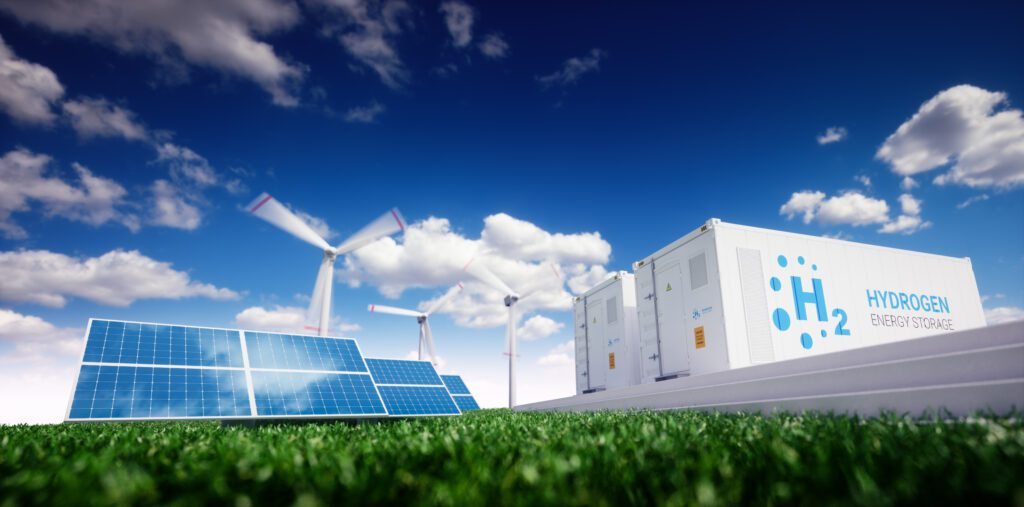

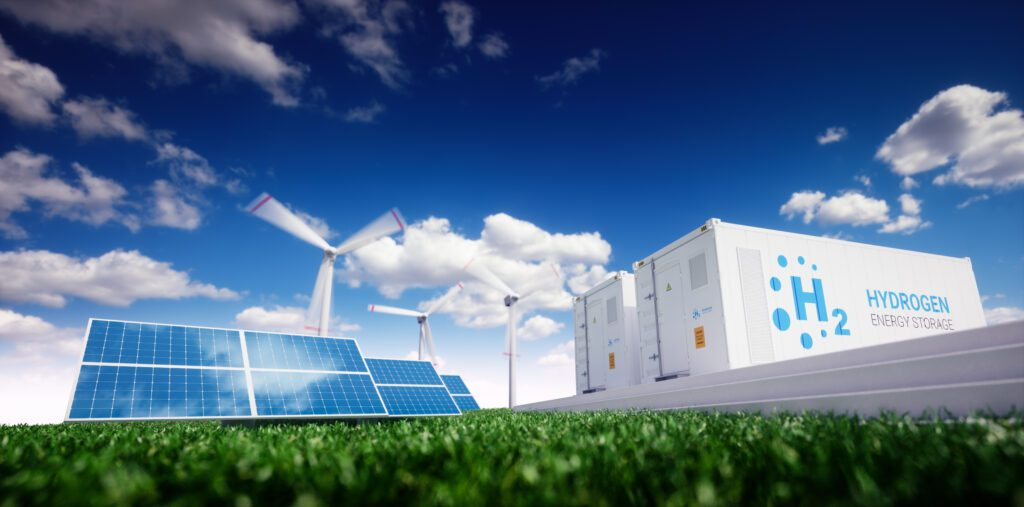
The Gulf countries are major producers and exporters of natural resources, particularly crude oil, LNG, and petrochemicals. With the growing climate concerns, these countries are aiming for a green transition by participating in global energy diplomacy and investing in renewable energy technologies. However, excessive reliance on fossil fuel dependence makes this ambition quite unclear. Green transition in the Gulf is based on a strategic paradox. These States are investing oil and gas revenues in renewable energy expansion, sovereign wealth investments, carbon capture projects, green hydrogen, blue hydrogen, and climate summits. The UAE has established Masdar as a global clean-energy investor, with over 50 GW of renewable energy capacity by the end of 2024 and a goal to reach 100 GW by 2030 (Masdar, 2025). Saudi Arabia has pledged to ensure 50% of its electricity comes from renewable sources by 2030 (Saudi Green Initiative, n.d.).
The UAE is the best example of green energy diplomacy. By hosting COP28 in Dubai, Abu Dhabi gained tremendous visibility in global climate politics. The COP28 outcome also included a historic commitment to transition away from fossil fuels and a goal to triple renewable energy capacity worldwide to at least 11,000 GW by 2030 (COP28, 2023; German Federal Foreign Office, 2023). It was a political success for the UAE and helped portray it as a bridge between fossil-fuel-producing nations and climate-sensitive ones. But the COP28 presidency of a leading oil executive also highlighted the central tension of the summit. The UAE can host Climate negotiations, invest in solar and wind energy in other countries, and encourage the production of Green Hydrogen, but its credibility would be enhanced if its own energy and export systems were decoupled from fossil-fuel lock-in.
Saudi Arabia is following the emerging global energy transition, aiming for renewables to account for 45–50% of power generation by 2030 and for thermal energy to reach 50–55% (MSA, n.d.), which prioritizes emissions reduction, carbon capture, hydrogen, and efficiency over a rapid oil phase-out. However, the country’s climate action remains ‘critically insufficient,’ indicating inadequate policy framing for emissions reduction (Climate Action Tracker, 2025). In contrast, Qatar has a primary influence on the global LNG market and aims to expand LNG production through the North Field expansion to meet a demand of 142 million tons per annum (MTPA) by 2030 (QatarEnergy, 2025), providing the country with diplomatic leverage for its demand for non-Russian gas supplies from Europe. However, the argument is more complicated from a climate perspective. While gas provides an opportunity to reduce emissions by replacing coal, long-term dependency can be a challenge to renewable deployment in the future. This indicates that green diplomacy cannot replace hydrocarbons; it is about making gas acceptable as part of the transition. Oman is also a significant emerging market player in green hydrogen. Its strength isn’t about the scale of funds; it’s about geography, the solar and wind resources, and the desire to bring dollars into hydrogen export corridors. Hydrogen provides a path for the oil states to communicate with Europe and Asia using existing energy infrastructure, ports, and export relationships. However, there are also credibility problems with hydrogen diplomacy. Green hydrogen remains high-cost and infrastructure-intensive, while blue hydrogen relies on natural gas and carbon capture. But without successful carbon capture, blue hydrogen will be a new iteration of the fossil fuel economy.
Gulf states are ready to purchase solar farms, wind power generation, conference platforms, consulting reports, carbon market platforms, and global partnerships. They can buy renewable energy businesses in Europe, invest in clean energy in Africa and Asia, and sponsor major climate initiatives. For instance, the UAE’s Masdar has been aggressively expanding its footprint in global markets, such as Europe and Asia, with a focus on achieving its 100 GW target (Masdar, 2025; Reuters, 2025). This provides Gulf states with soft power. It also allows them to spread out their economies before oil demand fails. However, the vision of climate leadership is not the same as clean energy investments. Leadership translates the absolute emission reduction, reducing reliance on fossil fuels, phasing out inefficient energy subsidies, minimizing methane leakage, and aligning national budgets with net-zero scenarios
Due to High energy demand, energy use in transport systems, and energy-intensive development, the Gulf states are among the regions with the highest energy footprint per capita and experience extreme heat, water stress, and coastal risks. Although the climate diplomacy has been more directed towards sustainable technologies, financing public transport, building efficiency, water conservation, low-carbon cooling, and protection of outdoor workers from extreme heat, than to consumption practices and labor vulnerability. Overall, the Gulf oil states have made investments in renewable energy, cooperated with other nations, and participated in climate summits to play a climate leadership role. However, it also relies on the possibility of domestic emission reduction, reduction of fossil fuel consumption, transparency, scaling up renewable energy capacity, and creating an equitable global transition.
Keywords: Green Energy Diplomacy, Climate Leadership, Gulf States, Renewable Energy Transition, Green Hydrogen
References
Climate Action Tracker. (2024). Saudi Arabia: Climate action tracker country assessment.
Government Communications Office of Qatar. (2024). Ministry of Environment and Climate Change launches 2024–2030 strategy.
Hydrom. (2024). Oman green hydrogen strategy.
International Energy Agency. (2024). World energy investment 2024: Middle East. https://www.iea.org/reports/world-energy-investment-2024/middle-east
International Renewable Energy Agency. (2023). Renewable energy markets: GCC 2023. https://www.irena.org/-/media/Files/IRENA/Agency/Publication/2023/Dec/IRENA_Rnewable_energy_markets_GCC_2023.pdf
Masdar. (2026). Masdar reaches 65GW as it celebrates 20 years of renewable energy leadership. https://masdar.ae/en/news/newsroom/masdar-reaches-65gw-as-it-celebrates-20-years-of-renewable-energy-leadership
QatarEnergy. (2025). Climate change action plan.
United Nations Framework Convention on Climate Change. (2023). COP28 UAE Consensus and global stocktake outcome. https://unfccc.int/cop28/outcomes


 Reston Dennis Juah
  Noor Ul Ain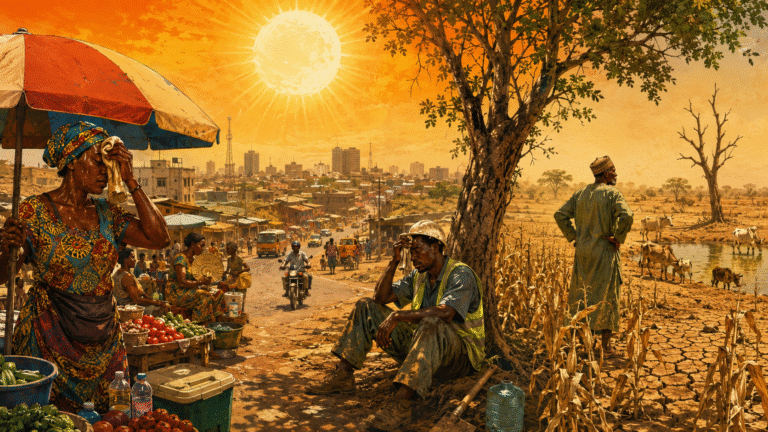
 Hassan Barrie
 Hoby Nasandratra Andriamiandrisoa
+ There are no comments
Add yours