

It is very ironic in Indonesia, the design of Labuan Bajo. It is the “super-premium” one, the “New Bali” which the government wants to offer to the world’s travellers who seek their pristine nature. Not all of the marketing is bogus. This small port town at the westerntip of Flores Island is the gem of Komodo National Park, which is home to some of the most ecologically rich marine area of the world, thousands of species of fish, the coral triangle waters, ancient Komodo dragons and an unchanging coastline for hundreds of years. It’s where climate science is telling it’s the one we are rapidly losing.
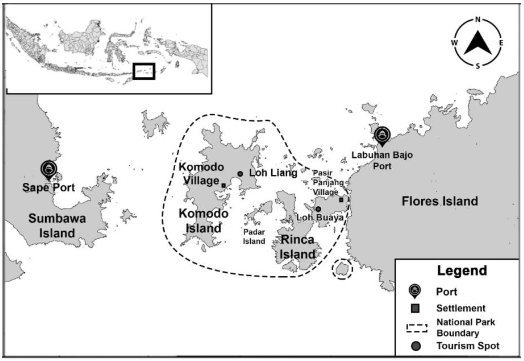
Source: (Saehu et al., 2026)
What has not been seriously discussed in climate policy in Indonesia however, is: how to develop tourism economy on an ecosystem already under climate stress and how to remove the community who maintained the health of the ecosystem?
It was the primary question in the current problematics of the relationship of tourism, indigenous rights and climate governance in Indonesia. Thus, the most apparent instance that we have is Labuan Bajo.
Climate Change is a Hazard.
Get the facts. The Integrated Tourism Master Plan for Komodo National Park 2023 indicates that the sea level rise is one of the high risks of vulnerability in Komodo National Park, while the SEA Komodo National Park 2023 classifies climate change as one of four strategic issues on sustainable development that has a high risk of hydrometeorological disaster both on abrasion and tidal wave and tsunami (World Heritage Outlook, 2025).
It’s not an outlandish guess. Coral bleaching was found by Reef Check Indonesia during the monitoring in 2024 in West and East NTT, the 4th global coral bleaching event (World Heritage Outlook, 2025). Already the Komodo dragon itself is endangered, the main attraction for visitors from around the world to drop by (Saehu et al., 2026). Climate modelling results indicate that the Komodo dragon’s suitable habitat within the national park will be reduced by over 30% over the next 45 years as a result of climate change which is predicted to raise the temperature and sea level.
This is an asset on which the entire tourism economy of the area relies and faces the risk of climate change as well as pressure from the tourism itself, with the aim of generating funds to protect it. But, the policy in Indonesia has not been able to deal with this structural contradiction, and we don’t have any other option.
Tourism Policy that is the Problem’s Accelerant.
The government of Indonesia has identified 5 “super priority destinations,” among them is Labuan Bajo. To come up with new economic thrusts other than Java and to follow Bali’s way in developing tourism. The built-up surface in Labuan Bajo has expanded by 161ha from 2011 to 2017, and by 246ha from 2017 to 2023, and 267ha will be added till 2029.
The issue is that this is in an zone that the government’s own environmental studies deem to be very sensitive to the type of climate stresses the project causes. On the list of thermal stress on marine ecosystems can be added other factors that might affect them – further ocean warming, more hotels, more boats, more construction and more visitors. Although, national policies relevant to SDG 14 exist and cover protection of sensitive areas, visitors management, wildlife interaction and species protection; at the destination level implementation is still limited; and environmental issues such as marine waste management, anchoring and damaging of corals and vessel pollution are still present, often due to low enforcement capacity and poor coordination between different stakeholders (Ayu et al., 2026).
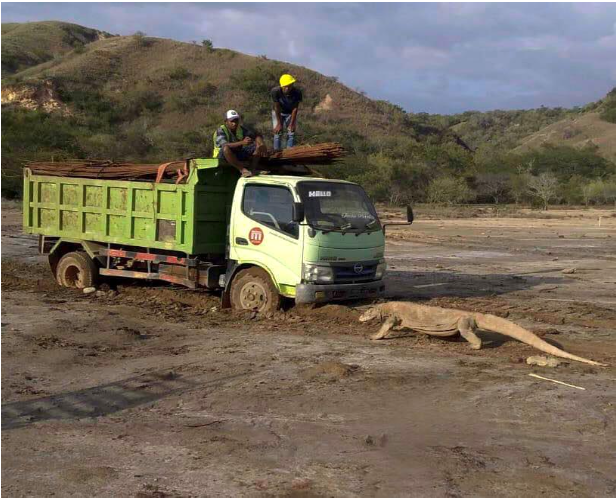
Source: (Saehu et al., 2026)
The analysis of the marine tourism policy implementation directly in 2024 found that the level of integration of tourism destination management is still insufficient, there is still a lack of synergy and coordination between the tourism destination management stakeholders, and still no uniformity in the platform for social and community welfare in Labuan Bajo (Suharyanto et al., 2024). This is not what is meant by a climate change effective governance framework. This is an incoherent, chaotic and chaotic bureaucracy that is dealing with an ecological crisis like it’s dealing with a real estate development project.
Ata Modo: Erased Before They Could Help.
But it is here that the indigenous becomes a matter of human rights and a first order climate policy failure.
The people of Komodo are the native people of the island, known as the Ata Modo whose ancestors have been living on the island for over 1000 years. The designation of Komodo National Park (KNP) since the early ’80’s resulted in the loss of the Agrarian Rights for Settlement by the Ata Modo as well as the loss of their Agrarian Rights for their Livelihood Land (Martanto, 2024). The dispossession was done under the guise of conservation. The State has been protecting the Komodo dragon and has removed the inhabitants as they have co-existed with the dragon for generations.
This is called ‘ambient exclusion’ which means that the state ‘pretends to be protecting ‘common good’ or ‘nature preservation”, and denies indigenous knowledge and ancient role of ‘Ata Modo’ as the stewards on Komodo island. The World Bank and Nature Conservancy began the Komodo Collaborative Management Initiative in 2005 but was not successful due to the absence of the local community’s involvement and co-ownership (Martanto, 2024).
It is concluded that the results of the study in 2024 indicate that the lack of legal products at the regional level which recognize and determine the Customary Law Community of the Ata Modo Tribe will allow for the clash of interests and violations of customary rights to occur (Pratama et al., 2024). The KNP tourism development has been the cause of “coercive transformation” for the tribe as they have been forced to shift from an agricultural to a fishing and ultimately to a low paying tourism economy, according to the same study.
It’s been declining of late. The Indonesian government has awarded the concession to PT Komodo Wildlife Ecotourism for 151.94 hectares of Komodo Island and management rights for 274.13 hectares on Padar Island, a large portion of the island’s total area (around 19.6%) since 2014. The Ministry of Environment and Forestry has issued a second permit for 22.1 hectares of land on Rinca Island and is in the process of privatising two more islands in the heart of the national park and jungle (Hasanah & Bayo, 2024).
In this instance the policy rationale is a version of a concept that has been termed ‘green developmentalism’ – nature is to be preserved by offering it to the rich tourists. The issue is that this model (without indigenous co-governance) can be one that takes the benefit of the ecosystem that indigenous stewards have generated and leaves indigenous stewards with low-paying service jobs, and/or evicts them.
Indigenous Stewardship in Action for Climate.
Some accuracy is needed to what is at stake here – otherwise the argument runs the risk of being sentimental.
Not only is indigenous peoples’ status as being evicted ethically indefensible, it is. It is said to be climatically unproductive as well. As evidence of the benefits of indigenous-managed territories continues to grow, so do the ecological results, decrease in deforestation, and retention of species, when compared to similarly designated protected areas that do not have indigenous stewardship.
The ethnographic research carried out in June 2024 revealed that in the case of Komodo, “local beliefs about Komodo dragons as animal relatives provide a substantial cultural protection framework to supplement formal protection” and that the “process of commodification” (using wildlife as an economic resource) “brings great ecologic risk”.
In a systemic review of the contribution of indigenous knowledge (IK) towards climate change adaptation and mitigation in different countries, Environmental Management 2024 found evidence of contribution of IK systems towards climate change adaptation and mitigation and evidence on potential for formal incorporation of IK in formal governance for climate change to strengthen community resilience (Dorji et al., 2024). The consequences for Labuan Bajo are simple. Formal recognition of the Ata Modo community, including land rights and co-management of part of Komodo National Park is a climate asset. Isn’t that what they say about those who have been dispossessed, whose lives aren’t legally acknowledged and who rely on the near break-even tourist business to make a living?
Gap of policy to be addressed in Indonesia.
Climate goals in Indonesia and what it entails. One of the paths towards emissions reduction in the revision of the NDCs and in the FOLU Net Sink by 2030 initiative is Forest and Land use management. The climate planning in Indonesia now explicitly recognizes forests, culture and carbon reduction and integrating the culture knowledge in the process of reducing the emissions is a necessity, particularly in tourism.
Either, there has to be a way to overcome this language barrier or translate this into effective policy at destination level. The two parallel tracks (tourism and conservation) have been broadened within the governance system in Labuan Bajo and the hope is that investments will somehow bring the two together. They won’t unless there is some change.
Firstly, there needs to be a clear link between the super-priority tourism designation and economic growth targets as well as climate risk assessments. The analysis is already included in the government’s own Strategic Environmental Assessment (SEA) for KNP from 2023. The missing component is a legal framework which must ensure that the analysis is applicable to the investment decision.
Secondly, as per the current forestry law, and downstream laws (UU No. 41/1999), the customary law community of the Ata Modo should be formally recognised by the issuance of a regional government regulation (Perda). It’s nothing new within the legal realm. It’s one that is well known, but has not been used this way before.
Third, in the tourism sector, any new concession, both inside and outside Komodo is required to be done in the context of prior informed consent with local communities in accordance with the UN Declaration on the Rights of Indigenous Peoples (UN DRIP) which has been ratified by Indonesia. Endorsement is a consistency issue that needs to be addressed by Indonesia, unless it is implemented.
The case study in a Journal of Tourism Futures (2025) on the development of Mandalika super-priority destination in Indonesia (Labuan Bajo’s equivalent) confirms the lack of response to the needs of Indigenous people in the process of developing a destination. That’s more of a warning to others (Widaningrum et al., 2025).
The Larger Point.
From the extreme side, the relationship between 3 elements, namely tourism, biodiversity and sensitivity of climate change and indigenous rights is very close in Indonesia. This is the case with Labuan Bajo as well. That’s the reason why it is very visible, especially considering that it is a UNESCO World Heritage site, the ASEAN Summit was held there in 2023 and the controversy surrounding the situation of the Ata Modo.
In the traditional tourism-climate storyline it is: what are the ways to make tourism greener? Improvement of waste management of hotels, use of renewable energy in hotels, carbon offset for flights. It’s not as though it’s artificial issues. However, it appears that they’re not leading the way in the field of structure: Who’s the cop who’s in charge of the ecosystem in which the tourism is valuable in the first place?
The policy of responding to climate change in Indonesia has not been seriously taken into account by the country’s government. The answer, in Labuan Bajo, almost certainly starts with the people that have inhabited Komodo Island prior to the park, pre-hotel era and pre-dragon-as-a-brand days and years. Their excision was known as conservation. I say let’s get them back on their job.
Keywords: Labuan Bajo, Ata Modo Tribe, Indigenous Stewardship, Green Developmentalism, Climate Vulnerability
References.
Ayu, J. P., Khadijah, S. A. R., Wibowo DC, Y. P. P., Hamdani, A. R. T., & Rachmawati, D. (2026). Sustainable tourism goals for Life Below Water in Labuan Bajo and Komodo National Park. Journal of Indonesian Tourism, Hospitality and Recreation, 9(1). https://ejournal.upi.edu/index.php/Jithor/article/view/97193/36460
Dorji, T., Rinchen, K., Morrison-Saunders, A., Blake, D., Banham, V., & Pelden, S. (2024). Understanding How Indigenous Knowledge Contributes to Climate Change Adaptation and Resilience: A Systematic Literature Review. Environmental Management, 74(6), 1101–1123. https://doi.org/10.1007/s00267-024-02032-x
Hasanah, M., & Bayo, L. N. (2024). “Twin Brothers”: Claim-Making Strategies by the Ata Modo in the Tourism Development Project of Komodo National Park, West Manggarai. International Quarterly for Asian Studies, 55(2), 173–195. https://doi.org/10.11588/iqas.2024.2.21145
Martanto, U. (2024, August 15). Komodo island a global tourism spot-but at what cost? https://indonesiaatmelbourne.unimelb.edu.au/komodo-island-a-global-tourism-spot-but-at-what-cost/
Pratama, A. P., Chandra, A. E., Isnanto, N. R., & Nisa, A. N. K. (2024). Transformation and Marginalization of Indigenous Communities: The Ata Modo Tribe’s Experience Amidst the Hegemony of Komodo National Park Tourism Development. Indonesian Journal of Socio-Legal Studies, 3(2). https://doi.org/10.54828/ijsls.2024v3n2.1
Saehu, R., Firdaussy, U. F., Maulana, Y., & Saleh, R. (2026). Living with Komodo Dragons: Wildlife and Tourism in Labuan Bajo, Indonesia. ETropic Electronic Journal of Studies in the Tropics, 25(2), 40–64. https://doi.org/10.25120/ETROPIC.25.2.2026.4272
Suharyanto, Fauzi, A., Adrianto, L., & Wahyudin, Y. (2024). Developing Marine Tourism Policy Pathways: The Case of Super Priority Marine Tourism Destinations in Labuan Bajo, Indonesia. International Journal of Sustainable Development and Planning, 19(10), 3809–3819. https://doi.org/10.18280/ijsdp.191010
Widaningrum, A., Rindrasih, E., Damanik, J., & Saputra, Y. A. (2025). The viability of state-led policy in tourism for sustainable livelihood: the case of Indonesia’s super-priority destination. Journal of Tourism Futures, 1–17. https://doi.org/10.1108/JTF-12-2024-0269
World Heritage Outlook, I. (2025, October 11). Komodo National Park 2025 Conservation Outlook Assessment. IUCN World Heritage Outlook. https://worldheritageoutlook.iucn.org/explore-sites/komodo-national-park





 Reston Dennis Juah
 Noor Ul Ain

 Hassan Barrie
 Hoby Nasandratra Andriamiandrisoa
Just pure fun and excitement. The animations are great and the win rate seems better than other sites I used before. Having a blast at phjilifun right now.