
This is part 2 of a series of articles about the energy transition policy in Indonesia. The first article titled “The Energy Transition is being Obstructed by the Power Market Structure in Indonesia: Locked In, Powered Down” looked at how PLN’s power purchase agreement process is systematically preventing renewable energy from joining the grid in Indonesia
The headline of the news report of the Ministry of Energy and Mineral Resources on May 26, 2025 for the announcement of the ten-year electricity plan RUPTL 2025-2034 was carefully thought out. 69.5 GW of new power generation is planned, with 76% of the new generation renewable, primarily solar, hydro and wind (Bubb et al., 2025). President Prabowo Subianto has been promising the world for 15 years that Indonesia will phase out coal and 10 years that Indonesia will be 100% renewable energy. The government has proposed that the RUPTL is an indication of this.
It is not. In this way, the difference between “plan” and “headline” provides a clue on the “state of climate policy” in Indonesia.
The facts behind the figures.
This new RUPTL is correct in a technical sense to state 76% renewables but fails to convey the structural information. The question isn’t what will be constructed by 2034, but rather when the renewables will get constructed – and what it will tie the nation to for decades.
As per this plan, 27.9 GW of new thermal power including most of the gas and coal power will be built during the first five years of 2025-2029. The biggest ramp-up of renewables and storage will take place in the next five years (2030-2034), with 42.6 GW of capacity to be installed (Draps et al., 2025).
That is, coal and gas are preferred to renewables. The new RUPTL delays 72% of all the new renewable energy projects (42.6 GW over 10 years) (Kariza, 2025). The useful life of today’s power plant is 25-35 years. Not only are all of these coal and gas plants committed to be built in 2025-2029 in the RUPTL, but they may also be well outside of the time horizon of Indonesia’s own climate transition plans.
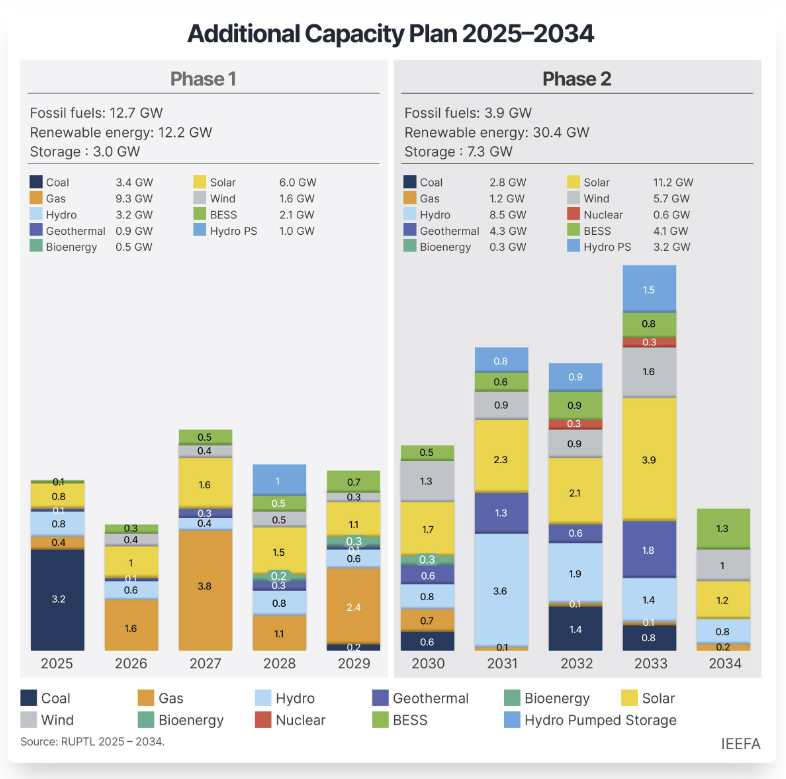
Source: (Yustika, 2025)
This makes it worse compared to what Indonesia had promised in the past. The RUPTL 2025-2034 will be less ambitious than the RUPTL 2021-2030 as deployment of renewable energy will be pushed back after 2030 with the planned renewable energy capacity reduced from 20.9 GW to 18.6 GW. This is not an improvement over the previous plan (Hasan & Zahiruddin, 2025). It is a step back.
The actual numbers match up with the direction of travel. As the RUPTL sees clean energy production quadruple from 44 TWh to 172 TWh by 2034, fossil fuel power generation will increase by 40% from 295 TWh to 407 TWh during the same period (Hasan & Zahiruddin, 2025). Fourfold renewables and 40% more fossil fuel production is NOT transition. Twofold increase – clean energy is complementary not a replacement to coal and gas.
The JETP gap
The Bali G20 Summit Joint Declaration on Just Energy Transition is a very positive step for Indonesia’s involvement. The partnership was able to mobilize international funding to speed coal retirement and boost renewable deployment beyond what was planned for in national programmes. RUPTL 2025-2034 is also going in the opposite direction as all the JETP commitments.
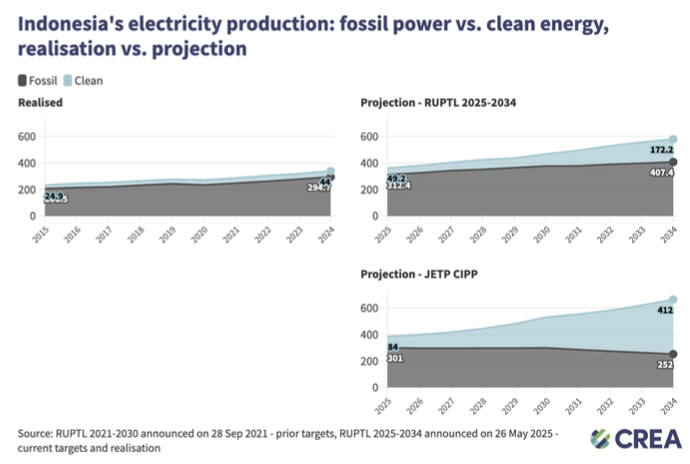
Source: (Hasan & Zahiruddin, 2025)
With only 40% of the JETP Comprehensive Investment and Policy Plan’s total solar and wind capacity of 24.3 GW, the RUPTL will have 10.6 GW by 2030 (Hasan et al., 2025). More important, what has taken place in the JETP process in relation to coal retirement. Managed coal phase-out and early coal retirement were added as the second priority in the CIPP 2023 version of the JETP. In the draft version this has been delayed to 5th position because of technical, legal and finance issues. So this isn’t an engineering solution to deprioritize coal retirement when the whole point of having the partnership is coal retirement. It’s a very easy paradox.
It’s a big misalignment with the Paris Agreement. With a 1.5°C Power Sector, the share of coal energy in Indonesia will be reduced to 16% or below in 2030 and eventually be phased out by 2040. Even the RUPTL 2025-2034 has adjusted the percentage of coal in electricity generation to 57% in 2030.
The issue is this still happens.
That was not the first time Indonesia had ready its ambitious energy plan which failed to be materialized. Almost all of the new capacity targeted by Presidents Yudhoyono and Widodo for 17.5 GW and 35 GW respectively is fossil fuel. These commitments lead PLN to contractual commitments to operate and maintain coal plants, which affect the development of renewables and result in oversupply (Yustika, 2025). The RUPTL 2025-2034 is the same, but it will have plenty of knowledge of its past.
In the first of this series of articles, we explained the contractual mechanism: PLN’s take-or-pay power purchase agreements stipulate that the PLN is obliged to pay the owner of the coal plant, even in the absence of demand for the electricity. The pledge is further delayed with more coal power projects coming up in 2025-2029. The dependence on fossil fuels (gas and coal) may cost USD 60 billion for Indonesia from 2025 to 2034, and in 2024, Indonesia is already dependent on gas-fired power plants with less than 30% capacity (Yustika, 2025). The fossil fuel capacity available on the system is sufficient. The remaining is thrown in by RUPTL.
They’ve an example of execution to throw into the mix. The commissioning of power plants until the first semester of 2025 was 1.6 GW out of the 10 GW planned for 2021-2030 in the RUPTL (Hasjanah & Simanjuntak, 2025). The current plan in Indonesia has been realized by only 16% renewable energy. Then there is a little institutional optimism that 2025-2034 plan with backloaded renewables (as long as there were no structural changes which resulted the failure to meet earlier goals) is needed.
Signal problem in investments
There is a straight-line relationship between RUPTL planning and capital allocation. In the first half of 2024 renewables totaled USD 565 million, a figure which was less than a quarter of the amount for mineral and coal (USD 2.4 billion). (Hasan & Zahiruddin, 2025) International green capital is in line with regulatory certainty. A 10-year electricity plan backed by fossil fuel with heavy up-front costs and renewables is telling investors that the opportunity set is short-term gas and coal, not solar and wind and storage. The RUPTL is also a price signal since it is a planning instrument. Currently, fossil fuel costs are included in its price.
Global investors and multinationals might be hesitant to invest in Indonesia due to the huge amounts of coal and gas energy subsidy. (Yustika, 2025) Foreign capital is needed for the renewable build out, as the RUPTL itself estimates that, in total, IDR 2,133.7 trillion is required for the build out, of which 73% is from private independent power producers (IPPs). If a plan doesn’t persuade the investors in need to support it, then it is a plan that undermines itself.
What shall we construct in a believable plan and how can it be constructed?
It’s not so complicated, but politically hard to do. While recognizing the current difficulties in renewables’ capacity additions, the phase-in of renewables capacity additions should begin in 2025-2029 and should not be deferred beyond 2030. New coal plant in the pipeline should be given a hard stop of 6.3 GW. The existing coal plants have take-or-pay PPA commitments with PLN which needs to be restructured and was explained in the first article of this series. It is essential to shift the coal retirement mandate in the JETP to the core of the energy planning in Indonesia from fifth priority.
Coal late-comers and renewables deployment delays forced Indonesia to a failure to launch scenario with the nation risking to be locked into fossil fuel-dominated power grid for decades as a result of giving priority to fossil fuel infrastructure deployment. (Hasan, 2025)
To reach a truly clean energy system, renewable energy potentials such as solar, geothermal, hydro and wind can be developed in Indonesia. The resource deficiency is not observed in the RUPTL 2025-2034. It’s a matter of policy. However, policies can be changed — before the next 10 years are spent building out infrastructure that makes that impossible.
The third part of the series is about the newly established state export agency for coal: the PT Danantara Sumberdaya Indonesia, and the impact of this on the credibility of the supply side in Indonesia.
Keywords: RUPTL 2025-2034, Fossil Fuel Dependency, JETP, Renewable Energy Delay, Investment Signal
References.
Bubb, M., Kasmali, M., Clugston, S., & Antonio, K. S. (2025, June 6). Powering Indonesia’s future: Key takeaways from the 2025–2034 RUPTL. https://pdf.hoganlovells.com/en/publications/powering-indonesias-future-key-takeaways-from-the-20252034-ruptl
Draps, F., Mendelli, J.-L. N., Baggett, S., & Trevanion, D. (2025, June 20). Indonesia’s new power development plan: Highlights from the 2025–2034 RUPTL. https://www.ashurst.com/en/insights/indonesias-new-power-development-plan/
Hasan, K. (2025). RUPTL 2025-2034 sees fossil fuels hold place of honour despite vision for renewables. The Centre for Research on Energy and Clean Air. https://energyandcleanair.org/wp/wp-content/uploads/2025/09/CREA_Press-release_ID_RUPTL_2025-2034_09.2025.pdf
Hasan, K., Myllyvirta, L., & Zahiruddin, N. (2025). Indonesia’s RUPTL outlines faster growth in fossil fuel use, downgrades ambition for clean energy. https://energyandcleanair.org/publication/indonesias-ruptl-outlines-faster-growth-in-fossil-fuel-use-downgrades-ambition-for-clean-energy/
Hasan, K., & Zahiruddin, N. (2025). Indonesia’s RUPTL 2025-2034: Fossils first, renewables later. https://energyandcleanair.org/publication/indonesias-ruptl-2025-2034-fossils-first-renewables-later/
Hasjanah, K., & Simanjuntak, U. (2025, May 27). Government Needs to Ensure Strategy to Achieve Renewable Energy Target in RUPTL 2025-2034. Institute for Essential Services Reform. https://iesr.or.id/en/government-needs-to-ensure-strategy-to-achieve-renewable-energy-target-in-ruptl-2025-2034/
Kariza, D. (2025, June 2). New “green” RUPTL risks sidelining, rather than empowering renewables. Jakarta Post. https://www.thejakartapost.com/business/2025/06/02/new-green-ruptl-risks-sidelining-rather-than-empowering-renewables.html
Yustika, M. (2025). The risks of fossil fuel dependence in Indonesia’s Electricity Supply Business Plan (RUPTL) 2025-2034 Insights Electric Grid Renewables Decarbonization Solar Indonesia Asia. https://ieefa.org/resources/risks-fossil-fuel-dependence-indonesias-electricity-supply-business-plan-ruptl-2025-0


 Reston Dennis Juah
 Noor Ul Ain

 Hassan Barrie
 Hoby Nasandratra Andriamiandrisoa
گینر گالوانایز، به
طور خاص برای ورزشکاران و افرادی طراحی شده که میخواهند بدن خود را تقویت کنند.
فیتنس مکمل، منبع بهترین مکمل های اروجینال برای افرادی است که به سلامت و زیبای اندام خود، و کیفیت و اصالت مکمل ورزشی اهمیت میدهند.
کراتین بی پی ای، ساخت کمپانی بی پی ای است که شعار خود را بر مبنای کیفیت و عملکرد بنا کرده و در این محصول روی یک ویژگی کلیدی دست گذاشته است، خلوص و میکرونیزاسیون.
وی بی پی ای، در واقع یک ترکیب فوقپیشرفته از پروتئینهای وی با سرعت جذب متفاوت است.
وی ایزوله بی پی ای، یک مکمل پروتئین وی با کیفیت فوقالعاده بالا است که توسط کمپانی بی پی ای تولید میشود.
وی ایزوله کوین لورون، یک مکمل پروتئین وی بسیار پیشرفته است که توسط برند ورزشی کوین لورون تولید میشود.
گینر اپتیموم، یک معماری تغذیهای است که برای شرایط بحرانی کمبود وزن طراحی شده است.
وی زوماد لبز، محصولی فوقحرفهای و باکیفیت است که با ترکیبات استثنایی و طعمهای جذاب، انتخابی عالی برای ورزشکاران محسوب میشود.
گینر ایوژن، یکی از حرفهایترین و باکیفیتترین مکملهای افزایش وزن و حجم در دنیاست که توسط «هانی رامبد»، مربی مشهور اسطورههای بدنسازی، فرموله شده است.
وی ایزوله زوماد لبز، یک مکمل با کیفیت بالا است که از آبپنیر ایزوله با خلوص ۹۰–۹۵٪ تهیه شده و تقریبا فاقد چربی و لاکتوز است.
کراتین دنیس جیمز، یک مکمل ورزشی باکیفیت است که تحت برند بدنساز حرفهای و سرشناس، دنیس جیمز، تولید و عرضه میشود.
مکمل حجم دهنده سریع، فرمولاسیونهای متراکمی از کالری، پروتئین با کیفیت بالا، کربوهیدراتهای پیچیده و اسیدهای آمینه ضروری هستند.
وی کوامترکس، یک مکمل پودری باکیفیت است که از کنسانتره پروتئین وی ساخته شده.
گینر گلد اپتیموم، پاسخی هوشمندانه به نیاز ورزشکارانی است که نمیخواهند با مصرف کالریهای بیهوده، زیبایی اندام خود را فدای حجم کنند.
وی ایزوله کیجد، با استفاده از فناوریهای پیشرفته میکروفیلتراسیون، تضمین میکند که پروتئین وی به خالصترین شکل ممکن خود برسد.
کراتین بادی بیلدینگ، میکرونایز شده و فاقد هرگونه فیلر (مواد پرکننده)، طعمدهنده مصنوعی یا شکر است.
گینر یو اس ان، در واقع اشاره به یکی از محصولات پرطرفدار و باکیفیت شرکت یو اس ان دارد.
وی ردکان وان، ترکیبی از پروتئین وی هیدرولیز شده و کنسانتره است.
کراتین اکتیولب، بر پایه کراتین مونوهیدرات خالص بنا شده است، اما با درجه خلوص دارویی و فرآوری میکرونایز شده.
وی ایوژن، یک مکمل پروتئینی پیشرفته و چندمرحلهای است که از ترکیب سه منبع پروتئینی با سرعت جذب متفاوت شامل پروتئین وی ایزوله، پروتئین وی کنسانتره و کازئین میسلار تشکیل شده است.
کراتین ترکیبی ماسل تک، یک کراتین ترکیبی پیشرفته و چندمؤلفهای است که برای به حداکثر رساندن جذب کراتین و افزایش حجم عضلانی طراحی شده است.
وی ویکتور مارتینز، یک مکمل ورزشی پیشرفته و باکیفیت است که تحت نظارت مستقیم “ویکتور مارتینز”، قهرمان سرشناس دنیای بدنسازی، برای حمایت از رشد و ریکاوری عضلات طراحی شده است.
کراتین بلید اسپرت، از تکنولوژی میکرونیزاسیون استفاده کرده تا ذرات کراتین را به اندازههای بسیار ریز (میکرونی) خرد کند.
گینر ناترکس، در واقع یک فرمولاسیون پیشرفته و یک بمب کالری مهندسیشده است.
کراتین ترکیبی ناترکس، یک محصول پیشرفته برای بارگیری گلیکوژن و کراتین است که برای به حداکثر رساندن عملکرد و حجم عضلات طراحی شده.
وی فا، یک مکمل خوشطعم و باکیفیت است که حاوی ۱۰۰٪ پروتئین وی کنسانتره میباشد.
وی گلد ماسل تک، یکی از پیشرفتهترین و خالصترین مکملهای پروتئینی در دنیاست که با هدف عضلهسازی خشک و ریکاوری سریع طراحی شده است.
گینر ویکتور مارتینز، فلسفهای از تغذیه است که توسط خود ویکتور مارتینز طراحی شده است.
گینر استرویت، یک مکمل غذایی پودری است که با هدف تامین کالری بالا، کربوهیدراتهای پیچیده و پروتئینهای باکیفیت برای ورزشکاران طراحی شده است.
کراتین ناکلیر، یک ماتریس پیچیده است، این کراتین ترکیبی از برند ناکلیر نوتریشن، بر اساس فلسفه همافزایی طراحی شده است.
وی ناکلیر، یک مکمل ورزشی باکیفیت است که عمدتاً از کنسانتره پروتئین آب پنیر تشکیل شده.
گینر ناکلیر، با ارائه ترکیبی هوشمندانه از ماکرونوتریینتها، به شما اجازه میدهد کالری مایع با کیفیتی را وارد بدن کنید که به سرعت جذب میشود.
گینر ویسلی، یک مکمل تخصصی افزایش وزن و حجم عضلانی است که با ترکیب هوشمندانهای از کربوهیدراتهای پیچیده، پروتئینهای باکیفیت و اسیدهای آمینه ضروری، طراحی شده است.
پروتئین بیف ماسل مدز، نخستین پروتئین ایزوله گوشت گاو در جهان است که با تکنولوژیهای پیشرفته فیلتراسیون تولید شده است.
کراتین hcl ماسل تک، خالصترین فرم کراتین است که نمک و ناخالصیهای دیگر از آن جدا شدهاند.
گینر ماسل اسپرت، یک سیستم کامل برای افزایش کالری دریافتی و پشتیبانی از ریکاوری عضلانی است.
گینر بادی بیلدینگ، یک مکمل پودری پرکالری است که از ترکیب کربوهیدراتها، پروتئینها و چربیهای سالم تشکیل شده است تا به شما در افزایش وزن و حجم عضلانی کمک کند.
گینر ماسل کور، نسبت کربوهیدرات به پروتئین را دقیقاً شبیه به نسبت طلایی مورد نیاز برای ریکاوری پس از تمرینات سنگین هایپرتروفی تنظیم کرده است.
گینر ناترند، یک مکمل پیشرفتهی ورزشی با ترکیب مهندسیشدهای از کربوهیدراتهای پیچیده، پروتئینهای با ارزش بیولوژیکی بالا و مجموعهای از ویتامینها است که برای ایجاد کالری مازاد و تسریع روند عضلهسازی طراحی شده است.
وی تروفیول، یک منبع پروتئینی با ارزش بیولوژیکی بسیار بالا است که حاوی تمامی اسیدهای آمینه ضروری است که بدن انسان قادر به تولید آنها نیست و باید از طریق رژیم غذایی دریافت شوند.
گینر وایکینگ فورس، یک فرمولاسیون پیشرفته و کالریمتراکم است که برای پشتیبانی از رشد عضلانی و افزایش وزن طراحی شده است.
وی ایزوله تروفیول، یک مکمل پروتئینی فوقالعاده خالص است که طی فرآیندهای پیشرفته میکروفیلتراسیون، چربی، کربوهیدرات و لاکتوز آن حذف شده و بیش از 90% پروتئین خالص و زودجذب را برای سنتز عضلانی در اختیار بدن قرار میدهد.
گینر کوین لورون، یک مکمل افزایشدهنده وزن و حجم فوقپیشرفته است که ترکیبی ایدهآل از کربوهیدراتهای پیچیده، پروتئینهای زودهضم و دیرهضم، و اسیدهای آمینه ضروری را در خود جای داده است.
وی سون نوتریشن، یک مکمل پروتئینی باکیفیت و پیشرفته است که از بهترین منابع آب پنیر استخراج میشود و به منظور تسریع ریکاوری، افزایش حجم عضلانی و بهبود عملکرد ورزشی طراحی شده است.
گینر تروفیول، با ارائه یک پروفایل درشتمغذی متعادل، به بدن شما سوخت لازم برای تمرینات سخت و مواد اولیه برای ساخت تارهای عضلانی جدید را میرساند.
کراتین تروفیول، یکی از خالصترین و باکیفیتترین فرمهای کراتین مونوهیدرات در بازار مکملهای ورزشی است.
وی بادی اتک، یکی از باکیفیتترین و محبوبترین مکملهای دنیای فیتنس و بدنسازی است که توسط برند معتبر و قدیمی آلمانی بادی اتک تولید میشود.
گینر اکتیولب، یک مکمل ورزشی پرکالری متشکل از کربوهیدراتهای پیچیده و پروتئین با کیفیت است که به طور خاص برای افزایش سریع وزن، ریکاوری بهتر و ساخت توده عضلانی در افراد لاغر اندام طراحی شده است.
وی رول وان، یکی از مکملهای برجسته در بازار جهانی است که عمدتاً برای حمایت از عضلهسازی، ریکاوری سریع، و بهبود کلی عملکرد ورزشی طراحی شده است.
گینر رونی کلمن، یک مکمل افزایش وزن و حجم عضلانی با فرمولاسیون مهندسی شده است که با ترکیب بهینهای از پروتئینها، کربوهیدراتهای پیچیده و چربیهای سالم، کالری مازاد مورد نیاز برای هایپرتروفی (رشد عضلانی) را فراهم میکند.
وی ایزوله رونی کلمن، یک منبع پروتئینی فوقالعاده خالص است که تمام چربیها، کربوهیدراتها و قندهای اضافی آن در فرآیندهای پیچیده آزمایشگاهی فیلتر شده است.
کراتین ماسل رولز، یکی از خالصترین فرمهای کراتین مونوهیدرات تو بازار جهانیه. وقتی حرف از توصیههای آکادمیک ورزشی میشه، کراتین همیشه پای ثابته.
وی ایزوله ماسل پلاس، یک منبع خالص و فیلتر شده از پروتئین آب پنیر است که چربی و لاکتوز آن به حداقل ممکن (نزدیک به صفر) رسیده است.
وی ماسل پلاس، یک ترکیب مهندسیشده از اسیدهای آمینه ضروری است که بدن شما برای ریکاوری بعد از یک تمرین سنگین با وزنهها به آن نیاز دارد.
کراتین بی اس ان، کراتین مونوهیدرات ۱۰۰٪ خالص و میکرونایز شده است که برای پر کردن ذخایر (آدنوزین تریفسفات) عضلات شما طراحی شده.
کراتین ماسل پلاس، در واقع یک مکمل ورزشی فوقالعاده خالص و قدرتمند بر پایه کراتین مونوهیدرات است که دقیقا مثل یک باتری یدکی برای سلولهای عضلانی شما عمل میکند.
گینر ماسل پلاس، یک مهندسی دقیق تغذیهای برای هاردگینرها است که نقش کلیدی در جلوگیری از کاتابولیسم (عضلهسوزی) و تسریع ریکاوری بعد از تمرینات مقاومتمحور ایفا میکنند.
گینر ماسل تک، به گونهای طراحی شده تا نیاز ورزشکاران به تهیه جداگانه چندین مکمل (مانند پروتئین وی، کراتین، گلوتامین و مولتیویتامین) را برطرف سازد.
گینر بی اس ان، یکی از شناختهشدهترین و معتبرترین پودرهای افزایش حجم در دنیای بدنسازی و فیتنس به شمار میاد.
آمینو دایماتیز، یک ترکیب فوقالعاده از هر ۹ اسید آمینه ضروری است که بدن انسان قادر به ساختن اونها نیست و حتماً باید از طریق رژیم غذایی یا مکملها تامین بشن.
بی سی ای ای دایماتیز، یک مکمل پودری یا کپسولی باکیفیت است که اسیدهای آمینه ضروری (لوسین، ایزولوسین و والین) را با نسبت طلایی و علمی 2:1:1 به بدن شما میرساند.
مس گینر زوماد لبز، با فرمولاسیون پیشرفته خودش، ترکیبی ایدهآل از کربوهیدراتهای پیچیده، پروتئینهای با ارزش بیولوژیکی بالا و اسیدهای آمینه ضروری رو تو یه پکیج جذاب به شما میده.
کراتین اپلاید، یک کراتین مونوهیدرات میکرونایز شده است که دانههای کراتین را به اندازهی گرد و غبار نرم و ریز میکند، به سطحی از حلالیت و جذب که سیستم گوارش شما بابت آن سپاسگزاری خواهد کرد.
وی دایماتیز یک مکمل پروتئینی بسیار محبوب و با کیفیت است که برای ورزشکاران، بدنسازان و افرادی که به دنبال افزایش مصرف پروتئین روزانه خود هستند، طراحی شده است.
کراتین کوامترکس یک منبع خالص از انرژی برای عضلات تشنه شماست! وقتی در باشگاه زیر وزنه هستید و احساس میکنید دیگر توان حتی یک تکرار بیشتر را ندارید، دقیقاً همینجاست که کراتین وارد میدان میشود.
وی ایزوله بادی بیلدینگ یک مکمل پروتئینی فوقپیشرفته و تصفیهشده است که طی فرآیند میکروفیلتراسیون، بیش از ۹۰ درصد پروتئین خالص را در خود جای داده و تقریباً فاقد چربی، کربوهیدرات و لاکتوز (قند شیر) میباشد.
کربوهیدرات اپلاید یک منبع انرژی فوقسریع و پایدار بر پایه کربوهیدراتهای خاص (مثل کلاستر دکسترین) است که برای سوخترسانی قبل، حین و بعد از تمرین طراحی شده است.
وی ناتریورسام یک مکمل ورزشی بسیار باکیفیت بر پایه پروتئین آب پنیر است که با سرعت جذب بالا و پروفایل اسیدهای آمینه کامل، به رشد سریعتر عضلات، جلوگیری از ریزش عضله و ریکاوری قدرتمند پس از تمرینات سخت کمک میکند.
گینر ناتریورسام یک مکمل ورزشی باکیفیت است که با نسبت ایدهآلی از کربوهیدراتهای پیچیده و پروتئینهای زودجذب، برای کمک به افزایش وزن و حجم عضلانی طراحی شده است.
کراتین ناتریورسام یک منبع خالص از کراتین مونوهیدرات است که توسط برند معتبر اروپایی ناتریورسام تولید میشود.
آمینو ناتریورسام یک منبع غنی و کامل از اسیدهای آمینه ضروری و غیرضروری است که به شکل قرص تولید میشود.
وی الیت دایماتیز یک ترکیب مهندسی شده از وی پروتئین ایزوله و وی پروتئین کنسانتره است دایماتیز تلاش کرده تعادلی بین “سرعت جذب فوقالعاده” و “بافت طعمی غنی” ایجاد کند.
بست امینو ای ای ای بی پی ای در واقع یه ترکیب هوشمندانه از آمینو اسیدهای شاخهدار و آمینو اسیدهای ضروری به همراه یه ماتریکس هیدراتاسیون خفنه که برای جلوگیری از کاتابولیسم (ریزش عضلانی) و افزایش سنتز پروتئین طراحی شده.
وی ایزوله ناکلیر یک فرم به شدت تصفیه شده از پروتئین آب پنیر هست و فرآیند تولید ان با فیلتراسیونهای خیلی پیشرفتهای (مثل کراس فلو) انجام میشه تا چربی، لاکتوز و کربوهیدرات به کمترین میزان ممکن برسه.
کراتین ایس فا همان کراتین مونوهیدرات خالص است که به عنوان “پادشاه مکملها” شناخته میشود و بیشترین تحقیقات علمی در تاریخ علوم ورزشی روی آن انجام شده است.
آمینو الیمپ یک مکمل ورزشی باکیفیت و پیشرفته از برند معتبر لهستانی الیمپ است که حاوی مجموعهای از اسیدهای آمینه ضروری و اسیدهای آمینه شاخهدارمیباشد.
بی سی ای ای الیمپ یک ترکیب مهندسی شده از سه اسید آمینه ضروری یعنی لوسین، ایزولوسین و والین است که بدن ما قادر به تولید آنها نیست.
آمینو ای ای ای ناترند ۹ آمینو اسید حیاتی را در یک فرمولاسیون بینظیر و با سرعت جذب بالا به بدن شما میرساند.
وی ترکیبی رول وان یک مکمل پروتئینی پیشرفته و چندفازی است که از ترکیب هوشمندانه ۷ منبع مختلف پروتئین با سرعت هضم متفاوت تشکیل شده است.
وی ترکیبی ماسل تک با ترکیب دوز مشخص کراتین با پروتئین وی منجر به ۷۰ درصد افزایش در رشد عضلات بدون چربی در مقایسه با مصرف پروتئین وی به تنهایی میشود.
I’ve been looking for a reliable spot like this for a while. The interface is super smooth and the payouts are quick. Highly recommend pkbat999 to everyone.
وی بیسیک یک مکمل پروتئین وی تمرکزیافته یا ترکیبی استاندارد است که تمام اسیدهای آمینه ضروری و اسیدهای آمینه شاخهدار را بدون قیمتهای نجومی فراهم میکند.
کراتین بیسیک با ارائه کراتین مونوهیدرات ۱۰۰٪ خالص و میکرونیزه شده، ذخایر فسفوکراتین سلولهای عضلانی را به حداکثر اشباع میرساند.
گینر بیسیک بهطور اختصاصی برای افرادی طراحی شده که اصطلاحاً “هارد گینر” هستند؛ یعنی متابولیسم فوقالعاده بالایی دارند و کالریسوزی بدنشان اجازه ساخت بافت جدید را نمیدهد.
Best betting odds I have seen in a while. The deposits are instant and the site is very secure. I feel safe playing at vny88bet.
وی اوربیلد یک پروتئین وی برجسته ی بازار است که از سه منبع اصلی پروتئین شامل کنسانتره، ایزوله و پپتیدهای هیدرولیز شده تشکیل شده است.