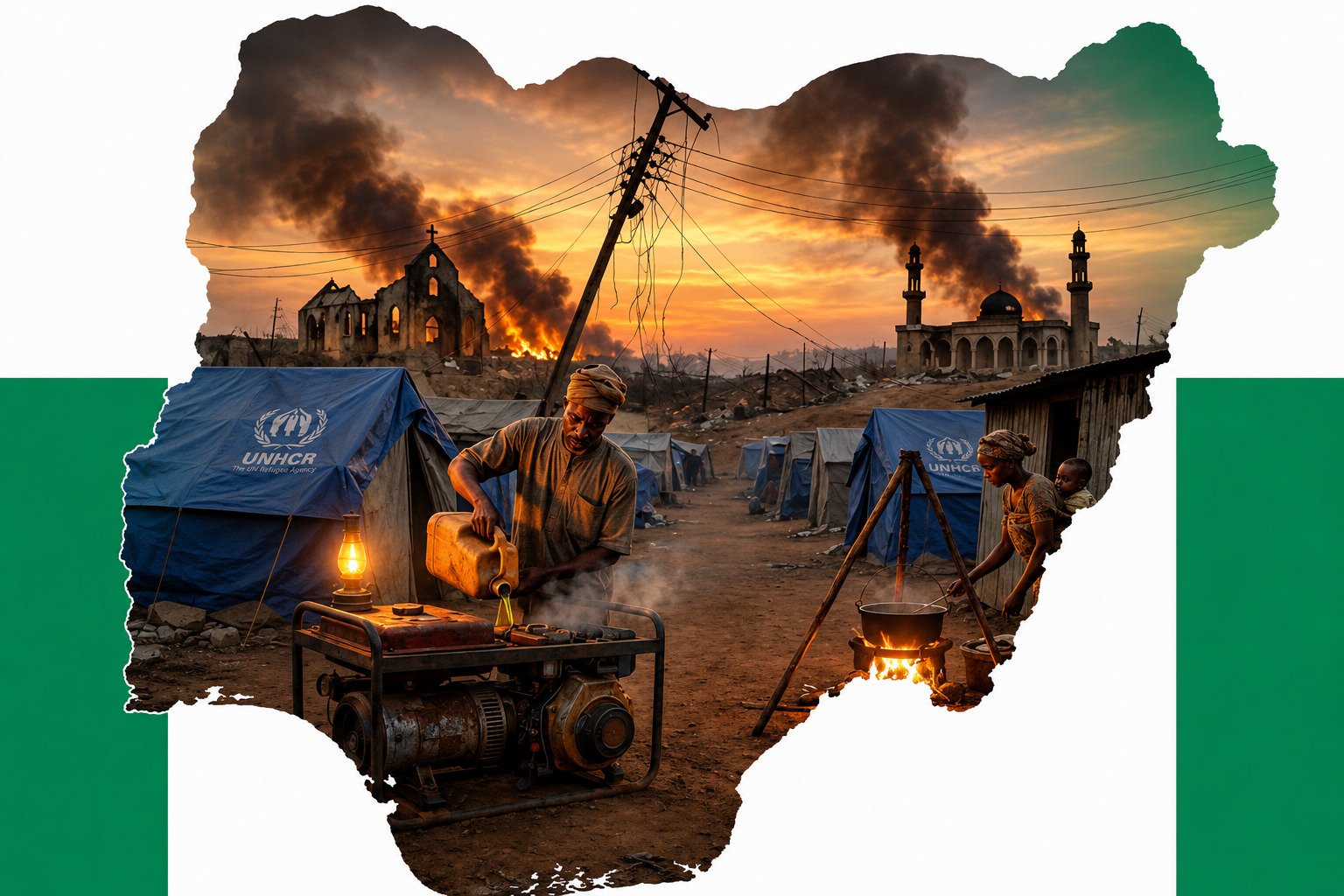

Climate Crisis Beyond Emissions
Nigeria’s climate crisis cannot be fully interpreted on the basis of emissions data and policies alone. It has to be read in the open wounds of conflicts, displacement, institutional decay which defines daily life. In fragile states, it is not just industrial emissions or poor policies that causes stagnation in climate actions, but survival without good governance.
In what way(s) does the dissolution of social capital due to ethno-religious conflict undermine collective action and limit the ability of citizens to hold the government accountable in providing basic amenities that can facilitate lower-emission lifestyles?
Persistent ethno-religious conflicts have destroyed social capital; loss of trust, collective action and civic action. This undermines the capacity of citizens to demand accountability on basic services like electricity by the state. This causes millions to be forced towards sources of energy that consume carbon, and climate outcomes are directly linked to conflict.
Conflict and the Erosion of Social Capital
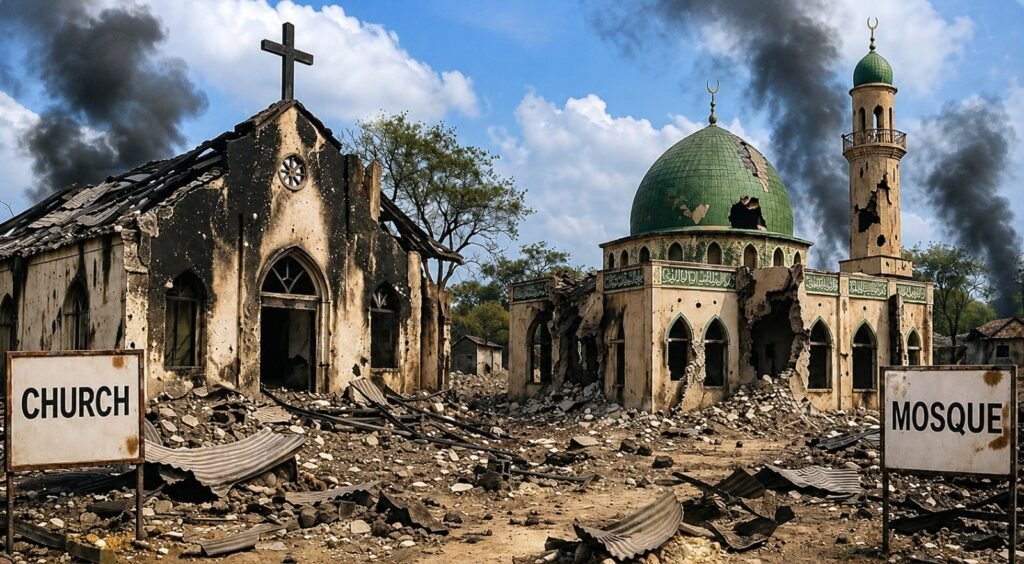
Fig. 1. Aftermath of Conflict: Burned Church and Mosque
Ethno-religious violence has become a structural feature of the politics of Nigeria, in the form of insurgency in the northeast and communal conflicts throughout the Middle Belt between Christians and Muslims. Identity-based violence thrives on weak institutions and exclusionary governance, contributing to an expanding hollow of democratic accountability (https://www.theamericanjournals.com/index.php/tajpslc/article/view/6176).
The destruction of communal religious spaces as shown in Fig. 1 is more than mere physical loss, it is the end of trust and social solidarity. In the place of fear and polarization, citizens are less mobilized, demand less, and penalize state failure. Armed conflicts then have a deep ravaging effect on social capital.
Displacement and the Loss of Political Voice
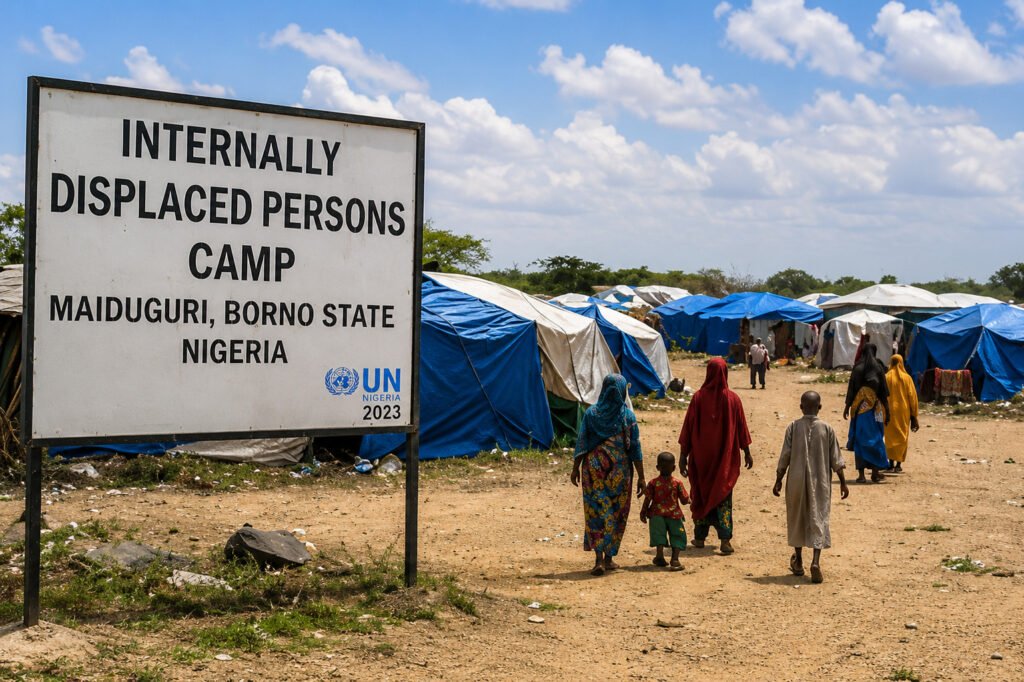
Fig. 2. Internally Displaced Persons (IDP) camp, Borno State
Displacement accelerates social capital decay, hence, are now millions of IDPs who are no longer governed by formal systems, having little to no access to electricity, and public services because the state failed to provide them and nobody is pressurization the state. Fig. 2 shows how displacement breaks communities and undermines political voice, and makes long-term civic pressure almost impossible. Ngwoke and Ituma (2020) present evidence that these disruptions compromise the ability to govern and to focus on sustainable development (https://hts.org.za/index.php/hts/article/view/6090heng). In this regard climate vulnerability is anchored in day to day survival.
Energy Failure and Weak Accountability
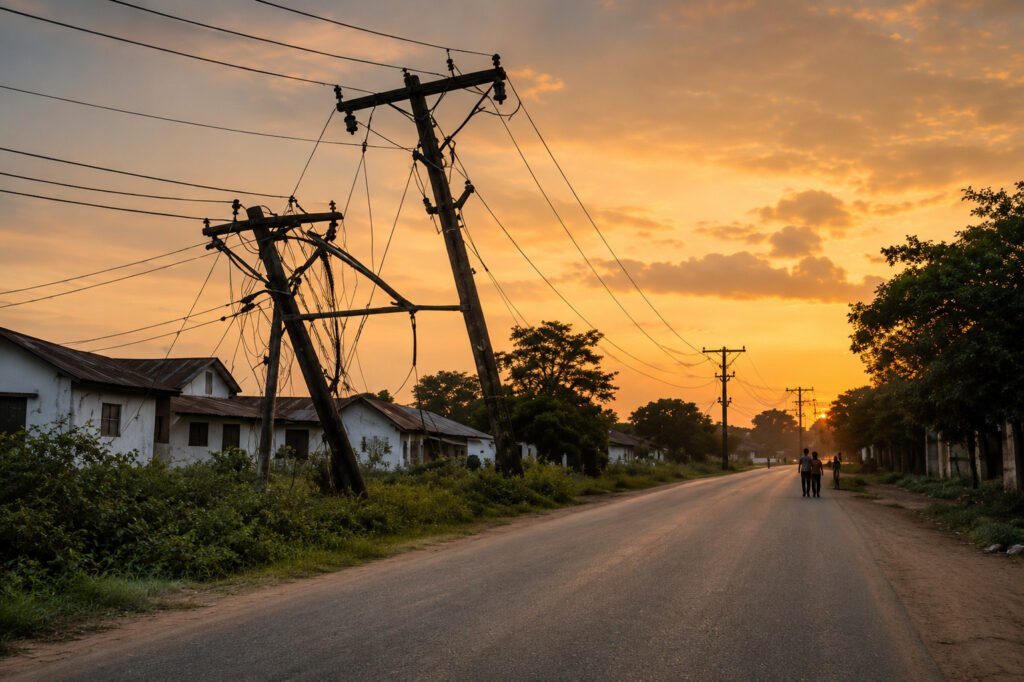
Fig. 3. Broken/overloaded electricity lines at dusk
The acute power outage in Nigeria is a direct result of eroded accountability. Despite the growth of her economy, power industry in the country is unreliable, especially in conflict-affected areas. As depicted in Fig. 3, deteriorating infrastructure is an indicator of insecurity, poor investment and poor regulation. The World Bank estimates that electricity access is still uneven, and often, even in urban centres, there are frequent outages (https://www.worldbank.org/en/topic/energy). In a country where people have no collective power to demand for reform, energy insecurity becomes normalized.
Diesel Generators and Carbon-Intensive Survival
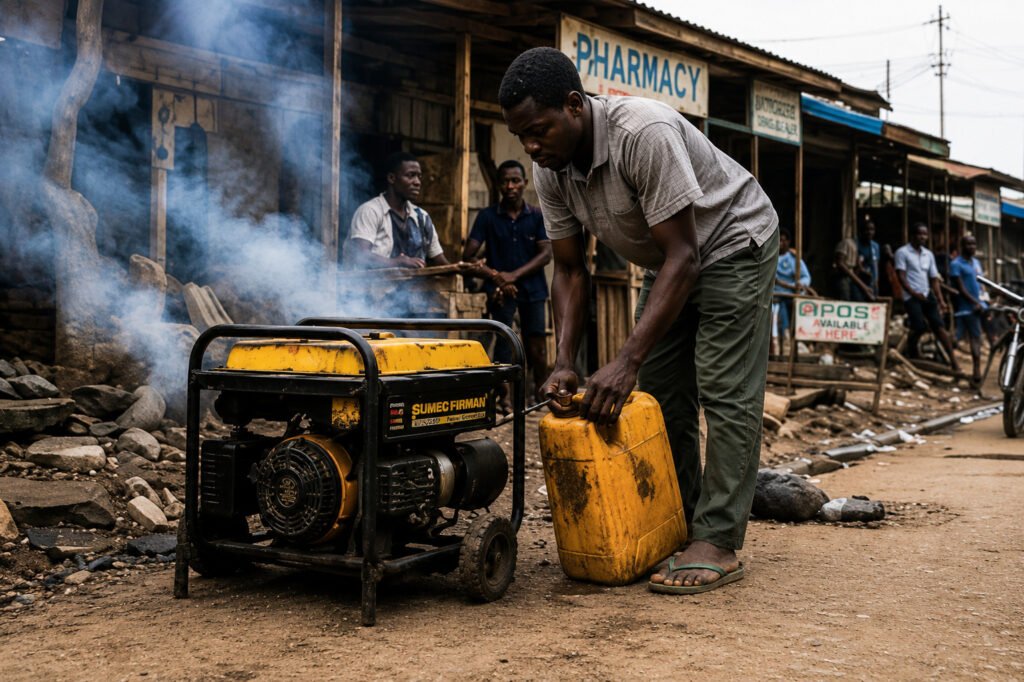
Fig. 4. Diesel generator being refuelled outside a shop
Self-provision in place of public service is applied in this governance vacuum. Homes, schools and businesses in Nigeria are powered by diesel generators. These generators, as seen in Fig. 4, are highly polluting yet indispensable. Obileke (2026) demonstrates that people are not dependent on fossil fuels because they prefer to use it, but due to institutional failure (https://www.mdpi.com/2071-1050/18/5/2387). Here, emissions are an indication of limited options due unreliable infrastructure in the state.
Rural Energy Use and Climate Inequality
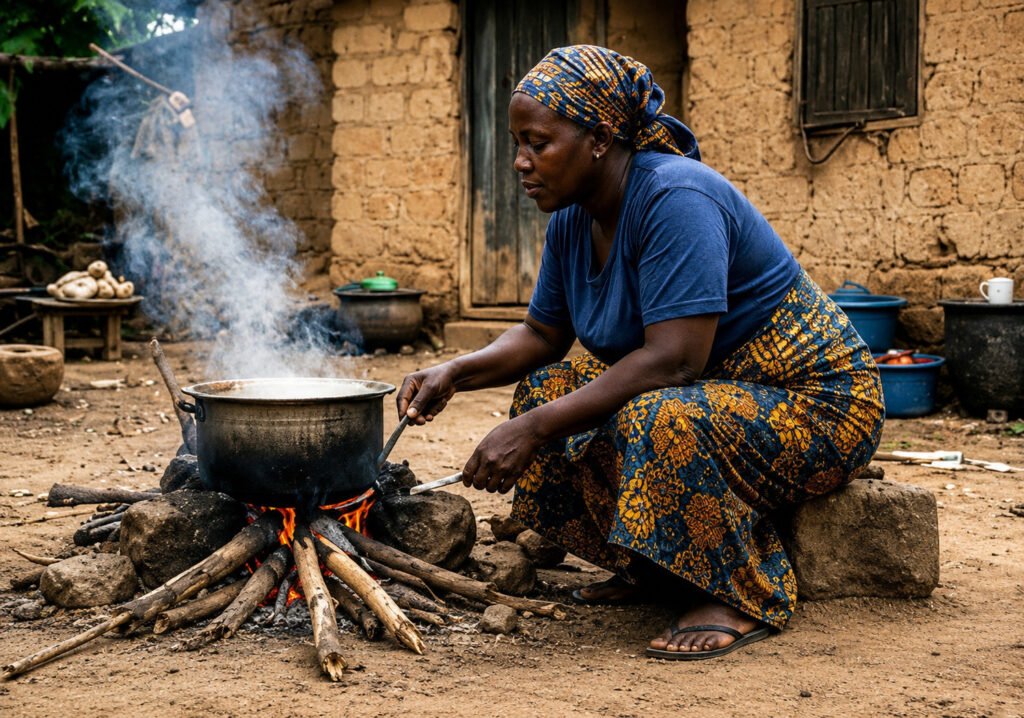
Fig. 5. Woman cooking with firewood
The use of firewood and charcoal is still a common practice in rural and displaced communities, which increases the rate of deforestation and puts households at risk of indoor air pollution. Fig. 5 highlights the unequal burden on women and children. According to Oruonye et al. (2024), the energy crisis in Nigeria negatively affects the welfare and climate commitments (https://oer.tsuniversity.edu.ng/index.php/jjsms/article/view/584). Here, environmental damage cannot be detached on social exclusion, which unveils the gendered aspect of climate injustice.
Rethinking Climate Governance in Fragile States
This reality challenges the prevailing assumption in climate diplomacy across the world as it tends to assume stable institutions and unified societies. Fragile states such as Nigeria put the boundaries of this model into question.
The effect of industrial emissions on climate here is not as significant as poor governance and a diminished social capital. The most unproductive communities in the context of climate change are forced into the carbon-intensive consumption since clean options are not available. This is not simply a technical disjuncture, but structural injustice.
Climate action in conflict-affected environments has to be combined with peacebuilding and governance reform as highlighted by the United Nations Development Programme (https://www.undp.org/climate-security).
Conclusion
Collectively, Fig. 1–Fig. 5 narrate one story: once social capital is destroyed, state accountability collapses, hence, survival becomes carbon-intensive. The consequences of fragility are interrelated, such as burned communities, displacement, collapsing infrastructure and reliance on diesel. The impact of climate action in Nigeria will be minimal unless these structural conditions are address alongside with emissions reduction.
Call to Action: Rebuilding Governance for Climate Action
Nigeria needs to initiate climate action by focusing on fragility. To establish any sustainable transition, it is necessary to rebuild trust and strengthen institutions and restore accountability.
The key priorities of governments and partners should include decentralized renewable energy, climate finance protection, and community involvement. Climate solutions will not become a reality without a powerful governance; act now to align peacebuilding, accountability and clean energy.
Keywords: Ethno-religious conflict, Fragile state, Social capital erosion, Energy insecurity, Climate governance


 Reston Dennis Juah
 Noor Ul Ain
 Hassan Barrie
 Hoby Nasandratra Andriamiandrisoa
Very educative and also challenging
Thank you for giving us this tips