
If the same sacred texts have been used to justify both domination and stewardship, which interpretation should guide humanity in the age of climate crisis?
Faith, Power, and the Climate Crisis
As the climate crisis intensifies and increases in frequency, mitigation is no longer about emissions and technology alone, but also integrates cultural and ethical systems that influence human relationships with the environment. Religion is among these structures; very powerful, but not frequently taken seriously. Among the Biblical references use to over exploit the environment is Genesis 1:28 in the Bible which is written:
“And God blessed them, and God said unto them, be fruitful, and multiply, and replenish the earth, and subdue it: and have dominion over the fish of the sea, and over the fowl of the air, and over every living thing that moveth upon the earth.”
This term has traditionally been viewed as a call towards conquest, even up to exploitation. This perspective is however coming to be re-examined with other verses like Genesis 2:15 which it is written
“And the Lord God took the man, and put him into the garden of Eden to dress it and to keep it.”
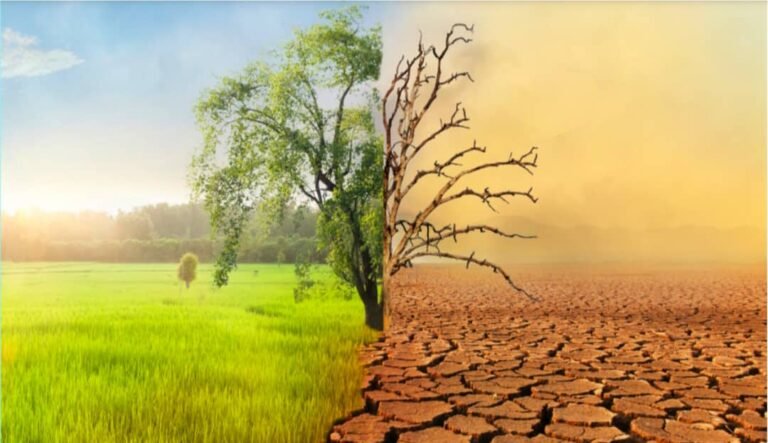
Genesis 2:15 explains that humans are put there in the garden to work and take care of it. This framing stresses on stewardship and not domination. These theological interpretations have been re-examined by scholars, policymakers, faith leaders over the years with the realization that previous readings could have led to in one way or other to environmental degradation. The question of the role of the belief systems in environmental behaviour is becoming more and more important as climate diplomacy develops. When religious teachings are viewed through a prism of responsibility and care, they can be a potent factor to achieve sustainable instead of a destructive relationship between humans and nature as shown in Fig.1.
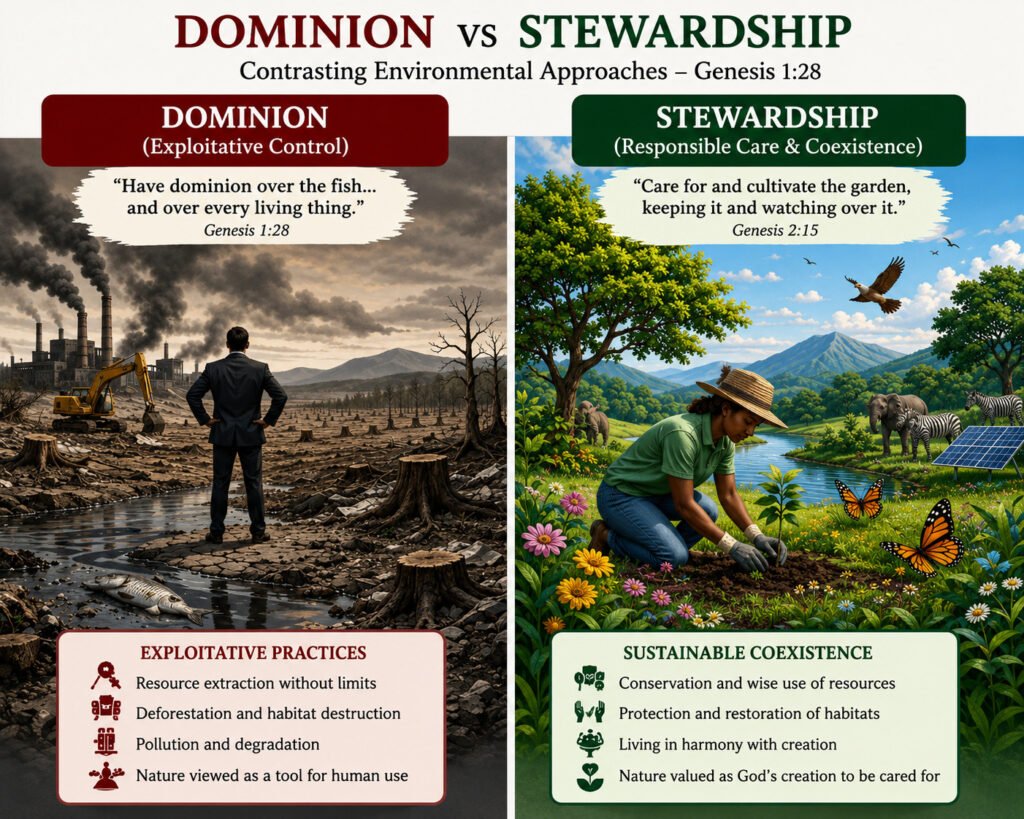
Fig. 1. Dominion vs stewardship contrast
A visual comparison between exploitative environmental practices and sustainable coexistence, reflecting competing interpretations of Genesis 1:28 and 2;15.
Fig.1 frames the central tension of this this dialogue: does dominion mean domination or responsibility?
Dominion as a Driver of Exploitation
The understanding of dominion as domination has been consistent with the extractive economic models especially after the industrial era. Nature was perceived more as an instrument of human consumption; forests were cleared, ecosystems turned into commodities and environmental boundaries were disregarded.
Environmental theologians claim that these interpretations have influenced Western views on nature since ages. An example is historian Lynn White Jr. who attributes the Judeo-Christian thinking to ecological exploitation (The Historical Roots of Our Ecologic Crisis: https://www.science.org/doi/10.1126/science.155.3767.1203). Although controversial, this view brings to the fore the larger issue of how belief systems shape behaviour. This worldview continues to exist today in the form of deforestation and overuse. through deforestation especially in the Amazon and the Congo Basin (see fig. 2).
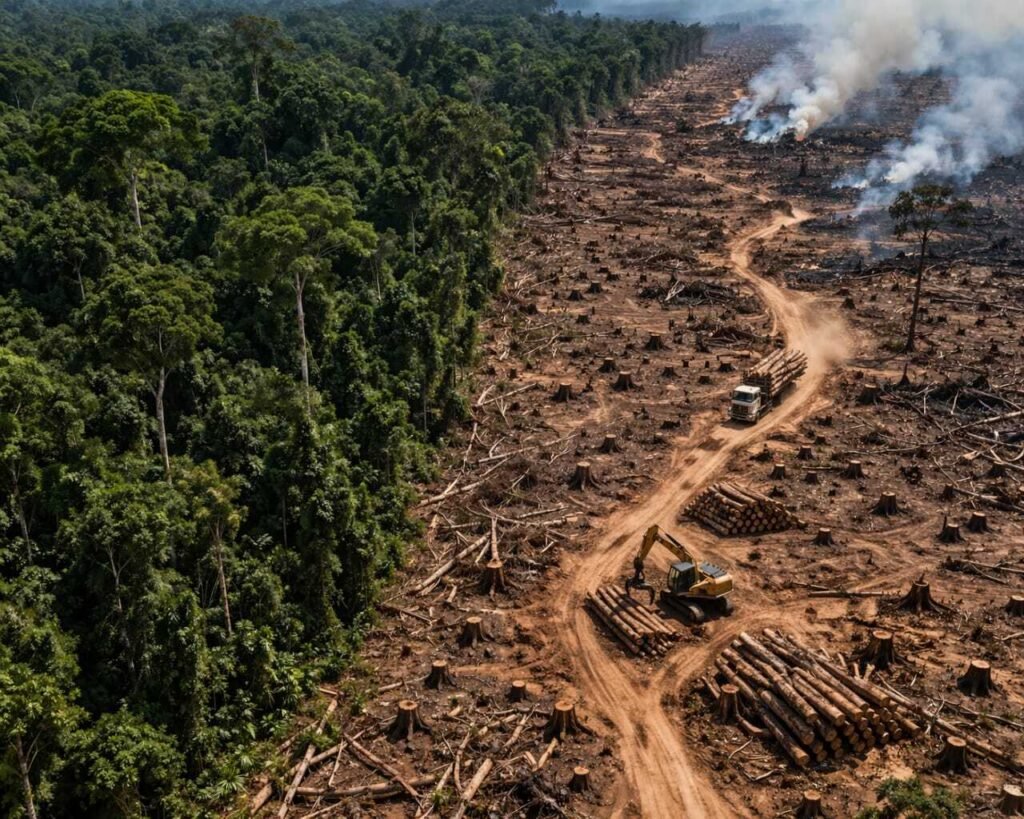
Fig. 2. Large-scale deforestation in tropical regions; provides the bases of the theological argument on material reality, indicating how the abstract beliefs can be transformed into the material ecological damage.
Religion as a Policy Community in Climate Action
In the Bible, Genesis 2:15 emphasized stewardship; the duty of man to nurture, conserve and preserve the Earth instead of to dominate it as use Genesis 1:28. Other religious beliefs share similar principles and tend to respect nature and be ethical towards the environment.
Religious actors make up an important policy community as far as policy is concerned. They are able to construct social norms, shape behavior and mobilize collective action as shown in fig. 3. Religious institutions tend to be trusted and have more authority than formal government structures in many regions of the Global South, and thus can be major agents of effective climate governance.
Faith-based agencies are already involved in the environmental activity. As an illustration, the Interfaith Rainforest Initiative (https://www.interfaithrainforest.org) and the World Council of Churches (https://www.oikoumene.org/what-we-do/climate-change) demonstrate how religious ethics and values can be converted into tangible climate action.
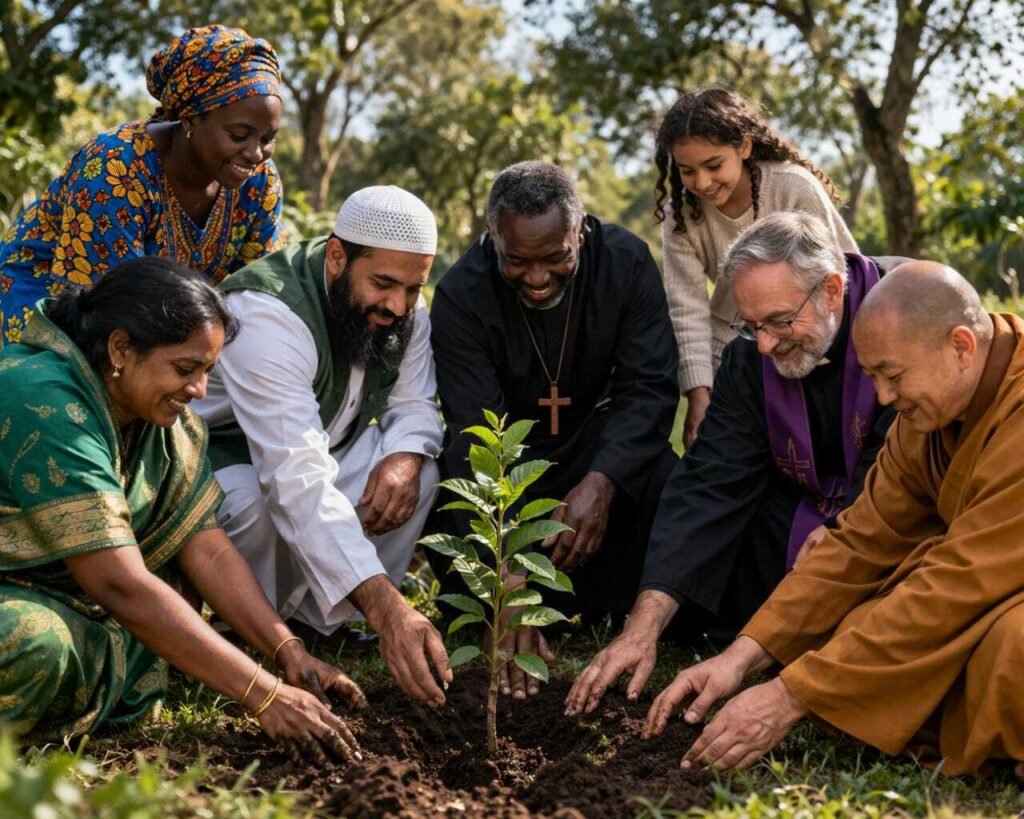
Fig. 3. Faith-based environmental action.; religious communities engaging in activities such as tree planting, illustrating stewardship in practice
These actors also help in closing the divide between the global climate structures and the local action. Treaties such as the Paris Agreement (https://unfccc.int/process-and-meetings/the-paris-agreement/the-paris-agreement/) rely on community level behavioural transformation; something faith networks can do quite effectively.
Reinterpreting Dominion: From Control to Stewardship
To this end, there is an increasingly large literature and religious activism redefining dominion as stewardship. This reading focuses on the responsibility, care and accountability to the natural world.
The Yale Forum on Religion and Ecology (https://fore.yale.edu) emphasizes the possibility of religious beliefs to promote environmental ethics that are founded upon respect toward creation. In a similar vein, in his encyclical Laudato Si, Pope Francis presents environmental protection as a moral and spiritual duty (https://www.vatican.va/content/francesco/en/encyclicals/documents/papa-francesco_20150524_enciclica-laudato-si.html).
This change is very much consistent with sustainability principles like the ecological balance and intergenerational responsibility. It questions the anthropocentric perception of human dominance, but rather places humanity as a component of a related system.
Implications for Climate Diplomacy
There are challenges and opportunities associated with integrating religious narratives into climate diplomacy. The wrong understanding of the holy scriptures may support the opposition to environmental policies, particularly when it is viewed as culturally unacceptable. Nevertheless, a reinterpretation of these stories can improve the acceptance of the policy and community involvement.
Climate justice can also be reinforced by enlisting the services of religious leaders. Numerous religions focus on equity, accountability, and concern about the vulnerable, which are the values that resonate with the climate justice objectives. In that regard, reinterpreting dominion turns out to be not only a theological undertaking but a diplomatic course as well.
Conclusion
A re-study and close analysis of Genesis 1:28 in the lenses of the Spirit will give a chance to move beyond exploitation and into stewardship. As shown in Figures 1-3, this change links belief, behaviour and policy. To policy-makers, the incorporation of religious views can improve legitimacy and effectiveness. Stewardship can make belief action in the case of faith communities.
The need to bridge the science-policy-faith gap is crucial in order to fight against environmental issues; climate change crisis especially.
Keywords: Dominion, Stewardship, Climate crisis, Environmental ethics, Climate governance





 Reston Dennis Juah
 Noor Ul Ain

 Hassan Barrie
 Hoby Nasandratra Andriamiandrisoa
+ There are no comments
Add yours