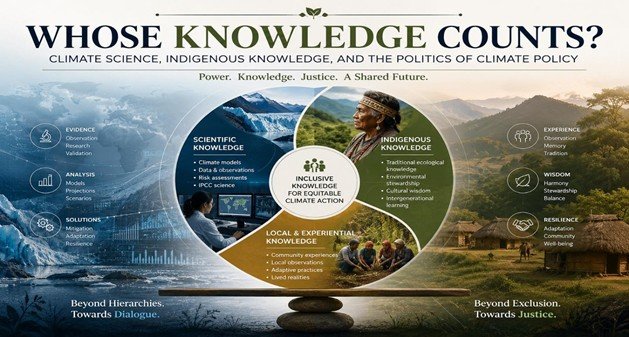

Climate change is often described as a scientific issue that must be addressed with scientific solutions. Scientific assessments, climate models, and expert knowledge are critical to informing decision-making processes for international climate negotiations, national adaptation plans, climate finance mechanisms, and public climate debates. The authority of climate science has been crucial in demonstrating the reality of anthropogenic climate change and mobilizing global action. However, one question that has not yet been adequately explored is whose knowledge matters in the processes of climate policy-making? This question is not simply about information; it is about power, authority, and justice (Conrad, 2009; Oomen, 2019).
The politics of whose knowledge counts in climate change is becoming increasingly important because climate governance today is no longer just technical but rather encompasses diverse perspectives on how to solve climate change. Climate policy is about competing values, interests, worldviews, and experiences that shape understanding of environmental change and how people respond to it in society. Although scientific knowledge is and will continue to be essential, indigenous, local, and experiential knowledge systems have been and continue to be underutilized in climate governance processes, even though they might be valuable for adaptation and resilience building (Born, 2019; Oomen, 2019). This blog contends that the nature of climate governance is a battle over whose knowledge is legitimate. The democratization of knowledge production and decision-making is thus essential for effective and equitable climate policy to encompass diverse perspectives on climate change.
Climate Science and the Authority of Knowledge
Today, scientific knowledge plays a very important role in climate governance. The IPCC and other institutions have authority based on systematic observation, peer review, and methods that are recognized by the scientific community. However, as (Oomen, 2019) notes, Climate science has been under attack for decades, conflicting with the scientific consensus on anthropogenic climate change, and continues to be the subject of resistance, skepticism, and political contestation. Yet scientific evidence continues to be the primary source of authority in defining climate issues and in determining policy options (Oomen, 2019).
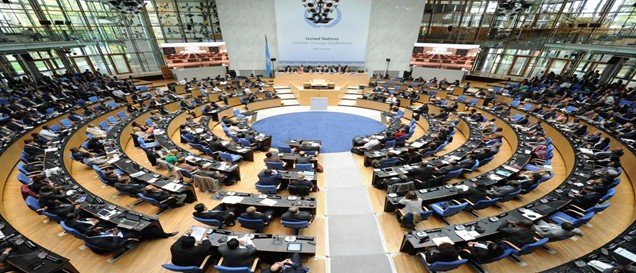
Climate science has become a key feature in the current landscape of expertise and is a manifestation of the increasing influence of expertise in governance. Scientific assessment informs climate negotiations, national climate strategies, climate adaptation plans, and decisions on climate finance. Climate research, climate discourse, and climate policy, however, have different social and political dynamics, as argued by (Oomen, 2019). Yet the dissemination of scientific information does not necessarily lead to political action because the process of making policies is shaped by institutions, power dynamics, competing interests, and societal values (Conrad, 2009).
This observation contradicts the notion that the more scientific evidence, the better the climate policy. While there is a consensus amongst scientists on the threats of climate change, the positions of the governments on responsibilities for mitigation, priorities for adaptation, and commitments of climate finance are still divided. These disagreements have persisted, indicating that the debate over climate politics is not just a discussion of scientific facts but rather a political struggle over how they are interpreted and used in the political systems (Conrad, 2009; Oomen, 2019).
Indigenous Knowledge and Alternative Ways of Knowing
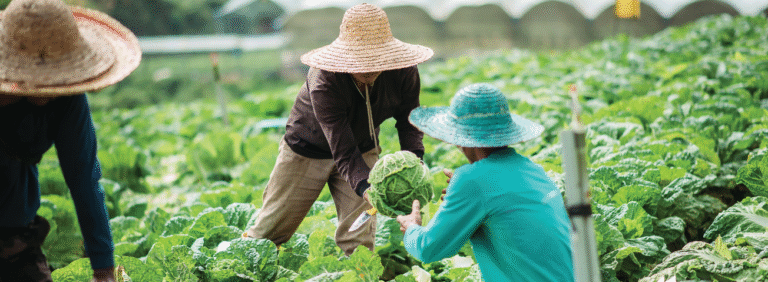
Indigenous and local knowledge systems are frequently overshadowed by the prominence of scientific knowledge. In the African continent, Asia, Latin America, and the Pacific, communities have a thorough understanding of the environmental variations over the years through observation and interaction with the environment in which they live. These knowledge systems include weather forecasting, water management, agriculture, biodiversity conservation, and disaster preparation, and offer local solutions to the impacts of climate change, which are often not captured by scientific assessments (Oomen, 2019).
Importantly, indigenous knowledge must not be seen as a weak substitute for science. Instead, it is a unique type of knowledge that is shaped by a lived experience, culture, and a long-term, close relationship with a particular ecosystem. (Oomen, 2019) argues that scientific knowledge has often been assumed to be the objective standard of truth, thereby diminishing the experiences of communities that have been close to their environments. Therefore, local views are often included in climate governance once they have been approved using a scientific or translated method, which further institutionalizes a hierarchy of knowledge (Oomen, 2019).
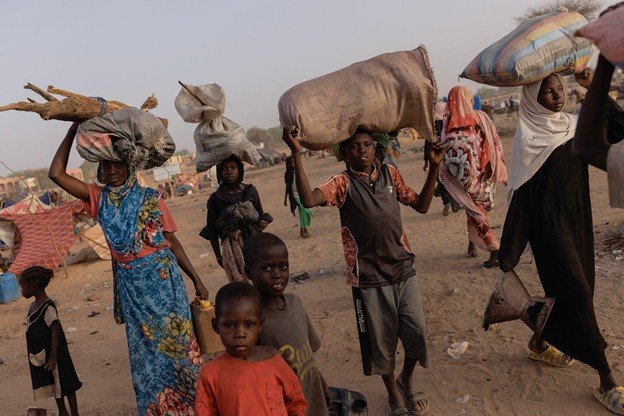
This is especially relevant in the Global South, where communities most vulnerable to climate change have more experience in terms of adaptation and climate resilience, yet still their inputs are not widely considered. Adaptive practices are developed by pastoralist communities in the Sahel, forest communities in the Amazon, and coastal communities in small island states based on centuries of environmental experiences. However, these views are often overshadowed by the technical knowledge produced by expert bodies and consultants from outside.
Climate Governance, Colonial Legacies, and Knowledge Hierarchies
The marginalization of indigenous knowledge can only be understood from the perspective of the historical roots of modern environmental governance. Climate governance institutions were developed in more encompassing frameworks reflecting colonialism, industrialization, and Western scientific rationality. As a result, some types of knowledge have been privileged, whereas other types have been disregarded or overlooked (Born, 2019).
In line with Critical Theory, (Born, 2019) states that there is no way to isolate science from the political and economic environments in which it exists. Science is situated in a much wider complexity of power and knowledge production that shapes what is understood as legitimate science and who gets to speak in decision-making processes. Even as a scientific field, climate science is not without its biases, but instead is “embedded in institutional contexts that have been historically formed by inequalities and are currently dominated by political-economy systems.” (Born, 2019).
This observation echoes in (Ghosh, 2021) claim in The Nutmeg’s Curse. According to Ghosh, the colonial ways of thinking reduced nature to the object of control, exploitation, and commodification. This worldview contributed not only to environmental degradation but also to the marginalization of alternative ways of understanding human–nature relationships. Most of the current climate governance practices still echo this legacy as local communities are seen as consumers of external governance designs, not providers of valuable climate knowledge.
For countries in the Global South, these dynamics have important implications. In the development of adaptation strategies, vulnerability assessments are often produced externally, technical models are developed, and indicators are standardized. These tools can be useful, but do not necessarily capture local perspectives on vulnerability, resilience, and environmental change. Therefore, climate governance can inadvertently reinforce inequalities in representation and knowledge even in the name of tackling climate inequalities.
Beyond Facts: Climate Communication and Human Behavior.
The politics of climate knowledge goes beyond policy-making for climate communication. A major lesson from the recent climate communication studies is that scientific information alone does not necessarily change behavior. (Fearns, 2019) affirms that contemporary climate communication often assumes that facts will “automatically” inspire action. But there is evidence that knowledge is not enough, as human behaviour is influenced by emotions, experiences, social norms, and perceptions of relevance (Fearns, 2019).
Similarly, (Armstrong et al., 2018) demonstrate that attitudes toward climate change do not necessarily translate into climate action. Although awareness and concern are critical, structural barriers, social norms, political identities, and notions of collective efficacy affect behavioral responses. However, in many situations, attitudes are not as strong determinants of behavior as one might think (Armstrong et al., 2018).
These findings refute the idea that climate governance should give preference to science over other communication and engagement approaches. The immersive experiences, stories, and experiential approaches to communication can make climate change more real and personal than science can present (Fearns, 2019). This approach recognizes that knowledge is not only gained in a rational way but also through experiences and is emotionally and culturally meaningful (Fearns, 2019).
Climate Finance and the Politics of Expertise
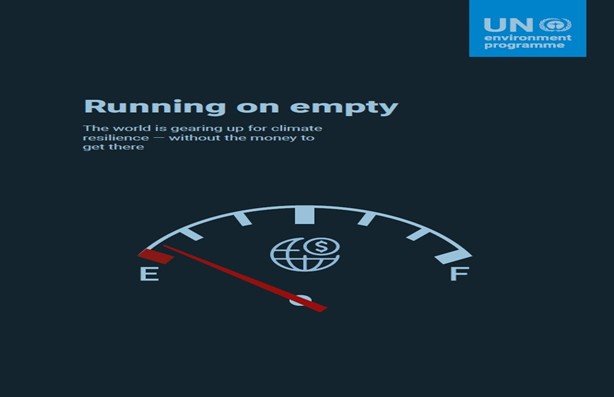
The issue of who holds the knowledge is more apparent in climate finance. The process of accessing institutional resources, like the Green Climate Fund, Adaptation Fund, and multilateral development banks, often involves long and complex technical processes, vulnerability assessments, cost-benefit analyses, and monitoring frameworks. These procedures are primarily based on science and economic approaches that have been developed in international organizations.
While these conditions are designed to hold people to account and ensure effectiveness, they can also be detrimental to communities and countries lacking the technical capacity. The knowledge of climate vulnerabilities and priorities for adaptation at the local level is less institutionalized than the knowledge produced by consultants and external specialists. This leads to a paradox in many developing countries: communities have knowledge about climate risks, but in many cases have limited influence on climate-financed projects’ design and implementation (Conrad, 2009) (Oomen, 2019).
For climate-vulnerable countries such as The Gambia, this issue is particularly important. The potential for adaptation depends largely on local knowledge of agricultural systems, water resources, livelihoods, and environmental change. If these types of knowledge are not included in climate finance mechanisms, they risk delivering interventions that are technically sound but socially disconnected from local realities.
Rethinking Knowledge in Climate Governance
One central debate that has emerged from the literature is whether science should be decentered in climate governance. The complete rejection of scientific authority could lead to relativism and result in the loss of society’s ability to distinguish between credible evidence and misinformation, as argued by (Oomen, 2019). Scientific knowledge is a key reference for collective action in a world where climate denialism and conspiracy theories are undermining public understanding (Oomen, 2019).
(Born, 2019) reminds us, however, that science needs to be examined critically, since it is part of a system of power and knowledge production. The view of scientific authority should not be taken at face value, especially if it excludes the voices of marginalized, usually local, knowledge (Born, 2019).
The solution, therefore, lies neither in scientific dominance nor in scientific rejection. Instead, knowledge pluralism is needed for climate governance. Scientific knowledge, indigenous knowledge, local experience, and social scientific knowledge are all relevant in the fight for climate mitigation and adaptation. Effective climate policy should establish institutional opportunities for these types of knowledge to engage in dialogue and participate in decision-making processes.
Conclusion
Who has the knowledge is ultimately a matter of power. Climate governance is not just about creating better scientific information; it’s about deciding on who will have the power to define the problem, to shape the solutions, and to influence the decisions. Although climate science is essential for understanding environmental change, the exclusive focus on science can leave behind other important knowledge systems, such as indigenous, local, and experiential, which are also vital for climate resilience and adaptation (Oomen, 2019). This is especially important for the Global South, where local knowledge is abundant but not adequately exploited, while the impacts of climate change are likely to be most significant. In order to achieve better climate governance, it is necessary to shift from a narrow idea of relying on what only experts say to comprehensively taking all forms of knowledge into account.
Keywords: Climate Governance, Knowledge Pluralism, Indigenous Knowledge, Climate Science, Climate Justice



 Reston Dennis Juah
 Noor Ul Ain
 Hassan Barrie
 Hoby Nasandratra Andriamiandrisoa
+ There are no comments
Add yours