
What if the “perfect” climate policies from wealthy nations are actually a trap-setting the Global South up for catastrophic failure?
A new perspective that emerges is that idea that most of the cities in Global South (such as Jakarta) always face challenges in urban governance and climate action. It requires approach that goes beyond the framework centered like in the Global North. For example, newest study about Karawang’s (Indonesia) transformation which is driven by private sector investment and transportation infrastructure related to Jakarta’s expansion, in contrast to structured and policy-based growth in Bekasi, Tangerang, and Bogor. This shows that the trajectory of urban development in the Global South can be highly dependent on market strength of the city and the lack of comprehensive government planning. Another case, Jakarta as a “city of cities,” continues to transform through the daily actions of its citizens, which becomes an important change agent. If we see this “from below” perspective, it highlights the role of grassroots capacity and community initiative in shaping cities, which may be underemphasized in case studies of cities in the Global North. The next question that arises is whether the city like Jakarta, can be made as the Global North city like Netherlands?
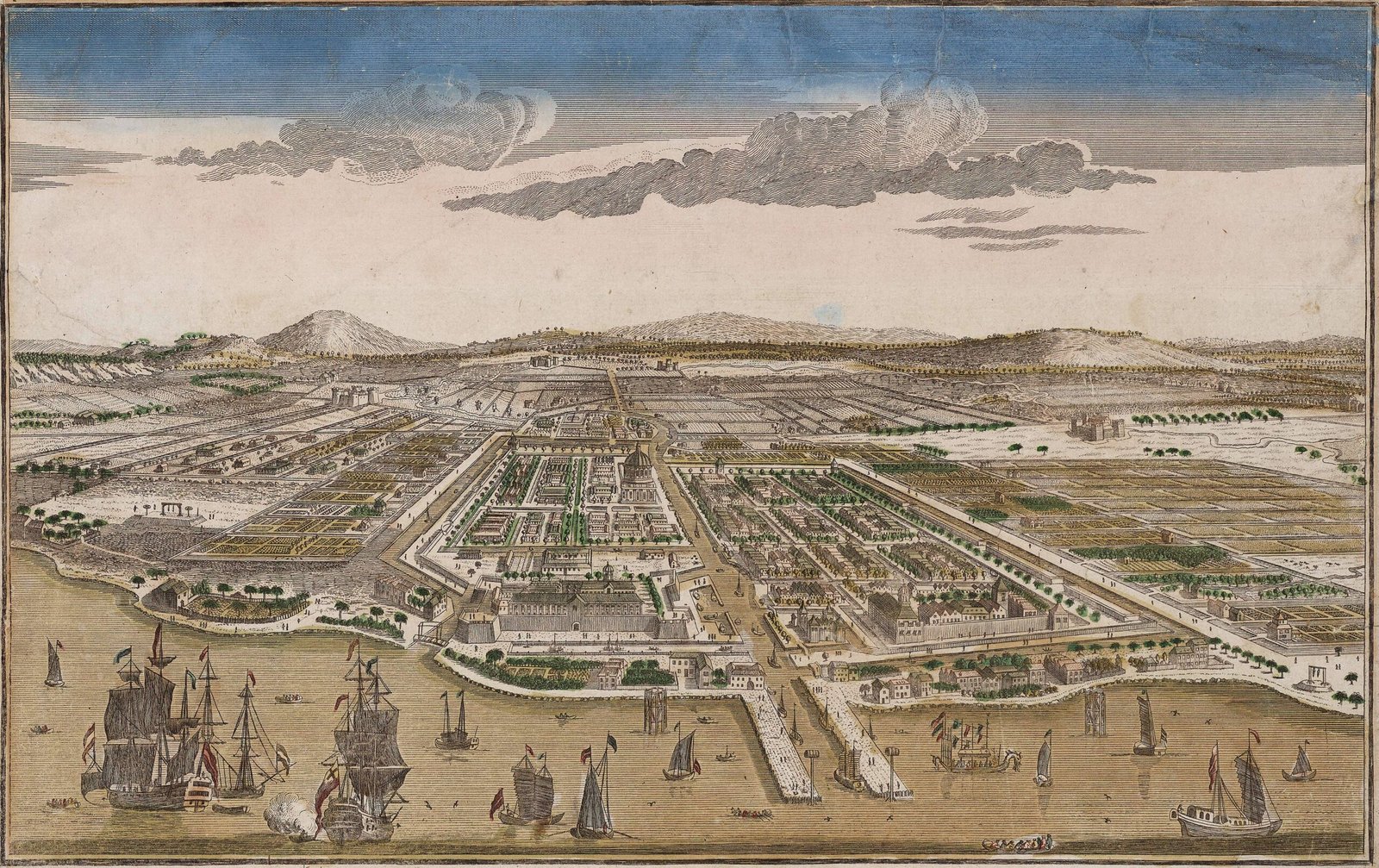
In the early stages of my thinking, I assumed that Indonesia which was once colonized by the Dutch, had a very strong influence in shaping the city. Colonialism is not only about political and economic colonization. It is also about how space is formed, organized, and used. Since 1619, ethnic groups of Batavia in the city had been maintained into the Dutch and non-Dutch residents, certain zones also been defined. We could see how Batavia was built with spatial segregation until today, making the Dutch lived in the center of city and the natives (pribumi) lived on the outskirts near swamps and villages. Historically, this is what has fueled the growth of informality in Jakarta. And it leads me to think that history was the main source of a city’s problems. Idealizing colonial legacies can create identity problems like in Jakarta where the city complicates this assumption.
In my perspective, for many in the Global South, colonial urbanism is not a model to aspire to but a system of inequality to dismantle. Many societies (especially in the Global South) see colonial urbanism as a symbol of oppression, not progress. So, today’s urban approaches should be reflective and contextual, not simply restorative or nostalgic. Well, Jakarta shows that history does leave its mark, but it is our present and future that determine the direction. Blaming the past alone will not save us from problems like floods, pollution, or inequality. We must dare to see the present as a political space, not just a legacy.
Another question, if colonialism can be considered as a factor, why is urban climate governance in the Global South still limited to the provincial and national levels? Resonating to the idea that “urban climate governance in Global South cities remains an underexplored area”. A study shows that the factor is because of the knowledge mismatch between the climate initiative and actions. This is where historical structures collide with present-day realities. Although some institutional frameworks have been inherited from colonial rule, many post-colonial states failed to democratize or deconstruct the centralized, hierarchical governance models they inherited. In climate governance, this results in top-heavy policies that lack community ownership or adaptability to local contexts.
Moreover, there are existing mismatch between climate knowledge and action. Many climate initiatives in the Global South are not resonating with citizen’s everyday-reality, it is was more driven by international agendas and expert-driven narratives. Local governments still facing lacks of technical capacity, political autonomy, or financial resources to translate global goals into local actions. Meanwhile, grassroots actors are often excluded or instrumentalized, their contributions framed as “participation” without meaningful decision-making power. In some cases, climate action is prioritized only when it aligns with elite interests or international funding. Making it stays in status quo, reinforcing exclusion rather than equity.
A study found the use of climate knowledge in urban planning perspective in Global North considered as marginal in planning processes. Which means city planners are interested in climate aspects, but the use of climate information is not systematic. Interestingly, while countries in the Global North are often considered to be more advanced on climate change issues, their approach to climate action is often still global and technocratic. The study in Sweden show that the use of climate knowledge in urban planning is still very limited. Despite awareness of the importance of climate, urban planners are often not confident in their own knowledge, and many decisions are still driven by economic or political interests. This indicates that even in contexts considered “ideal,” climate is not a top priority. Especially when it comes to the needs and voices of local communities. Many climate policies are formulated from a macro perspective, focusing on national or global emission targets, but paying little attention to how they impact small communities, microenvironments, or everyday practices. In the context of the Global South, this approach is even more problematic. In addition to capacity challenges, cities in the Global South also have a very complex social diversity and local needs that cannot be addressed with generic solutions from the Global North. Therefore, a climate governance approach that only imitates the models of developed countries, without strengthening local movements or knowledge from below, actually risks creating policies that are irrelevant and difficult to implement.
Moreover, in the Global South, additional constraints such as political instability and entrenched inequalities further reduce the space for climate-informed decision-making. From the Global North experience, therefore we can conclude more contrast catastrophes. Climate governance is not merely a technical issue, but one that requires deep structural, institutional, and cultural shifts. At the end, this also signals that adapting best practices from the North without acknowledging these underlying systemic and historical differences may produce unsustainable outcomes.
Keywords: Urban climate governance, colonialism






 Reston Dennis Juah
 Noor Ul Ain
 Hassan Barrie
 Hoby Nasandratra Andriamiandrisoa
+ There are no comments
Add yours