
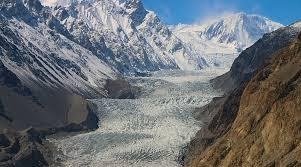
The Gilgit-Baltistan area in northern Pakistan is home to one of the world’s largest glacier inventories outside of polar regions. These glaciers are the main source of water for the Indus River system that provides water to millions of people downstream. The region contains over seven thousand glaciers, and with the rise in temperature and changing weather patterns, these glaciers are now under unprecedented threat. The situation has turned extreme, and the National Disaster Management Authority (NDMA) has issued a formal Glacial Lake Outburst Flood (GLOF) alert for Gilgit-Baltistan (GB) and Khyber Pakhtunkhwa (KP) in July 2025 following a significant surge in temperature in northern regions of Pakistan. The snow melt and glacier melt during these persistently high temperatures has heightened the potential for sudden glacial lake outburst floods (GLOFs) in vulnerable valleys and surrounding regions. These floods threaten about two and a half million people who reside in the region, and billions of dollars of economic infrastructure and agricultural resources downstream. The connection between these distant glaciers and the livelihoods of people across Pakistan makes this a national security issue rather than just a regional concern. If water sources are under threat, food security is under threat, and when food security is under threat, stability is under threat. This is the reason, Gilgit-Baltistan should not be considered as a remote and insignificant part of the country.
In September 2025, Pakistan submitted its Nationally Determined Contribution 3.0, which included northern hazard monitoring as part of the country’s adaptation strategy. The NDC 3.0 also pledges to cut greenhouse gas emissions by 50% by 2035, with the target being shared between domestic and international measures. However, the estimated financial gap to meet these targets is approximately five hundred and sixty-five billion dollars by 2035, which reflects the need for global support to countries like Pakistan, which are attempting to take action to combat climate change. In spite of these commitments at national level, Gilgit-Baltistan is still not in the policy discourse. There is no adequate support from the federal government on the Draft Environment Policy of the region and no guideline to ensure people are aware of the risks they are exposed to from glacial hazards. This is not a minor oversight but a fundamental gap in how the country approaches climate resilience. Without awareness of the risks people are at, they cannot protect themselves, and that is what is happening in Gilgit-Baltistan today.
The constitutional status of Gilgit-Baltistan poses significant challenges for effective climate action. The area is not a full province nor a union territory which makes it unable to access its due allocation of resources via the National Finance Commission Award. The cost of the glacial lake outburst floods could be up to 2-3% of the local economy annually, while the cost of literacy in the region is less than 1% of the local economy. This mismatch of invested and at risk is a policy prioritization failure. The state should grant Gilgit-Baltistan its due constitutional rights which is the demand of the people of this region, and the demand for constitutional reform is also vital for unlocking the resources required for climate resilience. If Gilgit-Baltistan doesn’t have a constitutional status, its people will continue to be treated as second class citizens and their safety will continue to be disregarded. Academic studies have well documented the governance issues in Gilgit-Baltistan. Fatima et al. (2025) conducted a detailed study on how effective national climate policy is at helping countries implement it locally, which they determined was not effective and faced logistical, financial, and institutional barriers. The study pointed out that there is a huge lack of cooperation between various disciplines in Pakistan’s climate research and Gilgit-Baltistan is generally excluded in national research. This oversight is exacerbated by the poor implementation of policies in remote areas and underscores the necessity of improved collaboration amongst government departments and funding mechanisms. The study also identified that young people and religious leaders need to be more aware of the issue in the public, and for that, it is necessary to have educational initiatives combined with concrete climate action steps. Many observers have suspected this, now confirmed. The policies are in place, however, they are not available for those who need them the most.
The human impact of this neglect is increasingly apparent to anyone going to the region. Today the glaciers are disappearing and have been shrinking at an alarming rate with the intense heatwaves. During the 2025 heatwave, the water level at the Attabad Lake rose by 12 metres, displacing almost 1,000 residents from their homes following the formation of the lake by a massive landslide in 2010. These are not abstract statistics but real events that affect real families and communities. With the floods of 2022 and 2025, it is clear that the rivers that support 90% of Pakistanis are fed by the melting glaciers, but the response from the federal government has been totally inadequate. The policy-making entities that influence climate policy making are far removed from the floodplains of Sindh and the heatwaves of Punjab and this disconnect poses a critical risk between policy and reality. This is one of the primary reasons there has been little progress.
At the community level, there have been some positive efforts, revealing what can be achieved with the right support. The Muslim Ismaili community in Hunza has mobilized about 15,000 people in the region to drain the lake and implement satellite monitoring applications. The Aga Khan Foundation has applied virtual reality simulations of how a flood in 2030 might appear, which have helped to raise people’s awareness of their exposure in the pilot valleys. The Ministry of Climate Change has allocated 1.2 billion Pakistani rupees for the early warning systems, which are expected to be supported by SUPARCO satellites, but the procurement of equipment has been delayed, resulting in a 40 percent expenditure on the project so far. As the examples demonstrate, the technical solutions are available and communities are ready to take action. The lack of political will and administrative capacity to deliver these solutions at scale is what is missing. Tools are provided, but not used effectively.
The root of the problem lies in what can be called a failure to value local knowledge. It is the knowledge of local communities in Gilgit-Baltistan, who have been studying the mountains and glaciers for generations but are not respected by the federal policymakers. In the 2025 survey in Hunza, a minority of the youth population were aware of the timing of glacier retreat, which was associated with much greater rates of non-compliance with evacuation advice in mock disaster scenarios. According to Peace Foundation’s assessment 2026, the overall adult literacy rate in the region is around 68% and the specific knowledge about climate risks is rather low at 22%. This lack of knowledge is not only an educational issue, but a life and death one if a GLOF strikes. When people don’t know the warning signals, they’ll not move out of the way on time, and they will be dead.
Another issue of concern is the allocation of funds based on an inclination towards the southern part of the country. The Federal Government established a fund of five hundred million rupees for GLOF, but instead of providing this fund to glacier affected areas, it has been sent to Khyber Pakhtunkhwa province. This is a wider trend of giving preference to the upstream communities which are immediate victims of climate change over the irrigation requirements in the Indus Basin. This is an unfair bias indeed, and it is also a vicious circle of neglect as the most climate change–vulnerable communities are the least supported. The people of Gilgit-Baltistan are safeguarding the water sources for the whole country, and they are being abandoned when they need them the most.
A paradigm shift is needed in Pakistan’s approach towards climate resilience in northern peripheries. The first and most important step is to pass the Gilgit-Baltistan Climate Literacy Act, which has been proposed for 2026. A considerable part of the NDC adaptation funds would be dedicated to education and awareness programmes and those programmes would be developed in collaboration with glaciologists to ensure scientific correctness. The target should be 90% literacy coverage by 2028, which might be achieved by rolling out the successful Hunza type hubs at other locations throughout the region. The ROI of such programmes would be immense because the money invested in a climate literacy programme would save many rupees in loss avoidance from glacial lake outburst floods. It’s not simply a question of spending money, it’s a question of spending money correctly.
The second step involves developing agreements between federal and provincial governments to provide SUPARCO satellite data regularly to the schools and community organisations. This strategy has proven effective in Nepal, where water knowledge-sharing agreements have been able to educate and assist communities to prepare for climate risks. The third step is to create an example of climate resilience for the world at large in the region of Gilgit-Baltistan. The area may be promoted at COP31 as a model for adaptation of vulnerable communities to a changing climate, which could draw 200 million dollars from the Adaptation Fund for the digital twin technology and virtual reality training programs. They are not optional; they’re needed to create the climate knowledge that could save lives. The country can’t wait for ideal solutions; something must be done with what is available.
The absence of climate knowledge in Gilgit-Baltistan is a warning sign for the whole country. The floods will not wait until policy documents are written, and the people of northern Pakistan cannot wait for federal bureaucracies to overcome their slowness. It remains to be seen during the 2026 session of the provincial assembly if the Environment Policy will be approved with concrete demands for climate education. However, if not, then another chapter will be added to the long history of neglect. Centuries of life in this area have been dependent on the glaciers, which are receding, along with the security and stability of the communities that rely on them. Allowing the north of Pakistan to wait is unacceptable; so too is a wait on the conscience of this nation.
Keywords: Climate Literacy, Adaptation, Disaster management, GLOFs, Pakistan, Gilgit-Baltistan, Glaciers
References
Fatima, F., Ali, S., Raza, H., Siddiqi, F. A., & Ali, S. (2025). Empowering climate action through policy analysis and education in Gilgit-Baltistan: A comprehensive mixed method analysis. Frontiers in Climate, 7. https://doi.org/10.3389/fclim.2025.1527694
Government of Pakistan. (2025). Pakistan NDC 3.0. Ministry of Climate Change. https://faolex.fao.org/docs/pdf/pak240004.pdf
Government of Pakistan. (2025). Newsletter November–December 2025. Ministry of Climate Change. https://www.mocc.gov.pk/SiteImage/Misc/files/Newsletter%20nov-dec%202025.pdf
Human Rights Commission of Pakistan. (2024, November 17). HRCP general body calls for consensus on civilian autonomy, climate justice and land rights. https://hrcp-web.org/hrcpweb/hrcp-general-body-calls-for-consensus-on-civilian-autonomy-climate-justice-and-land-rights/
National Disaster Management Authority. (2025, July 4). GLOF alert: GB & KP [Press release]. https://pid.gov.pk/site/press_detail/29590
Shahi, M. (2025, December 15). Survival strategy. Dawn. https://www.dawn.com/news/print/1961184
Shahi, M. (2025, December 25). Climate funds overdue. Pakistan Today. https://www.pakistantoday.com.pk/2025/12/25/climate-funds-overdue

 Reston Dennis Juah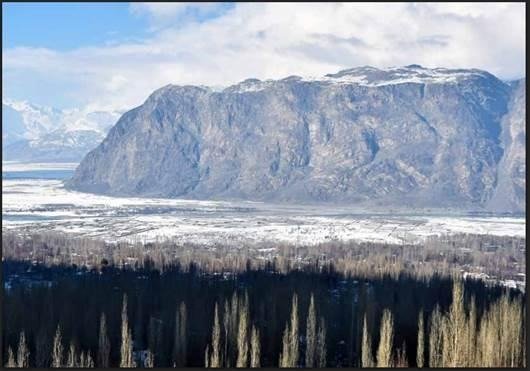
 Noor Ul Ain
 Hassan Barrie
 Hoby Nasandratra Andriamiandrisoa
Finally found a site that doesn’t lag during big wins. The payouts are fair and the support team is quite helpful. Check out brlwinbr if you want a stable experience.