
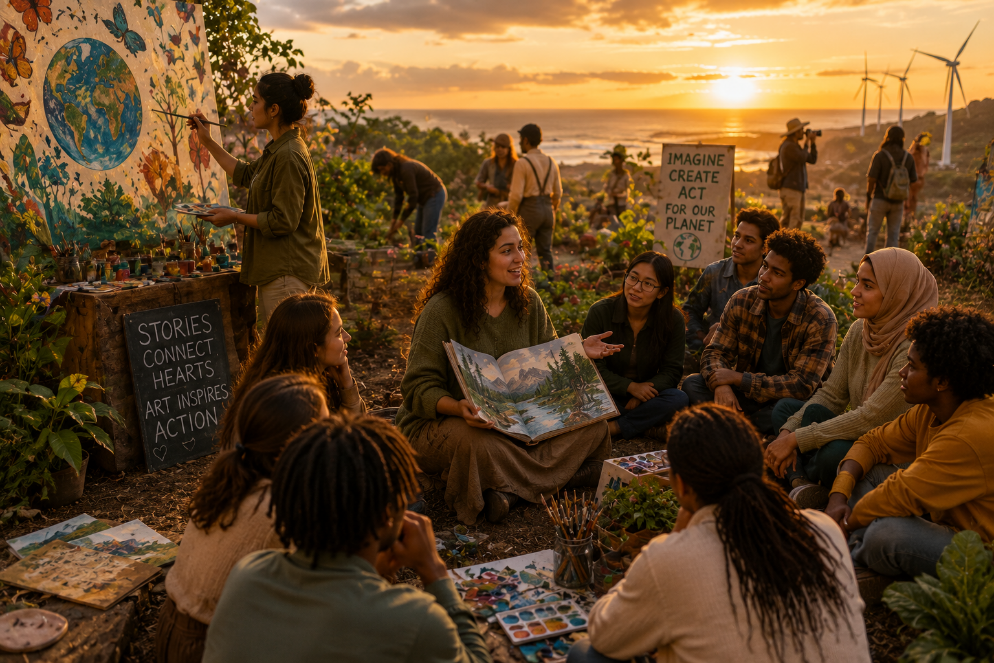
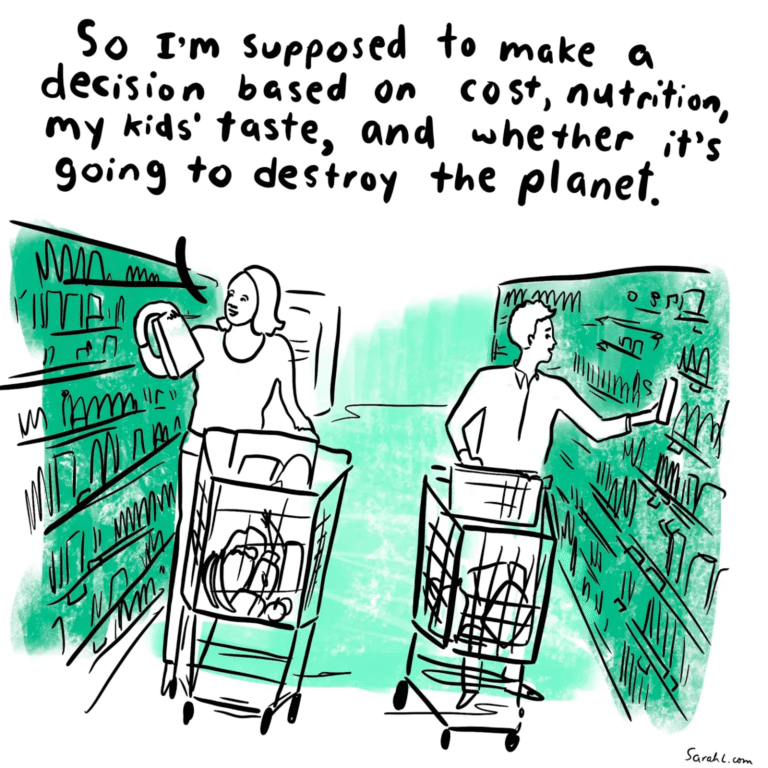
Over the past few years, there has been a slow, but significant, transformation in the conversation around climate change. For a long time, the prevailing discourse was based on the dissemination of facts and data, and it was assumed that if people could better understand the problem, they would naturally take action. Yet, despite overwhelming evidence and increasingly dire warnings, many people find themselves stuck. They feel overwhelmed, anxious, and powerless in the face of such a huge crisis. There is a name for this feeling, and it is called “Eco-paralysis.” It is a condition marked by profound feelings of powerlessness, helplessness, and inaction when people are confronted with the enormity of climate threats. The constant stream of catastrophic news often makes this feeling worse, and it reinforces a sense that nothing we do can make a difference. It is here that we have to stop and ask a hard question. Why do we keep engaging in the same strategy if it isn’t working such as more facts and more alarming news? The reason is that climate change is not just a scientific issue, it is also a human issue which needs human solutions.
The issue isn’t that the science is murky or that people aren’t concerned about the future of the world. The true issue is that the human brain is not designed to take in abstract long-term risks such as climate change. Even facts and figures which are necessary to understand the issue do not necessarily have the impact to move us on a deeper emotional level. According to a scholar, statistics do not bleed, and this simple observation captures a fundamental truth about human nature. Take a moment to consider your own life. When was the last time that a statistic influenced your behaviour? It is well known that smoking is harmful; still some people continue to smoke. Exercise is a well-known health benefit and we all know we should be getting plenty of it, but we don’t. This “knowing-doing” gap is a very human behavior, and it is just as true when it comes to climate change as it is to personal health. That’s what we need: to make the invisible visible, and to find ways to make complex data relevant through a narrative that resonates and evokes. This is where the arts and storytelling come in. They provide a way out of eco-paralysis and they help us get out of a fear and stagnant state to a place of connection, hope and meaningful action.
Storytelling has the power to make abstract concepts real and personal to all of us. The urgency of a film on the rise of sea levels or a novel set in a climate-changed world can be more impactful than a scientific report. Stories enable us to think about other futures and these futures are not just possible but experienced, lived, felt and understood. This is essential as people’ perception of the climate crisis is a key determinant of their reaction to it and this perception is more likely to be formed from narratives than facts. A scientific report about ocean acidification is true, but a story about a fishing community is doing everything to survive makes it real and elicits empathy from the reader. This is why there is a need for increased investment in creative ways of communicating climate change. We invest billions in science and technology solutions, and virtually nothing in assisting people to deal with the emotional burden of the crisis. If we are to witness any meaningful development, this imbalance needs to be addressed.
That is why there is significant importance of the humanities in the battle against climate change. It is because the humanities are needed to engage broad public audiences, and that is part of the solution to environmental issues, that scholars advocate for seeing the humanities working alongside the science. The arts have a power to resonate with people who may not be touched by facts and figures. The humanities make climate change feel human, and tangible and emotionally real for ordinary people through historical photographs, museum collections, public art and powerful. It is not a denial of science, or a denial of science’s value. Rather, it’s a matter of making science ‘actionable’ and the arts are well placed to do the task. I think we are just trying to treat the signs of the climate problem with technologies, and not the actual problem of inaction: a crisis of imagination and connection. The arts have a direct solution to the root cause.
A very effective model for this is referred to as the 2CG method. This approach combines storytelling, climate fiction, poetry and the arts for a holistic and action-oriented approach to climate education. The objective of this framework is to transform learners; it takes them from a passive recipient of information to an active agent in creating a better future. The approach fosters critical reflection, disrupts existing patterns, and promotes emotional and ethical engagement, which are crucial for sustainable environmental behavior. The approach is also a way of opening up space for the voices of others and other voices, non-human voices, such as trees or rivers. This contributes to shifting away from anthropocentrism and fosters the vision of a just and livable future for everyone. I think this is a really strong approach because it doesn’t dictate people’s thinking. It is rather the opportunity to find a personal bond to nature and to nature’s preservation. That’s much better than just preaching to folks about the threat of climate change.
A university course on the Blue Humanities saw real change among its students, with its implementation. The course was designed to blend scientific knowledge about climate change with literature, storytelling, and ethical dimensions, motivating students to take positive action in their everyday lives. They started turning off unnecessary lights to reduce energy consumption and they also started to reduce the use of printed materials as well due to the environmental impact of paper production. It may sound like little things but it is a big change in thinking. It was not only about the facts of the climate crisis; it was about the values of sustainability in their daily lives. Here is climate education in action. It planted a seed that grows over time and knowledge and action spread out to families and communities. I would say that these little actions are really more important than we thought, because it is a significant change in the way that people think about themselves and the planet. With sustainable choices, we are not only saving energy or waste. Through us, they are making a statement of our values and our desire for a better future.
A team effort by a climate scientist and a performance artist in India is another inspiring example. They created a course, Theatre of the Climate, with the full title, Performing a Just Future. The course integrated earth science and systems thinking concepts with theatre, dance and storytelling in novel and profound ways. The objective was to go beyond data sharing and to engage the entire student in terms of mind, body, feelings, and moral sense. One of the pivotal moments was during a field visit to a fishing community where students were able to hear the stories of the people who are on the frontlines of climate change. This meeting in reality altered their concept of knowledge, and they saw that the fisher’s knowledge was not just stories but a form of lived and handed-down science. The course concluded with an intense performance piece titled When the Sea Changes, Who Decides and the performance allowed the audience to be both active and involved in the scenes of environmental loss and injustice. This transformed the understanding into actions. I am impressed with this particular instance because it is an example in which the distinction between expert and non-expert is not typically present. It acknowledges that communities on the frontlines of climate change possess knowledge as significant as scientific information and that it is a vehicle through which to share those learnings, using the arts.
As is emphasized in these examples, an important lesson about climate communication is that facts alone will not achieve lasting change. Science provides the what and the how of the climate crisis, but it is art, stories and feeling that provides the why. Stories provide us with the cultural context needed to navigate the intricate realities and this context is vital for the challenges that lie ahead. These assist us to navigate through difficult emotions such as sadness or anxiety and foster resilience instead of despair. They develop what is called “critical hope” which is a vision with the future in mind that is aware of the difficulties we are encountering but that also believes in our capacity to overcome them. We are not only learning about the climate crisis thinking, by participating in the arts. We are adjusting to it, we are embracing it, and we are creatively and boldly imagining our way through it. This is the work that I think is most important to do at this time, because it gets at what is preventing people from taking action, the emotional and mental blocks.
Finally, climate literacy is not about just science of climate change. It is about the capacity to ask good questions, engage in meaningful conversations and make decisions about what makes sense in our own lives and communities. Some of the best ways to develop this literacy are the arts and storytelling, and we can all access these, regardless of our backgrounds or schooling. They transform concern to understanding, and they transform understanding to action. The humanities are not simply assisting science in a minor way in a world experiencing eco-paralysis. They could be one of those reasons why the science is relevant enough to take action, and it is a truth that we need to hold on to, if we are to achieve a sustainable future for all. I think there is a story behind each individual and their role in this escalating problem. Arts provide us with the words to tell those stories, and they remind us that we are not alone in our fear or our hope. This is why storytelling and the arts is not only nice add-on to the climate communication. They are vital instruments for the process of recovery from the paralysis that cripples us, and instruments for the shared courage we must have to face the future together
Keywords: Climate Communication, Climate Literacy, Eco-Paralysis, Storytelling, Arts and Climate, Climate Actions
References
Ganesh, S., & Dhara, C. (2026). When the sea changes, who decides? Performing climate knowledge beyond data. EGU General Assembly 2026. https://doi.org/10.5194/egusphere-egu26-4994
Merl, C. (2025). Advancing climate literacy through storytelling, Cli-Fi, and input from the arts: A 2CG® framework. Australian Journal of Environmental Education. https://doi.org/10.1017/S0814062625100670.
Minkoff, M. J. (2024). Exploring the connections between the arts and mental health in the face of climate change [Master’s thesis, Yale University]. EliScholar. https://elischolar.library.yale.edu/ysphtdl/2424
Muharram, M. (2025). Making the invisible visible: How the Blue Humanities translate climate change to the public. Public Humanities, *1*, e14. Cambridge University Press. https://doi.org/10.1017/S2977017325100467

 Reston Dennis Juah
 Noor Ul Ain
 Hassan Barrie
 Hoby Nasandratra Andriamiandrisoa
+ There are no comments
Add yours