
Introduction
One garbage truck of plastic enters the ocean every minute. It is estimated that by 2050 there will be more plastic in the sea than fish by weight. But plastic pollution has been brushed under the carpet as a local waste management issue and not a global governance crisis for decades. That is all about to change, it is not an easy or uncomplicated change. In March 2022, at the UN Environment Assembly (UNEA-5.2), Member States agreed to an historic resolution to create an international legally binding instrument on plastic pollution. The Intergovernmental Negotiating Committee (INC) was instructed to finalize its work by the end of 2024, but scant progress has been made due to deep divisions.
The short history of negotiations.
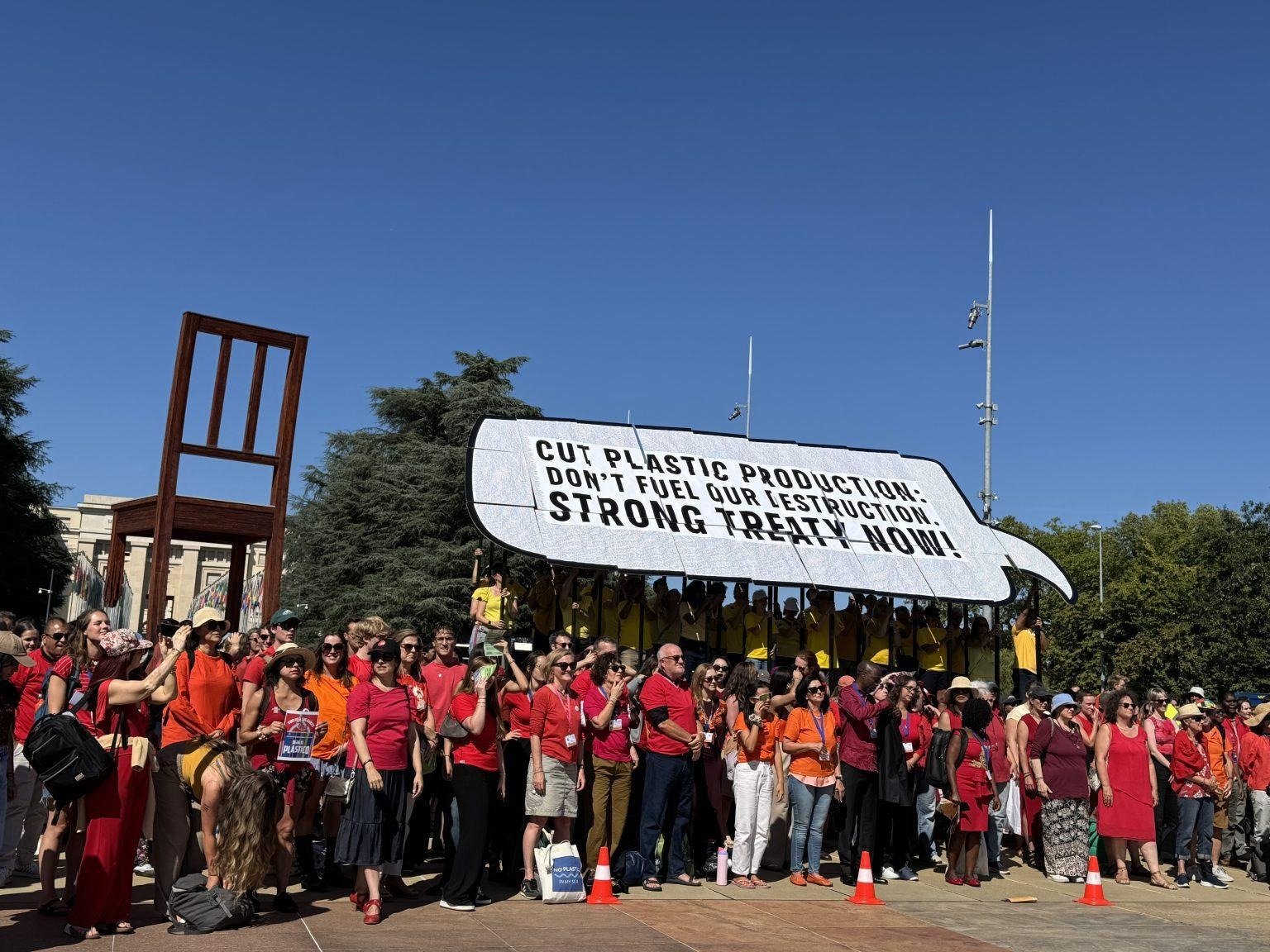
The negotiators have held five sessions, in Punta del Este (2022), Paris (2023), Nairobi (2023), Ottawa (2023), Busan (2023), and another one in Geneva (2023). At the Committee’s February 2026 meeting, the Committee elected Ambassador Julio Cordano of Chile as the new Chair of the INC. Cordano said: “Plastic pollution is a planetary problem, it’s a problem that impacts every nation, neighborhood and person. A treaty is desperately needed now”. Then, in August 2025, INC-5.2 met in Geneva, with 184 member states which was to be the last set of negotiations. Rather, the session made no headway. There were delays in the procedure and strong lobbying by industries.
The production cuts will be the Core Disagreement
The basic issue is whether the accord should attempt to curb the production of plastic or only downstream measures such as recycling. A plan put forth by Panama and backed by more than 100 nations would have resulted in quotas for reducing production. A plan that Panama had submitted, and supported by more than 100 countries, would have had quotas for production reduction. The science is predictable, plastic production will double by 2040 and nearly triple by 2050. Fiji’s delegate to the negotiators said, “We can’t go on mopping the floor without turning the tap”. At INC-5.2, the Chair’s text was highly controversial. The text failed to include an important article on reducing plastic manufacture, in contradiction of the treaty’s commitment to tackle plastics throughout their life cycle, GAIA (Global Alliance for Incinerator Alternatives) said.
The Petro-State Bloc vs. The High Ambition Coalition
More than 100 countries endorse binding limits on plastic production, harmful chemical elimination. However, a group of oil- and gas-rich countries (the petro-states) has always opposed supply side actions. Saudi Arabia, Russia and fast-growing the United States are known as the “Like-Minded Countries” (LMC). The LMC has been using techniques of process obstruction to slow down progress; it has challenged the very meaning of the word ‘plastic’ saying that any agreement must be done by consensus, a small minority of the participants can veto the consent of the larger group. Saudi officials have insisted that production quotas are “not in the negotiating track. One member of the LMC even claimed that the agreement has nothing to do with plastic but plastic pollution. Plastics are a key growth market for petro-states that are seeing a fall in demand for fuel, all plastic bottles start as crude oil or natural gas. GAIA Africa’s Merrisa Naidoo summed it up: “Consensus is not democracy. It does not reflect the will of the majority of member states and, sadly, it has to satisfy the wish-list of the petro-states and fossil fuel industry.
What Was Removed
GAIA’s analysis of INC-5.2 reveals that measures with overwhelming support were removed and seriously weakened: Article 6 had been completely removed from the draft due to support from more than 100 countries to reduce production of plastics. More than 100 countries voted for chemical phase-outs, which come in the wake of the loss of votes for Article 3, which sought to prohibit toxic chemicals. A health Article (Article 19) was deleted entirely, with 130 countries calling for a dedicated health article. Voluntary language instead of a new financial mechanism: supported by 151 (mainly Global South) countries.
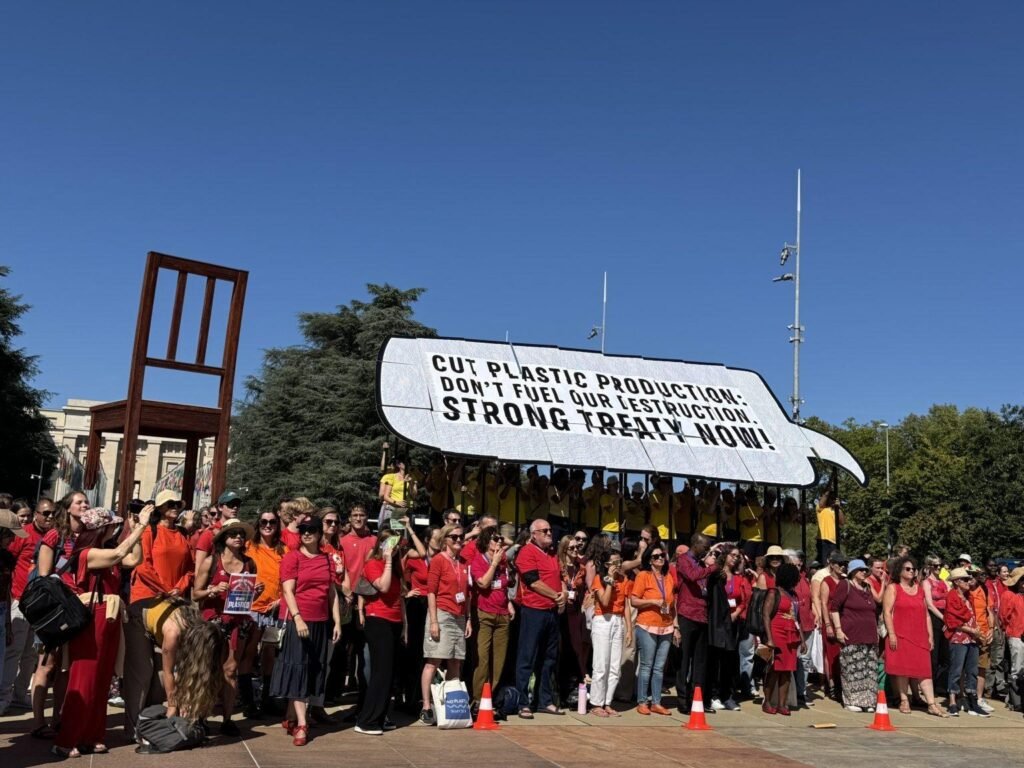
The INC Chair on August 13, 2025 with 27 hours to go announced a new “Chair’s text” that was developed behind closed doors. It eliminated binding production quotas, chemical control, health standards or any vote. The text, Colombia said, “completely unacceptable.” Panama said their “red lines” had been “stomped, spat on, and burned.
Waste Colonialism and Global South Leadership
The rich countries send their plastic waste to the poor countries and this is known as “waste colonialism. UK plastic waste exports to Asia jumped in June 2025 with 3.3m kg exported to Indonesia and 6.8m kg exported to Malaysia in June 2025 alone. Much of plastic exported is not recycled, but burnt or dumped in unsafe conditions, which causes toxic fumes to the workers, who are mostly children. Such trade is regulated by the Basel Convention’s Plastic Waste Amendments, which stipulate that importing countries must give formal consent before they import waste. But it’s not fully implemented. Greenpeace Canada has made it clear that it wants Canada to “stop exporting plastic waste and recycling to the global south. Delegates from the Global South have become vocal leaders, meanwhile. The African Group, made up of 54 countries, made solid proposals regarding toxic-free reuse systems. The Pacific Small Island Developing States have been advocating for strong and binding commitments, due to the danger of plastic pollution to their very existence.
Who is responsible for the funding of the Transition?
During INC-5.1 in Busan, 151 countries had called for the establishment of an independent and dedicated financial mechanism. However, the Chair’s draft had “weak, voluntary language. A Finance Minister from Fiji said: “Finance is a pathway to implementation and a bridge to ambition and a cornerstone to justice”. Bangladesh’s representative proposed EPR and Plastic Pollution Fee, which will ensure polluter accountability. The health-related economic losses as a consequence of plastic pollution have been estimated by The Lancet to be over $1.5 trillion a year.
The Road Ahead
With historic aspiration launched in 2022, the treaty process is at risk of creating a treaty that will deal with waste, not pollution. The basic questions have not been answered. A group of more than 100 countries in the High-Ambition Coalition supports mandatory production limits. Petro-states’ Like-Minded Countries remain in the way. The newly-elected Chair, Ambassador Julio Cordano, has said he is intent on helping the Committee “cross the finish line. But if you don’t finish with ambition you are a failure! Turning off the tap means challenging the fossil fuel industry and stopping waste exports, ensuring the protection of informal waste pickers, and ensuring finance for the Global South. The next session will be a deciding factor between a world first plastic pollution treaty that’s a landmark achievement and another missed opportunity. The research is indisputable. The people are calling for action. Everything that is left is political will to provide.
Keywords Glossary
Prior Informed Consent (PIC)– A Basel Convention requirement that importing countries must formally approve hazardous waste shipments before they leave the exporting country.
Extended Producer Responsibility (EPR)– A policy requiring manufacturers to manage the entire lifecycle of their products, including take-back and recycling.
PFAS (forever chemicals)– A family of synthetic chemicals that do not break down in the environment and accumulate in human bodies.
Chair’s text– A draft treaty prepared by the negotiating committee chair, often behind closed doors.
Supermajority– A decision-making process requiring a high percentage (e.g., two-thirds or three-fourths) of votes, not unanimity
Keywords: Plastic pollution, global plastics treaty, INC negotiations, waste colonialism, petro-states, Global South
References
- UN Environment Programme. (2026, February 7). New Chair elected to lead negotiations on global plastic pollution treaty.
- Environmental Investigation Agency (EIA). (2025, September 4). Global Plastics Treaty post-mortem – INC-5.2, petrostate obstruction and the way ahead.
- GAIA. (2025, September 8). INC-5.2 – A Broken Process, but NOT a Broken Promise.
- Environmental Investigation Agency (EIA). (2025, October 22). UK Government urged to end ‘waste colonialism’ by banning plastic waste exports. https://eia-international.org/press-releases/uk-government-urged-to-end-waste-colonialism-by-banning-plastic-waste-exports/
- Basel Convention. (2025). Call for information on further consideration of plastic waste under the Basel Convention.
- Twin Politics. (2025, August 19). Why the Global Plastics Treaty Negotiations in Geneva Failed.
- China Chemical Industry News. (2024, December 9). Limiting global plastic production may be difficult to achieve.



 Reston Dennis Juah
 Noor Ul Ain
 Hassan Barrie
 Hoby Nasandratra Andriamiandrisoa
Finally found a site that doesn’t lag during peak hours. The game selection is impressive and the support team is actually helpful. Great experience so far with vnvs888.