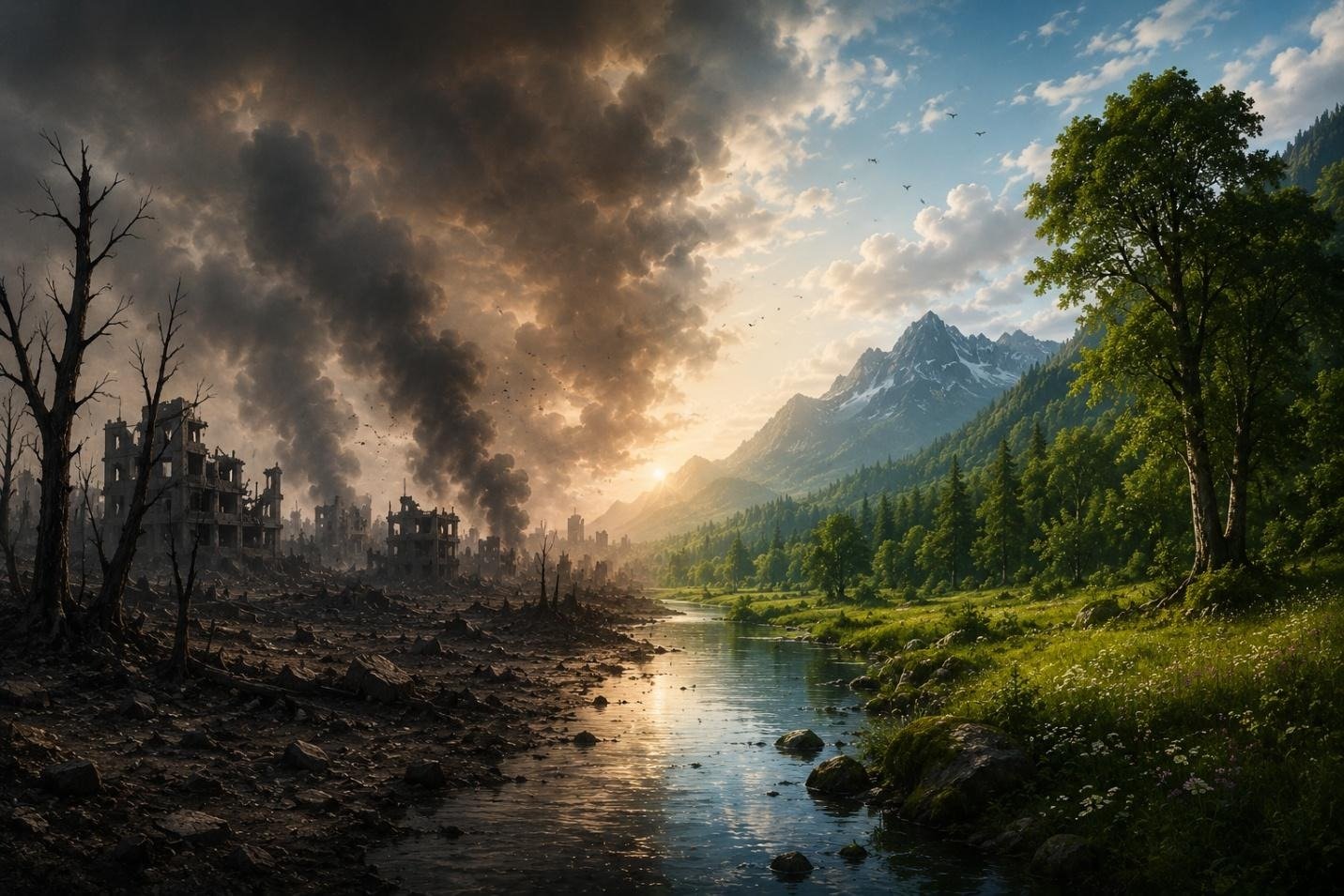

War has been assessed through loss of life, loss of property and loss of economy. But one victim is frequently overlooked: the environment. After the fighting stops, forests burn, rivers are contaminated, farmland becomes wasteland, and biodiversity is diminished. While humanitarian consequences dominate global attention, environmental agendas remain largely absent from international policy discussions.
There are currently more conflicts going on around the world than since the Second World War and an estimated 2 billion people are affecting. Meanwhile, the world is grappling with growing climate change, biodiversity loss and degradation of ecosystems. All these crises are interrelated. The war speeds up environmental degradation, reduces climate resilience and threatens sustainable development. As a concept, the large-scale destruction of ecosystems by human activity, including armed conflict, has become an important paradigm for understanding these impacts, and is known as ecocide.
It has been shown that ecosystems can be a secondary victims of armed conflict even if they are not the targets of armed conflict, as in Ukraine, Gaza, Myanmar and Colombia. Soil degradation, forest loss, water damage and agricultural land degradation frequently have long-term effects and can last for decades, causing long-term impacts on food security, livelihoods, and climate adaptation.
The conflict in Ukraine has had significant impacts on one of the most productive agricultural areas of the world. Studies show that about 20% of the protected areas in the country have been impacted by military activities. High levels of toxic metals are found in soil samples collected around the sites of explosions and military vehicle and demining operations have disrupted soil structure and fertility. Over 33,000 hectares of forests have been burnt and the flood of the Kakhovka Dam in 2023 has resulted in an environmental disaster, that has affected the ecosystems, washed away fertile soil and jeopardized future agricultural production.
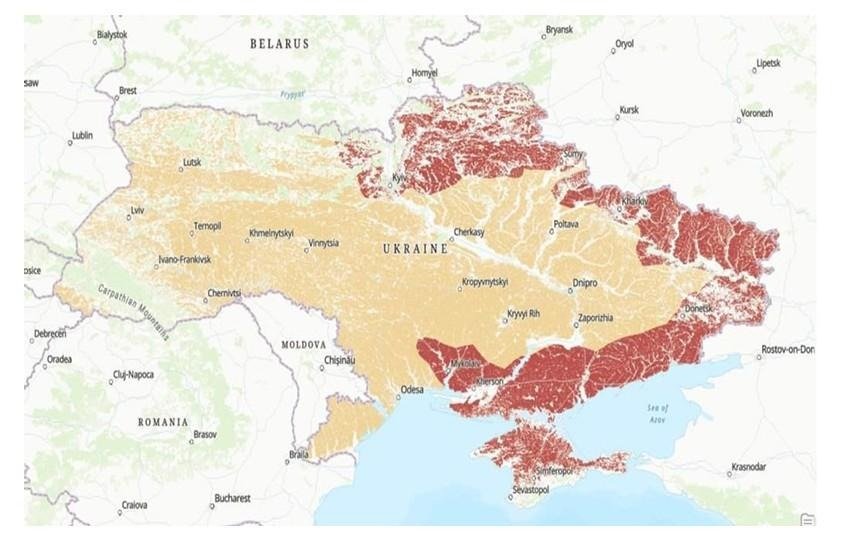
Figure 1: Agricultural landscapes of Ukraine affected by military operations. The darker shading indicates areas within zones of risky agriculture that have experienced soil contamination, compaction from military vehicles, and disruption of the humus layer. Source: Novakovska et al. (2023).
In Gaza the war-induced environmental effects are treated as a ‘collapse of ecosystem’. Recent assessments show 97% of tree crops, 95% of shrubland and 82% of annual crops have been lost. Tens of thousands of tons of explosives have left behind toxic residues in soils, untreated sewage and millions of tons of waste have further polluted the environment. The impacts of this are not just from the period of conflict, but have a long legacy of threatening future recovery, food security and adaptation to climate change.
The same patterns have been observed in Myanmar from satellite monitoring. The analysis of the Rohingya conflict revealed that almost all the residential areas in the study area were destroyed between 2012 and 2017. Burnt areas grew in size, deforestation increased and agricultural land decreased. The study raises the issue of satellite technology to document environmental destruction in areas where independent observers are not allowed to be.
The lesson from Colombia is different, but not significantly different. Increased deforestation rates in many protected areas after 2016 peace agreement with FARC. The cessation of armed control opened up opportunities for illegal land grabs, agricultural expansion and deforestation. This serves as evidence that, in the absence of strong governance institutions and appropriate environmental protection measures, a conflict may have long-term consequences on environmental degradation even after the war.
These cases illustrate an important governance challenge for the world today. When conflict strikes, environmental harm is frequently a by-product and not a primary policy issue. However, the loss of forests, water resources, agriculture, and biodiversity have direct impacts on climate adaptation, sustainable development and human security.
The impacts of wars on the environment are not limited to only local ecosystems. The military is responsible for a significant share of greenhouse gas emissions in its use of fuel, transportation infrastructure, manufacturing of weapons and destruction of infrastructure. The contribution of military related activities to global emissions is estimated to be around 5.5%.
Above all, conflict and climate change are mutually reinforcing in a perilous cycle. Climate impacts (drought, lack of resources, environmental degradation, etc.) may lead to instability and conflict. Armed conflict then further drives environmental degradation, reducing resilience to future climate effects. This cycle is of special concern in vulnerable areas already facing climate risks.
However, in the face of these realities the environmental impact of armed conflict is largely lacking in international climate governance. Big areas of global climate negotiations are on mitigation, adaptation and finance for climate change, but rarely on ecosystems lost to conflict. This is a huge deficit in climate diplomacy. Communities that are hit by both conflicts and climate change are likely to be the most vulnerable and least supported.
One possible avenue for accountability is the idea of ecocide. Ecocide is the name given to “acts of violence and recklessness” that, with knowledge, “will keep causing serious, extensive or lasting environmental harm.” An independent expert panel recommended in 2021 that ecocide be included in the Rome Statute as a fifth international crime alongside genocide, crimes against humanity, war crimes and crimes of aggression.
There are a number of countries already in place with legislation on extreme environmental damage. There are however, major issues that need to be addressed, such as the lack of a common definition, and weak political backing for international enforcement. However, the burgeoning discussion shows a welcome trend: environmental degradation is not only a conservation problem, but a concern of human security, peacebuilding and global justice.
The devastation of the environment is not a side effect of war, it is one of its most persistent legacies, as is shown in Ukraine, Gaza, Myanmar and Colombia. The affected communities suffer from polluted soil, deforested forests, polluted water systems and dying ecosystems even after ceasefires are proclaimed.
When climate diplomacy aims to safeguard the ecological underpinning of human welfare, environmental degradation in wartime can no longer be an afterthought in international negotiations. Legal responsibility, improved monitoring, environmental rehabilitation and the incorporation of environmental impacts of conflict into climate governance are crucial. The planet should not continue to be the silent victim of war.
Keywords: Ecocide, armed conflict, environmental degradation, land degradation, deforestation, satellite monitoring, biodiversity loss, international law, Ukraine, Gaza, Colombia, Myanmar
References
- Wirtu, Y. D., & Abdela, U. (2025). Impact of war on the environment: ecocide. Frontiers in Environmental Science, 13, 1539520.
- Aung, T. S. (2020). Satellite Analysis of the Environmental Impacts of Armed-Conflict in Rakhine, Myanmar. Science of The Total Environment.
- Clerici, N., Armenteras, D., Kareiva, P., et al. (2020). Deforestation in Colombian protected areas increased during post-conflict periods. Scientific Reports, 10, 4971.



 Reston Dennis Juah
 Noor Ul Ain

 Hassan Barrie
 Hoby Nasandratra Andriamiandrisoa
+ There are no comments
Add yours