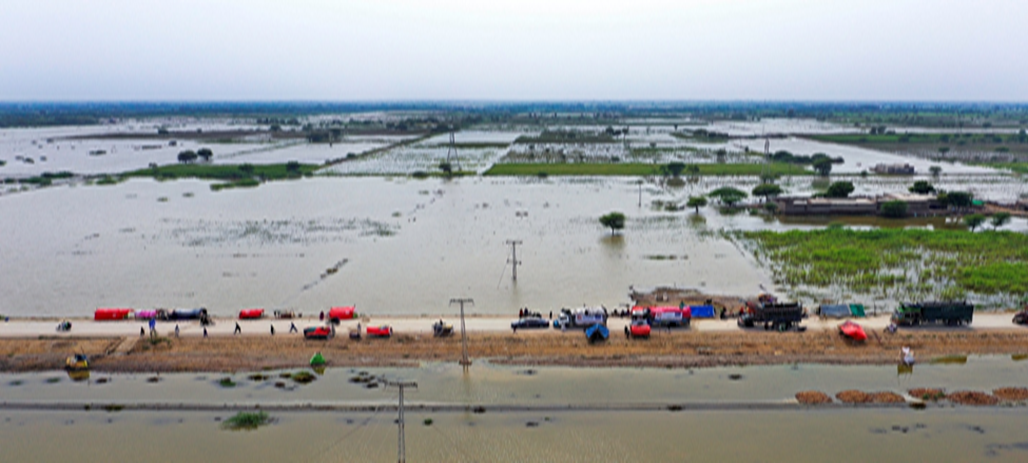

Pakistan has actively been engaging in international climate diplomacy, even though its contribution to global GHG emissions is less than one per cent. Pakistan has contributed very little to the climate change but it is highly vulnerable to climate change impacts. The floods in 2022 were devastating and impacted approximately 33 million people, making Pakistan’s weather story a political issue rather than just an environmental one. In the present times, Pakistan in international forums, through media and diplomacy, calls for justice for the climate change and financial assistance to the vulnerable countries. This article reviews Pakistan’s climate vulnerability, diplomatic communications, media coverage and communication strategies.
- Pakistan’s Climate Vulnerability
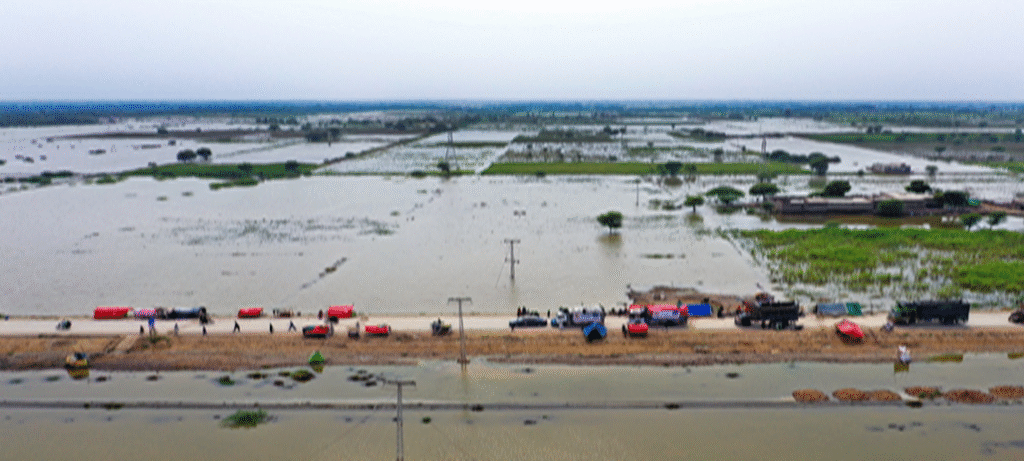
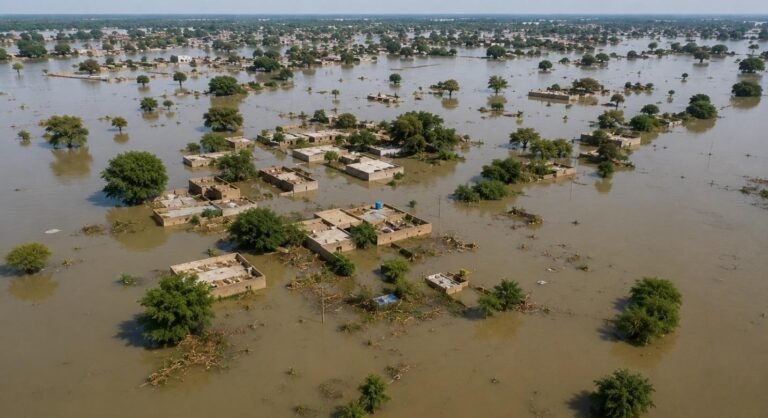
Figure 1: Humanitarian assistance being delivered to communities effected by 2022 floods in Pakistan Source: European Union
Climate change disasters have a significant impact on Pakistan. Pakistan is consistently listed among the countries most at risk from climate-related disasters, according to the Global Climate Risk Index (GCRI). This vulnerability was most clearly demonstrated during the 2022 floods. (NASA Earth Observatory, 2022) There was heavy rain during the monsoon season resulting in heavy floods in Sindh, Punjab and Khyber Pakhtunkhwa. Government and World Bank counting more than 1,700 fatalities, over 1.7 million homes destroyed and the economic losses of over $30 billion. (World Bank, 2022) The floods showed that climate change increase the existing socio-economic issues. The disaster also strengthened Pakistan’s case that the countries that emit the least are also the most vulnerable. Climate change thus ceased to be just an issue of the environment and became one of justice, inequality and international responsibility.
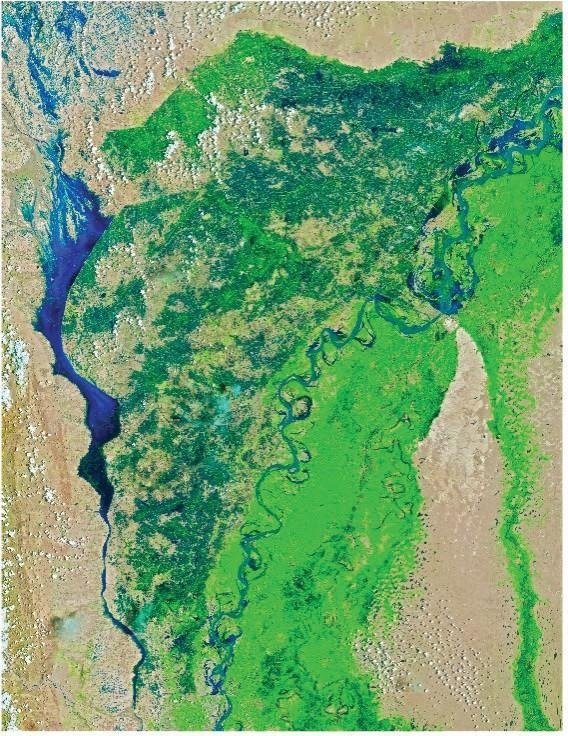
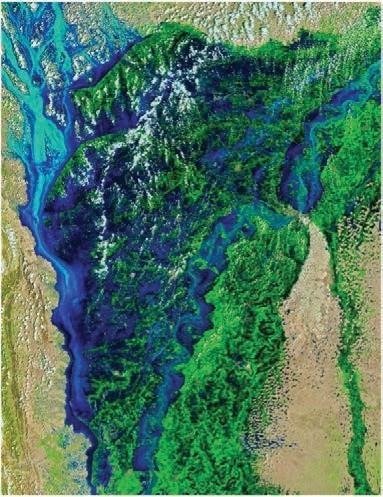
Figure 2: Satellite image of Pakistan floods Source: NASA Earth Observatory & Ministry of Planning, Development, Pakistan
1.Climate Diplomacy and Global Forums
Pakistan has strategically used international forums to communicate its climate challenges. At COP27 in Egypt (2022), Prime Minister Shahbaz Sharif highlighted the injustice of Pakistan suffering catastrophic floods despite its negligible emissions. He stated that Pakistan had become “a victim of something we had nothing to do with.”
Similarly, Sherry Rehman, the climate minister, also spoke for the G77 group of developing countries and said that climate disasters in poor countries should not be neglected. She said that the world needs to realize the growing need for loss and damage financing, which is money to help countries that are suffering from climate change effects that can’t be fixed. In conversations with international media, Foreign Minister Bilawal Bhutto Zardari also repeated this story, calling the floods “a catastrophe of biblical proportions” (Reuter, 2022) and asking for climate justice instead of charity. These diplomatic efforts led to a historic achievement at COP27, the introduction of a Loss and Damage Fund to help nations that are vulnerable recover from climate-related disasters.
Table 1: Estimated Flood Damage and Recovery Needs by Region (2022)
| Damage | Loss | Needs | ||||
| Region | (Billion PKR) | (Million US$) | (Billion PKR) | (Million US$) | (Billion PKR) | (Million US$) |
| Balochistan | 349 | 1,625 | 541 | 2,516 | 491 | 2,286 |
| Khyber Pakhtunkhwa | 201 | 935 | 141 | 658 | 168 | 780 |
| Punjab | 111 | 515 | 122 | 566 | 160 | 746 |
| Sindh | 1,948 | 9,068 | 2,444 | 11,376 | 1,688 | 7,860 |
| Cross-Provincial12 | 587 | 2,731 | 14 | 67 | 975 | 4,540 |
| Special Regions13 | 7 | 32 | 11 | 49 | 10 | 48 |
| Grand Total | 3,202 | 14,906 | 3,272 | 15,233 | 3,493 | 16,261 |
Source: Ministry of Planning, Development and Special Initiatives, Pakistan
Pakistan’s climate activism has attracted a lot of attention worldwide. Following the devastating floods of 2022, the United Nations and Government of Pakistan jointly organize the international conference on Climate Resilient Pakistan in Geneva in 2023. During the conference, donors pledged more than $9 billion for recovery and reconstruction (Amnesty International, 2023). These pledges came from multi-lateral and bilateral international financial institutions like the World Bank, Asian Development Bank and among other development partners. This funding which was welcomed by humanitarian groups, was also met with warnings about the harmful impacts of the money. It was emphasized that such commitments should support long-term climate action. Amnesty International stated that recovery found should not replace the broader responsibility of wealthy countries to reduce emissions and provide adequate support to vulnerable nation. At the institutional level Pakistan has played an increasingly important role in global climate policy advocacy. The establishment of the Loss and Damage Fund at COP27 marked as significant milestone, as it was the first formal recognition of compensation for climate related losses and damages. Yet, many observers say that the realities of funding are far below then what is required to address the needs of vulnerable countries facing the impacts of climate change.
The climate message of Pakistan is not the prerogative of the government alone, as digital media and NGOs also play the vital role. Researchers and print media also influence public opinion concerning climate change. Dawn Newspapers frequently comment on the impact of climate change on weather patterns during monsoon seasons and how they increasing the likelihood of floods. Organizations that are concerned about the environment, such as WWF-Pakistan and IUCN, are also contributing to these efforts. Pakistan stands tall in telling the world that it must do more to combat climate change. There is a need for people in Pakistan to become familiar with the concept of climate change, and these groups are helping to spread awareness. Some scholars also note that narratives can vary in media contexts. Mehr-un-Nisa et al. (2025) conducted a comparative study also pointed out that Pakistani newspapers tend to focus on failure in domestic policy and planning issues and on the other, western media outlets primarily emphasize global climate injustice. Civil society groups also use powerful storytelling to draw attention to the human impact of climate disasters. Images of the evacuees and destroyed villages are widely shared through social media campaigns such as #ActForPakistan, which are aimed at international audience and decision makers. But some analysts argue that placing all the blame on the external factors overlooks important domestic issues, such as land use and urban planning. It is therefore essential to have a balanced coverage to respond to the international responsibility and to local resilience.
Climate related natural disasters can have a dramatic impact on the approach and lifestyle of a nation, as shown by the case of Pakistan. The 2022 floods positioned Pakistan as a leading voice in discussions on climate justice and the need for financial support to address climate related losses and damages. Pakistan worked to communicate its message to the international community through speeches, media narrative, and cooperation with other countries. It also gathered support from the people and organizations concerned about climate change. These efforts helped Pakistan demonstrate that climate change is unfair to countries that are already facing significant challenges. Pakistan’s efforts contributed to change the way countries discuss climate change, particularly through the establishment of a special loss and damage found.
There is a need for Pakistan to continuously reach out with its message. If Pakistan can balance
discussion of its vulnerability with stories of its resilience and adaptation, its message will be more credible and influential in global climate change negotiations. Pakistan’s voice on climate change is not only about Pakistan; it also represents many countries in the Global South that argue that more must be done than simply reducing emissions. There is also responsibility to assist people who are already suffering from the effects of climate change, and this support must be provided in an equitable manner. Pakistan and other similarly effected countries need assistance and support to address the impact of climate change.
Keywords: Climate Vulnerability, Pakistan Flood 2022, Climate Diplomacy, Climate Communication,
REFERENCE
World Bank. (2022). Pakistan floods 2022: Post disaster needs assessment (PDNA). World Bank. https://www.worldbank.org/en/news/press-release/2022/10/28/pakistan-flood-damages-and-economic-losses-over-usd-30-billion-and-reconstruction-needs-over-usd-16-billion-new-assessme
Ministry of Planning, Development and Special Initiatives. (2022). Pakistan floods 2022: Post disaster needs assessment. Government of Pakistan.
NASA Earth Observatory. (2022). Satellite imagery of Pakistan floods. NASA Earth Observatory. https://earthobservatory.nasa.gov/images/150243/flooding-in-pakistan
European Union. (2022). Humanitarian assistance to flood-affected communities in Pakistan. EU Civil Protection and Humanitarian Aid.
Amnesty International. (2023). Pakistan: Climate resilient recovery must ensure human rights. Amnesty International. https://www.amnesty.org/en/latest/news/2023/01/pakistan-pledges-for-flood-recovery-must-be-followed-through-with-meaningful-climate-action/
Mehr Un Nisa, M., Doraisamy Pillai, M., & Ahmad, G. (2025). A comparative analysis of how Pakistani and American print media construct environmental disaster through systemic functional linguistics. ACADEMIA International Journal for Social Sciences, 4(4), 1343–1362. https://academia.edu.pk/index.php/Journals/article/view/987

 Reston Dennis Juah
 Noor Ul Ain
 Hassan Barrie
 Hoby Nasandratra Andriamiandrisoa
If I were to recommend a starting point for the topic this site would be near the top of my list, and a stop at idleflint reinforced that recommendation status, the small list of starting point recommendations I keep for friends asking about topics is short and this site is now firmly on it.
If I had to summarise the editorial sensibility of this site in a few words it would be careful and human, and a look at directionbeforeaction extended that summary feeling, capturing the essence of a sites approach in brief is hard but this site has a clear enough identity that the summary comes naturally enough.
Halfway through reading I knew this would be one to bookmark, and a look at pujckaonline confirmed that early intuition, when bookmark intent forms before finishing a post you know the writing has cleared a quality bar that most content fails to clear and this site has cleared it on multiple visits already.
узнать больше сайт kraken onion
Really liking the rewards system on this app. It keeps things exciting and the prizes are actually attainable. bdbb444app is my new favorite.