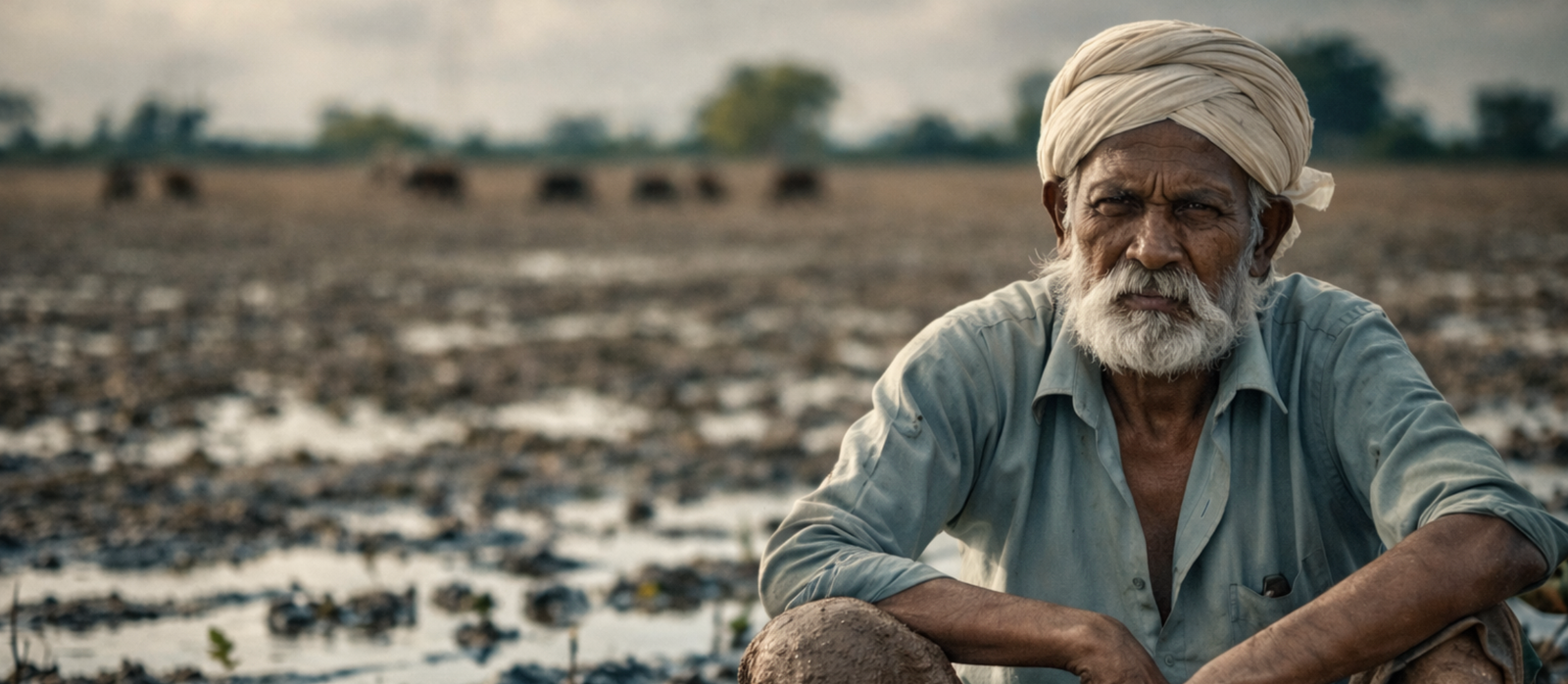

The Most Affected Community in the Climate Crisis
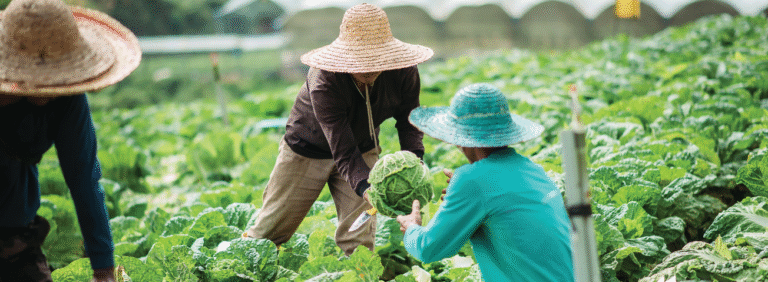
On the north coast of Java, there’s a fisherman named Ahmad who always wakes up before dawn, just as his father and grandfather did before him, to read the wind direction, scan the sky, and decide whether the sea is safe enough for sailing. However, those activities gradually become meaningless since his analysis is often inaccurate, and he can’t get the fish in their usual places, which make him return with smaller catches, and the seasons he’s always believed in no longer follow the patterns he’s been taught. Ironically, he doesn’t know that these “changes” are the effects of climate change, which were discussed at the COP (Conference of the Parties). According to the Pulitzer Center, the number of Indonesians relying on fishing for a livelihood has fallen from 2.16 million in 2010 to 1.83 million in 2019, with dwindling catches and rising costs making the profession increasingly unattractive. For example, in Benoa Bay, Bali, the number of tuna fishing vessels has decreased from more than 1,000 in 2009 to just 275 in recent years. Farmers are experiencing similar challenges, with a recent study published in Nature estimating that global crop yields for staple foods could be 24% lower.
Matos Carlos et al. documented how farming communities sensed and responded to climate change long before any formal policies reached them, adjusting planting schedules, reading environmental signals, and adapting accordingly, yet this was not enough to cover the costs of their losses given the limited resources farmers had.
What makes this even more alarming is who bears the costs and Beer argues that communities in the Global South, including smallholder farmers and coastal fishers, experience climate change through a lens of equity: they bear the brunt of a crisis they did not cause, while remaining the most underrepresented in the global conversations that should address it, but they are not passively waiting for policies to save them. In Indonesia, fishermen and farmers have passed down knowledge of nature for generations: knowledge about wind, tides, soil, and sky. This means that climate change could not only deprive them of their livelihoods, but also erase this knowledge, which they have relied on for centuries.
The Wisdom Across Generations
Long before climate scientists had satellites, Javanese farmers had pranoto mongso. Literally meaning “the condition of seasons” pranoto mongso is a traditional agricultural calendar practiced by Javanese people for generations, used to guide decisions about when to plant, when to harvest, and when to fish, based on the movement of the stars, animal behavior, and wind and rain patterns. This is beyond our understanding as a modern community, because it is a system that was built and refined over centuries.
Based on the research of Dr. Thomas Wijaya, he found that local wisdom like pranoto mongso, along with natural signs like thunder and certain plant growth patterns, have proven instrumental in determining the right time to plant, often more useful and practically efficient for local farmers than official government forecasts, which are sometimes inaccessible to farmers. However, climate change is now making pranoto mongso increasingly irrelevant, since the climate increasingly unpredictable with dry seasons lasting longer, rainfall patterns becoming more uncertain, make all knowledge they have relied on so far are being useless.
Based on this condition, meaning It’s not only about farmers and fishers who are losing their livelihoods, but also losing the knowledge systems through which they understand the world. As Born points out, modern climate science has long separated nature from human experience, treating it as an object to be measured rather than a relationship to be lived. The local wisdom like pranoto mongso is the opposite, it is knowledge that has never been separate from nature in the first place. Fearns argues that understanding climate change requires more than just data, but also real-world experience, the direct experience of communities or individuals living and affected by climate change. In this case, farmers and fishermen have a long history of observing, adapting, and recording, not on paper, but directly in practice, rituals, and knowledge passed down from their ancestors, which has even outlived the existence of any climate institution. This knowledge is not primitive, but a living system passed down through generations, and it is the knowledge derived from this experience that can be used to better understand nature in relation to climate change in the modern era.
Why Their Voice Never Reaches the “Table”
The question is: if farmers and fishermen are the most affected by climate change, and if they carry generations of knowledge about the natural systems that climate change is destroying, why are they almost never in the “room” when climate policy is made?
Most of us probably already know that climate policy, both domestically and internationally, has been built top-down from the beginning, from scientists to diplomats to governments, and only then, theoretically, to communities. Walsh argues that climate communication itself is systematically “born” from a Western perspective, meaning that all sources of knowledge are from the West, Western languages, and Western solutions, while the communities most exposed to climate impacts are in the Global South.
As Beer argues that this is a justice issue, where communities in the Global South, including smallholder farmers and coastal fishers, not only bear the brunt of crises they did not cause, but are also systematically excluded from governance processes designed to help them. Countries sign international targets just as a “sign of commitment” not including the action, pretending the problem is solved, which most of them struggle in implementation. We can imagine the gap between what was planned in Geneva and what actually reaches the fishing villages of Sulawesi or the rice paddies of Boyolali. It is a structural failure, inherent in the way climate governance has worked so far. Ironically, the people who have studied climate the longest, through lived experience and inherited knowledge, are treated as recipients of policy rather than contributors. As long as this persists, climate policy will continue to address a problem that is only partially understood.
Quoting the words of the fisherman named Ahmad, whom we mentioned at the beginning of this article: “If you can’t predict the weather and wind direction, like our grandparents did in the past, it means you can’t predict the catch.” From his words, he wanted to convey that their relationship with nature is very close, and even part of their culture, not just theories and agreements on paper, but a sacred relationship between humans and nature. As Amitav Ghosh said, nature is always sending signals: through species loss, ecological disruption, and environmental collapse, which cannot be heard by any modern technology and system. The science is clear, the framework is in place, what is missing is the political will to build climate policy from the bottom up, starting with the communities that best understand the conditions on the ground.
Based on that condition, we should not consider local and indigenous knowledge as a cultural footnote to be acknowledged in a policy preamble and then ignored, but as legitimate data, the kind that belongs in climate planning. As Fearns reminds us, the most effective climate communication is not the one that drowns people in data, but it is the one that connects with how people actually live. Farmers and fishermen have been living that connection longer than any institution has existed to study it. The question is, whether modern climate policy is finally ready to start learning from them.
Key words: Climate Change, Indigenous Knowledge, Climate Justice, Global South, Climate Governance



 Reston Dennis Juah
 Noor Ul Ain
 Hassan Barrie
 Hoby Nasandratra Andriamiandrisoa
Super easy registration process and I was playing within minutes. The vibe here is just right. phjili6 is simply the best in the game.