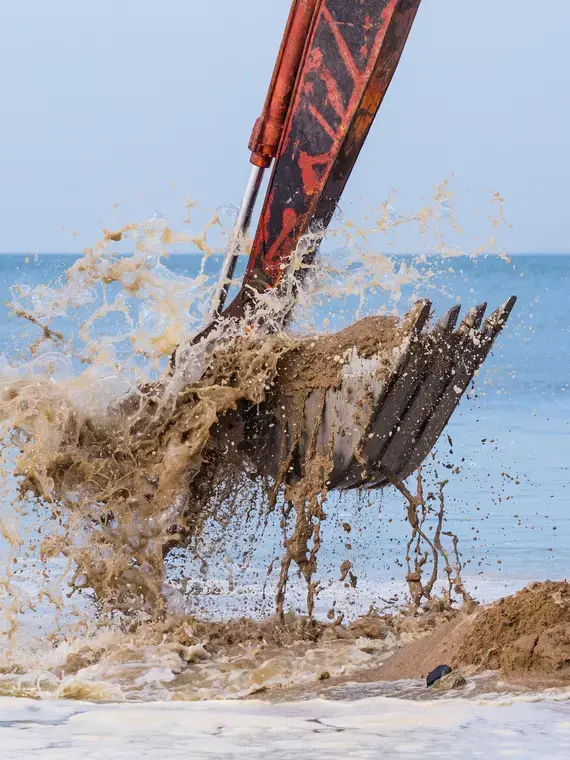

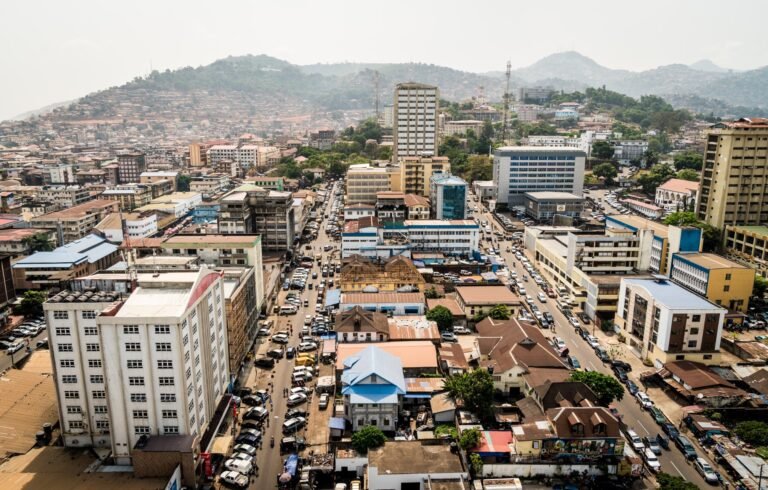
Unsustainable sand extraction is undermining the natural defenses that rural coastal communities rely on for survival in Sierra Leone, one of the poorest and most affected places on earth, as rising seas and extreme weather threaten its capital. Every day, during the early morning hours on Freetown’s Western Area beaches, trucks form a queue to haul away one of the most desirable natural resources in the world: sand. To many, it appears harmless. It is under our feet, around the shores we wash upon, and beneath the houses, roads, and buildings that are irrevocably changing this country as it spins into yet more rampant urbanization in its ever-expanding capital of Freetown. But hidden beneath this relatively innocuous practice is a dormant environmental disaster, slowly rendering Freetown more vulnerable to the impacts of climate change.
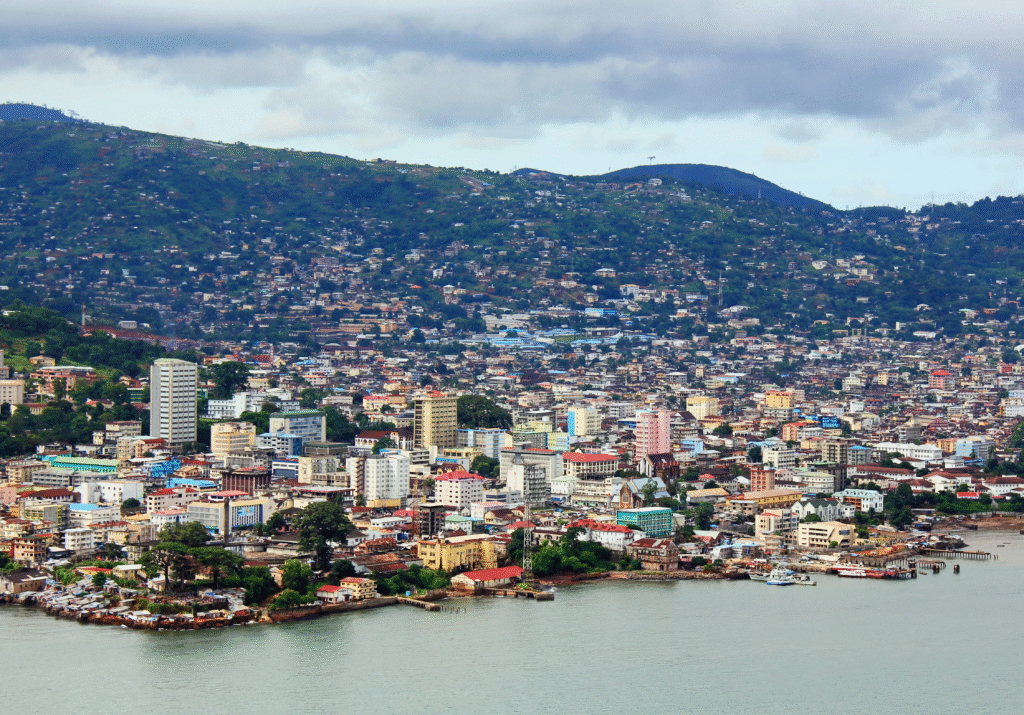
Coastal towns, from Hamilton and Lakka to Sussex and Kent, have undergone significant environmental changes over the years. Beaches are narrowing, shorelines are eroding, and flooding is becoming a growing concern. Although climate change is often held responsible for these processes, an additional factor is exacerbating the situation: the extensive extraction of sand from beaches and coastal ecosystems. Sand mining is rarely linked to climate change in public discourse. In fact, they are more closely linked than many people seem to think. Taking sand from coastlines is like dismantling nature’s first line of defense in a city already contending with rising sea levels, fiercer storms, and erratic rainfall.
The Resource That Built Cities
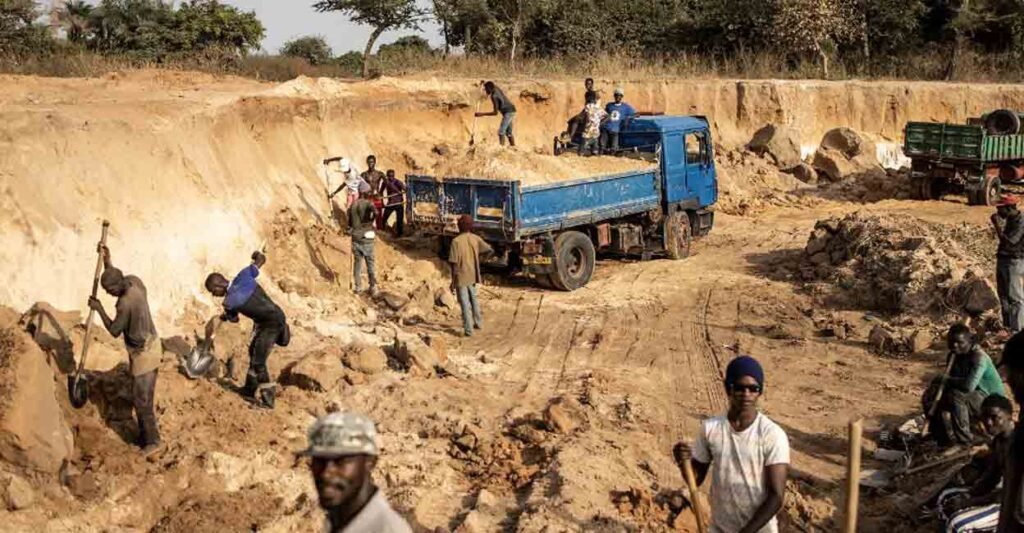
Very few citizens view sand as a resource that could run out. However, the United Nations Environment Program (UNEP) states that sand is the second-most-consumed natural resource on Earth after water. ~50 billion tonnes are used worldwide each year to meet construction and infrastructure needs (UNEP, 2023). Sierra Leone is no exception. The expansion of Freetown and rising housing demand put heavy pressure on the construction sector, which requires large amounts of sand. The beaches of the Western Area are mined for construction sand, making them major extraction sites for coastal communities. For many residents, sand mining is the only source of jobs and income in a crisis-ridden economy. Yet it has been impossible to ignore the environmental price.
A study in some coastal villages in Hamilton, John Obey, and Lakka showed that people are concerned about the adverse environmental effects of sand mining (Mabey et al., 2025). So the problem is not just sand removal. It’s where the sand is being suctioned out of & what that sand is actually doing to help save our coastal communities.
Nature’s Invisible Shield
To common people, beaches are sites for recreation, fishing, or tourism. But beaches serve a much more critical role. They naturally mitigate wave energy or lessen the impact of storms on coastal areas. Water, similar to wind on land, shapes the landscape from miles away, and every grain of sand plays a part in a living system that protects the coast. Beaches absorb the energy of advancing waves before they reach homes, roads, and infrastructure when waves approach land. Beaches can absorb a lot of energy, preventing much of it from reaching inland during storms. This natural barrier forms when sand is deposited, but it weakens on the extraction side because extraction occurs faster than nature can replenish. Now think about taking bricks out of the ground floor of a house. The structure itself might not collapse at once, but gradually its stability is lost. The same concept applies to coastal ecosystems.
UNEP explains that unsustainable extraction of sand can accelerate coastal erosion by disrupting the natural flow of sediments that sustain beaches and shorelines, at levels many times higher than high tide (UNEP, 2023). The risk of flooding and storm damage increases as erosion worsens. This is especially troubling for Freetown as climate change is putting unprecedented strain on already strained coastal environments.
Climate Change Is Raising the Stakes
Sierra Leone is no longer fighting a future battle against climate change. Its impacts are already visible. Businesses and employees in communities across the country are already coping with rising sea levels, coastal flooding, changes in rainfall patterns, and more extreme storms. With population, infrastructure, and economic momentum all focused on the coast, the Western Area is particularly exposed. Widely Threatened: Low-lying coastal cities across West Africa are at increasing risk from sea-level rise, scientists have repeatedly warned. Rising sea levels due to warming oceans and melting ice sheets will increase the risk of coastal erosion and flooding. In such circumstances, there is nothing more precious than healthy beaches.
But sand mining is steadily undermining it instead of bolstering these natural defenses.
This makes for a deadly mix. The combined pressures of climate change and sand extraction are undermining coastal systems’ capacity to cope. And in effect, at the moment when they need more protection from harm, communities are becoming more vulnerable.
When Flooding Becomes the New Normal
Those who have spent enough time in Freetown grasp the destruction caused by flooding. The heavy rains routinely inundate road networks, cause property damage and unrest, and even threaten lives. Climate change is expected to increase the frequency and intensity of extreme rainfall events across much of West Africa, making it even harder for rapidly growing cities to cope. This is further compounded by some of the sand mining. Extracting sand usually changes natural drainage patterns and destabilizes adjacent landscapes. Excavations make depressions that pool water, while the absence of vegetation diminishes the land’s absorption capacity. This allows floodwaters to cascade more quickly over susceptible areas, intensifying flooding during major rainfall events.
Therefore, what starts as a form of resource extraction may evolve into a major climate adaptation challenge. The Threat to Fisheries and Livelihoods
The Threat to Fisheries and Livelihoods
The Coastal Ecosystems in the Western Area support thousands of livelihoods. Fishing communities rely on functioning marine habitats as a source of food and income. Tourism and recreation are also supported in beaches and coastal environments, which boost local economic activity. The problem, as researchers point out, is that both climate change and sand mining are exerting greater pressure on these systems. Pulling too many can disrupt where fish breed, alter coastal habitats, and stir up sediment in nearshore waters. These impacts, when combined with climate-driven changes in ocean temperatures and marine ecosystems, can reduce fish populations and threaten livelihoods. Environmental degradation is more than an ecological issue for families that rely on fishing as their primary source of income. The loss of coastal ecosystems has therefore social impacts that go well beyond the shoreline.
The Cost of Ignoring the Problem
The gradual nature of the impacts is one of the difficulties in managing sand mining. A beach will not vanish in a single night. Shorelines retreat little by little. Erosion advances meter by meter. Every year, flooding comes a little earlier. It is these changes slow and steady that are hard to notice until they are severe. But the costs in the long run are enormous. This often puts pressure on governments to pay for expensive engineering solutions, such as seawalls and artificial barriers, when natural coastal defenses are lost. These are expensive to build and maintain, provide some protection, but often fail to replace many of the positive impacts of a functioning natural ecosystem. Hence, by protecting beaches, wetlands, and mangroves, we not only help the environment but also make economic sense.
Building Climate Resilience from the Coast Up
Dealing with sand mining is not a roadblock to development. Sierra Leone requires housing, infrastructure, and economic expansion. But development should occur in ways that do not undermine the country’s climate resilience. This will require stricter enforcement of environmental standards, enhanced oversight of extraction practices, and greater investment in green options. This also recognizes coastal ecosystems as valuable infrastructure. A healthy beach can protect communities from storm surges. A working wetland is one that can swallow floodwaters. A well-established mangrove forest can store carbon and help protect against dangerous coastal erosion. Ultimately, these are climate services that would be hard to replace once lost. Coastal resources management should also give local communities a bigger role. Because residents are often the ones to notice environmental changes firsthand, having a resident with experience observing environments can be invaluable for understanding how ecosystems are changing over time. After all, there is only so much that policy can do to make us climate-resilient. It has to be woven into the way we engage with and preserve our living environment.
Conclusion
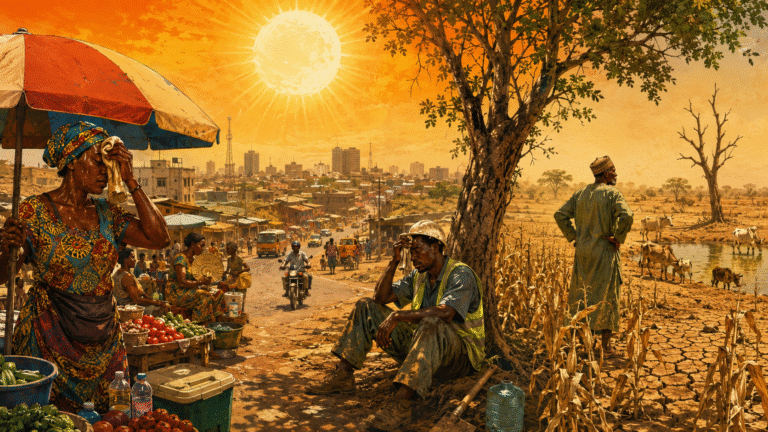
This story of sand mining in the Western Area of Freetown is not just about building materials. It centers on how the future city shoreline will look and whether that means there is resiliency for local communities against climate impact. And as sea levels rise and extreme weather events become more common, we will all rely on beaches, wetlands, and coastal ecosystems. But each truckload of sand stripped from these environments chips away at their natural defenses. Sierra Leone: An artist’s impression of the implications of climate change, in the coastal regions. Climate change is already challenging Sierra Leonean communities to adapt to a much-anticipated vulnerability, and it’s taking a toll on the coastal general population. It can ill afford to continue degrading the very ecosystems that protect it from these threats. The sand taken from the shores of Freetown today may help create houses and roads. Yet if we continue extracting without limit, the long-term price may be coastlines lost, livelihoods destroyed, and communities left ever more vulnerable to the realities of climate change.



 Reston Dennis Juah
 Noor Ul Ain
 Hoby Nasandratra Andriamiandrisoa
Just joined last week and I am already loving the vibe here. The bonuses for new players are actually helpful. Definitely visit inyolo47 for some good fun.
After I initially commented I clicked the -Notify me when new comments are added- checkbox and now each time a remark is added I get 4 emails with the identical comment. Is there any manner you possibly can remove me from that service? Thanks!