

Introduction
The effects of climate change are becoming more frequent and more severe, but adaptation
capacity varies in institutions. International agreements like the Paris Agreement and Global
Goal on Adaptation provide significant targets, and the execution of adaptation measures is
highly reliant on the coordination on a national level, local institutions, and the involvement of
the private sector. The disparity between the global and the local is thus technical as well as
institutional and behavioral. This essay explores the reason climate adaptation remains at the
backburner despite great global commitments based on class readings, major world reports,
international case studies, and personal experiences in Northern Ghana and Indonesia. The
main point is that adaptation is not unsuccessful because of the absence of plans, but because
of poor policy co-ordination, ambiguous incentives of the individual actors, and the absence of
co-ordination between the local realities of behaviour and governance structures.
Global Climate Governance: Strong Vision, Weak Coordination
The international climate agreements give the general guide on how to adapt, but national
interest usually destroys collaboration. According to Nordhaus, (2015) this can be explained
by the free-rider problem, where nations derive benefits out of the actions taken by other
countries to address climate change, but fail to contribute to it sufficiently themselves. The fact
that adaptation benefits are local, rather than global, and that the results of this are hard to
quantify also creates an additional problem in adaptation governance. The IPCC, (2022) points
out that the commitments of adaptation are largely voluntary and have no apparent enforcement
mechanisms.
Consequently, the global objectives, like making the world more resilient and less vulnerable
to climate change, cannot be easily implemented in national and local effort. This is supported
by the UNEP Adaptation Gap Report, which demonstrates that adaptation finance is below half
of the amount required by the developing countries partly because of disjointed planning and
lack of clarity of responsibilities among institutions (UNEP, 2023). This is a challenge of global
coordination that preconditions the following national and regional problems.
Regional and National Policy Coordination Challenges
The efforts by regional organizations such as the ASEAN to assist member states in
harmonizing climate adaptation policies have not succeeded in overcoming coordination
issues. In the ASEAN policy brief on Policy Coordination of the role of the private sector in
climate change Adaptation, it is noted that ministries dealing with climate change, trade,
finance, technology as well as agriculture tend to work independently (VGR Chandran
Govindaraju, 2024). This gives rise to the fragmentation of policies, duplication of mandates
and inconsistent conditions of regulations that deter private investment and delay
implementation.
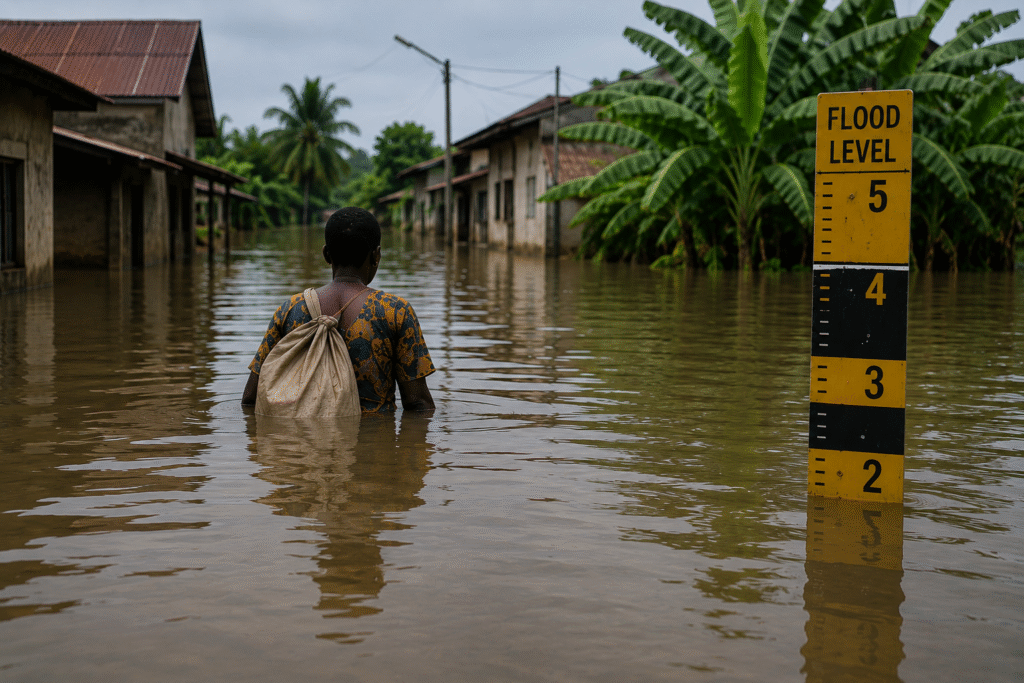
These are not only problems of Southeast Asia. There are similar issues in West Africa and
Ghana. As an example, the National Climate Change Adaptation Strategy of Ghana gives good
national guidance, but how this is applied at the district level varies because of resource
variations, data differences and institutional capacity (UNEP & UNDP, 2019). Having been
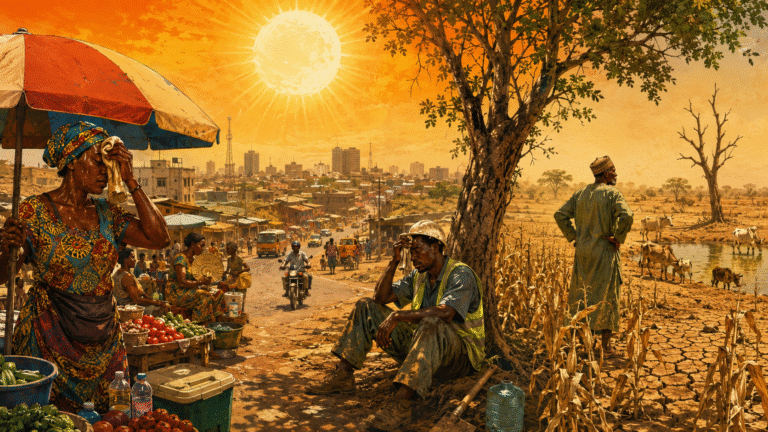
raised in Northern Ghana, I have seen how poor coordination of the district assemblies to the agriculture offices and environmental agencies has led to late reaction to droughts, inadequate
early warning systems, and underdevelopment of adaptation infrastructure. Therefore, national
documents may look ambitious, but local realities indicate the lack of coordination and
implementation.
Why the Private Sector Hesitates to Engage in Adaptation
The involvement of the private sector is necessary since adaptation needs to be invested in
resilient infrastructure, early warning, insurance products, and farming technologies.
Nevertheless, various studies show that there are obstacles on the way of private firms making
them less willing to invest.
Fuss et al., (2018) demonstrate that risk perception, policy uncertainty, and lack of clear
revenue streams influence the climate-related investments. In contrast to the renewable energy,
which can be profitable due to the sale of electricity or carbon credits, there is no direct money
associated with adaptation investments (flood protection or climate-resistant crops). The
(OECD, 2009) further contributes that dubious regulations, large initial expenditure, and
insufficient availability of climate risk information further deter the involvement of the private
sector. These results are supported by real-life examples:
- The African Development Bank Group, (2022) observes that in Africa, businesses do not opt to do adaptation projects because of confusion on the policies and the absence of insurance markets.
- The same concerns Asia, where the Asian Development Bank(2022) notes that companies are more interested in short-term investments in rapidly developing cities than in resilience projects with long-term prospects.
Briefly, without assured policy conditions and more powerful incentives, the private players
will still fail to invest in adaptation adequately.
The Montreal Protocol Lessons of a Successful International Agreements.
The Montreal Protocol is a good example of effective international environmental collaboration
(UNEP, 2025). The Australian Government has outlined the Protocol as successful in that it
had:
- Clear, binding commitments
- Strong monitoring systems
- Funding developing countries.
- Mechanisms of technology transfer.
- A common vision of the issue on the international level.
In comparison to the climate adaptation regime, institutional certainty was established by the
Montreal Protocol, which mitigates risks to industries and directs investments to cleaner
technologies (UNEP, 2025). The comparison reveals that climate adaptation governance does
not have a high degree of enforcement, reliability of financing, and predictability of policy,
which are some of the key determinants of effective collaboration and the role of private-sector
participation.
Link Between Global Frameworks to Local Realities: Personal Reflections
One of the most important issues in adaptation is the gap between global ambitions and local
actions. My experiences in Ghana and Indonesia shows that environmental policies tend to fail
because of poor enforcement, cultural norms, and the diversity in individual behavior.
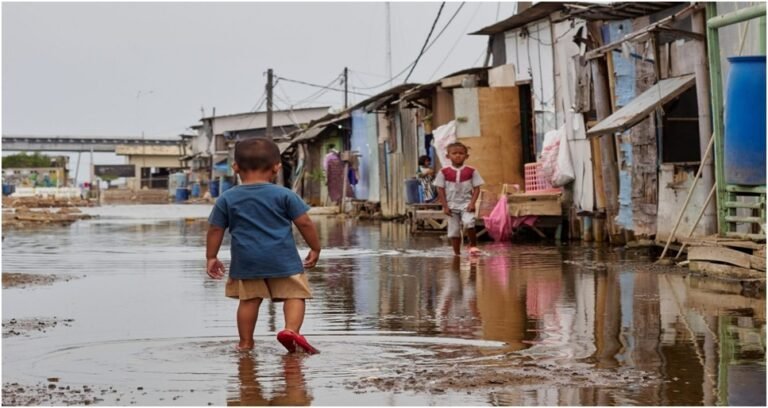
In my Indonesian university (UIII), I found that waste management among different students
varied considerably according to their country of origin. Although there are rules and facilities,
common areas including kitchen and bathrooms are frequently abused by some groups, which
results in conflicts and sanitation problems. This gave me a first-hand experience that, policies
do not transform behavior unless they correlate with the social norms and are supported with
consistent monitoring.
Likewise, in Northern Ghana, populations or farmers that are offered climate-resilient farming
equipment or drought-resistant seeds do not necessarily accept them due to the traditional
reasons, insufficient extension services, or lack of trust in government initiatives. This
underlines that there is a need to incorporate cultural, social and behavioral issues in the
adaptation policies, rather than focusing on technical solutions. It also reveals that there should
be local leadership and community-based strategies in bridging governance gaps.
Strengthening Coordination: Practical Recommendations
An improved adaptation can be achieved by the governments and regional leaders embracing
the following measures:
- Create cross-ministerial adaptation task forces: As in the case of the Delta
Programme of the Netherlands, it can achieve a decrease in fragmentation and a policy
consistency (NGFS, 2024). - Establish adaptation investment guarantee schemes: Governments and development
banks can alleviate the risk in the private-sector by providing insurance, loan
guarantees, or blended finance. - Develop Local Adaptation Funds: Similar to the EU Solidarity Fund, pooled
resources on climate shocks can be developed by ASEAN and the African regions. - Enhance local institutional Capacity: District assemblies need to be funded, trained
and provided with data support in order to convert national strategies to action. - Promote community-based adaptation monitoring: Cyclone preparedness model in
Bangladesh reveals that by engaging local volunteers, trust is established, and the early
warning system is enhanced (IFRC, 2025).
Conclusion
The disconnect between the global climate governance and the local adaptation outcomes
shows greater coordination issues in institutions, the sector and the governance levels.
Although the global frameworks offer vision, effective adaptation is pegged on how the
national authorities relate their policies, how effectively the private actors are incentivized, and
how firmly the local reality is integrated into planning. To close these gaps, it is possible to
integrate the lessons of successful agreements, such as the Montreal Protocol, enhance the
incentives of the private sector, and provide better functions of local institutions. As illustrated
in Ghana and Indonesia using personal experiences, adoption should be based on behaviors,
norms, and abilities of communities. Adaptation efforts can only be made to address the
immediate climate threats of vulnerable regions today through coherent, multi-level
coordination.
Keywords: Climate Adaptation, Global Climate Governance, Private Sector Collaboration, Environmental Resilience, Sustainable Development





 Reston Dennis Juah
 Noor Ul Ain

 Hoby Nasandratra Andriamiandrisoa
+ There are no comments
Add yours