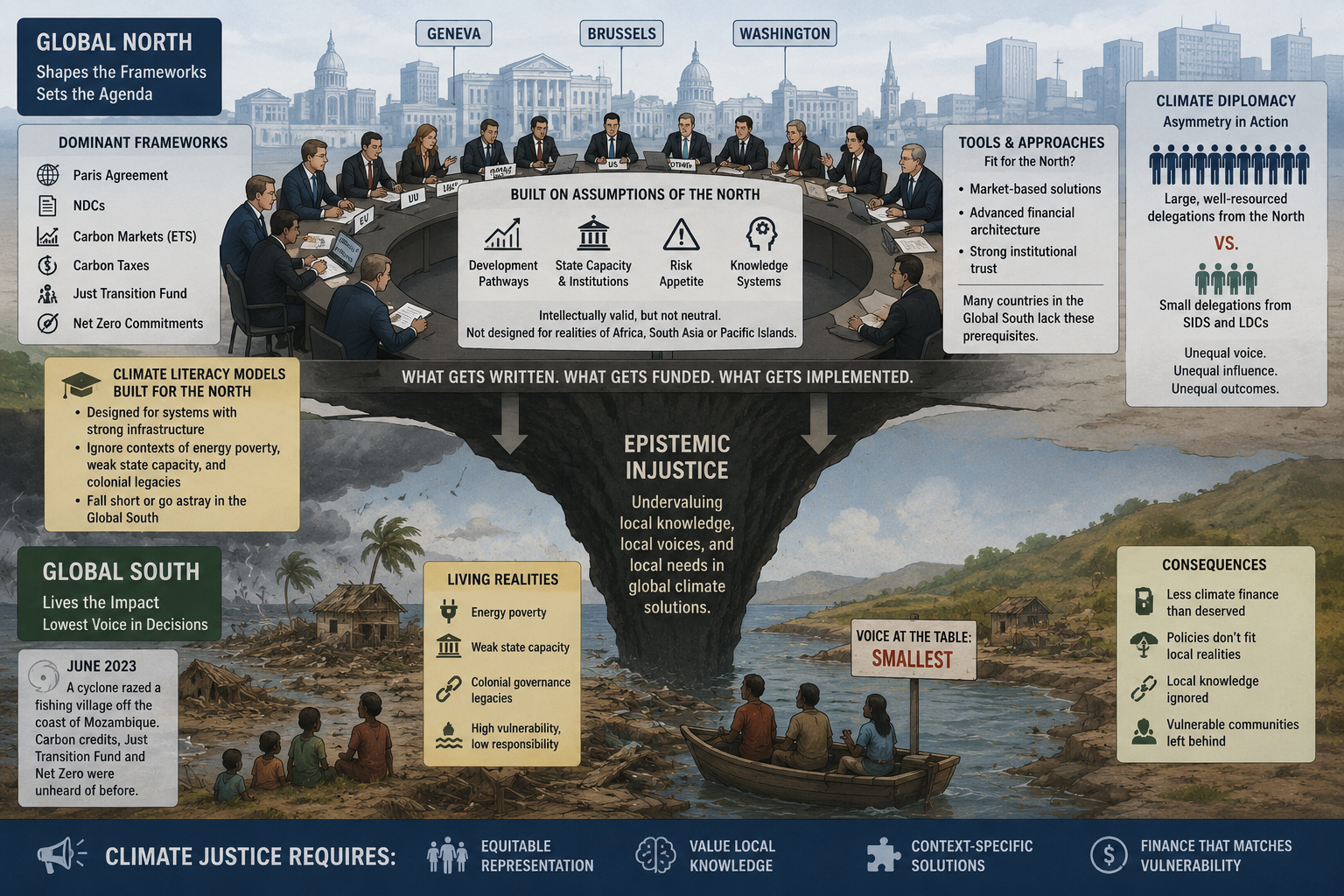

In June 2023, a fishing village was razed by a cyclone off the coast of Mozambique, and the carbon credits, the Just Transition Fund, and the commitment to become carbon neutral for these villages were unheard of before. But the world’s reaction to their plight was almost exclusively expressed in the terms of Geneva/Brussels/Washington-based frameworks. This is no coincidence. In today’s climate governance, the biggest vulnerability is that of those being lost, for whom the voice to protect them is the smallest in the policy-making process.
Most of the international climate policy framework, from the Paris Agreement to nationally determined contributions (NDCs), has been built with scientific, economic and political institutions of the Global North. These frameworks are both intellectually valid, but also not neutral. They take with them concepts of the development process, what skills a government needs, what kind of risk they can take and so on, none of which have much connection to what these are like in sub-Saharan Africa and South Asia or the Pacific Islands. What is the result of such a process? Epistemic injustice – Undervaluing local knowledge, local voices, and local needs in the processes of designing global climate solutions (Táíwò & Bhakuni, 2020).
A fixed position on the part of the blueprint that it contains an inherent.
The ability to understand and act in response to climate change is known as climate literacy and is critical for citizens, policymakers and communities to respond to climate change effectively (Koulaidis & Christidis, 2021). In general, the global models that have been developed on how to build climate literacy have been constructed for educational systems, infrastructure, and institutions in the North. These frameworks frequently fall short or even go astray in the context of energy poverty, weak state capacity and colonial governance legacies.
For instance, the emphasis is on market-based approaches to mitigation, such as emissions trading schemes (ETS) and carbon taxes. They are crucial pieces of the climate policy toolboxes of the EU and the US, and rely on such advanced financial architecture and trust in institutions that many countries in the Global South do not have. Okereke and Coventry (2016) identified structural challenges for African countries to meaningfully participate in global carbon markets, and were able to conclude that many countries are receiving much less climate finance than they deserve based on their vulnerabilities. Policy design and execution are not technical matters, but rather a reflection of the reality that was captured in the initial policy design.
Climate Diplomacy has worsened this situation. At important international meetings, there are more and better-resourced delegations from the North than from the countries of the Global South. Developed countries send teams of climate scientists, economists and lawyers, and many SIDS and least developed countries (LDCs) send teams of two or three to get through thousands of pages of negotiating text (Okereke & Coventry, 2016). This structural asymmetry is not just manifested in the people who speak at COP; it also manifests in the content of their speech and what is not included in the final text.
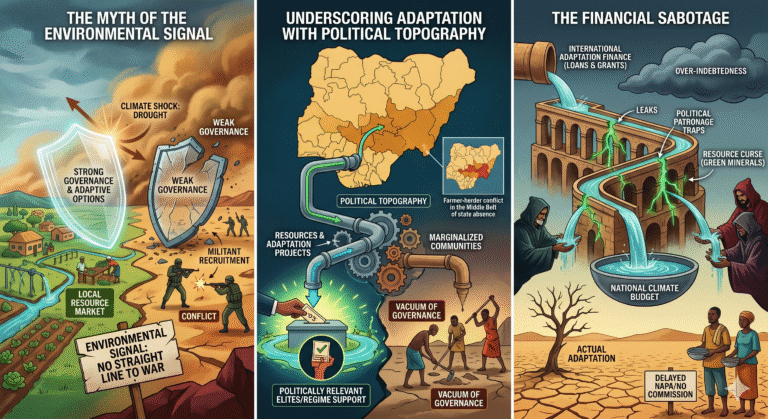
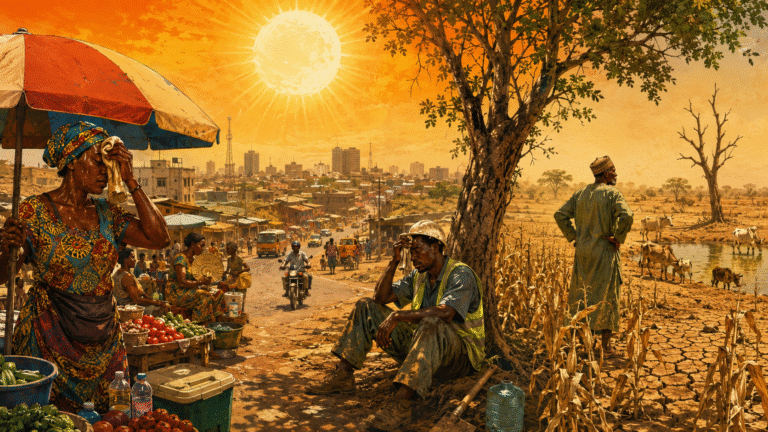
Figure 1. Climate Governance Inequality
This disconnect between global and local levels of adaptation is most apparent in the difference between climate adaptation and climate mitigation. International climate finance and diplomacy have been focused on mitigation the reduction of greenhouse gas emissions. In the Sahel, Mekong Delta, or coastal Bangladesh communities, however, there are no abstract projections of warming, but rather actual threats this year: floods, this season: droughts, next month: cyclones. The emphasis on long-horizon mitigation rather than short-term adaptation is also associated with the time horizon of wealthier countries, which have financial resources to react to short-term shocks while investing in long-term mitigation.
This adaptation finance gap has been documented extensively by Roberts and Weikmans (2017), and they found that pledged climate finance was not always reaching adaptation projects in the most vulnerable countries, nor was much of the finance being used for new adaptation projects, but instead ‘recycled’ in the form of loans, which added to the fiscal strain of already fiscally constrained countries. Climate finance as a loan can be the cause of a country going into a debt crisis.
The media has shaped these biases with its framing of the issues. International climate journalism analysis is always consistent in depicting communities of the Global South as victims and not agents, that has their own knowledge systems, adaptation strategies and other policy demands. The Global South communities are merely victims of climate disasters, lacking a knowledge system, adaptation actions and policy demands, as the research of global climate journalism has always indicated (Das, 2021). This mismatch fuels public opinion and political support in donor countries and forms a charity approach to climate action, which obscures the structural causes of vulnerability, including the historical emissions of countries that are driving climate action (Ganapathy, 2022).
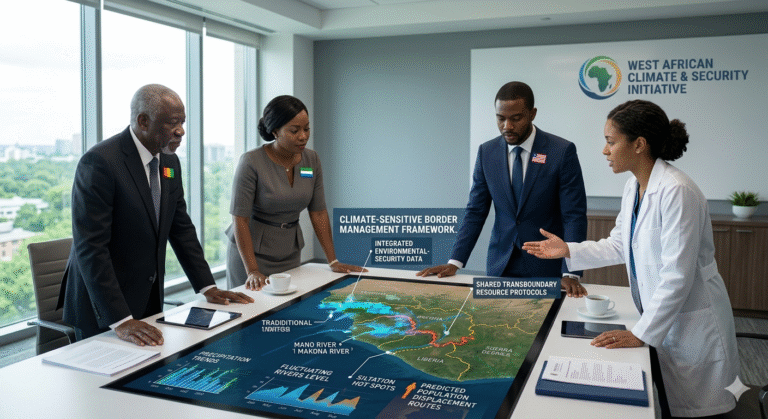
Figure 2: Comparison of global and local climate policies
The absence of governance and the appearance of universal templates.
One of the old deficits in northern climate policy is that the concept of governance models can be exported to other countries with ease. Such models of policy change, including the Advocacy Coalition Framework, have been developed out of a description of pluralist political systems in which the rule of law, free press, and stable bureaucracies exist. Such models lack explanatory or prescriptive quality in countries with low governance quality (LGQ), countries with high levels of repression of civil society, and countries where food security and debt servicing requirements outweigh climate policy requirements. (Sabatier & Weible, 2007)
The Moroccan case is instructive and is not only possible but also limited. The country has made tremendous strides in the deployment of renewables, and is on track to reach 52% of installed capacity from renewables by 2030, and has become a leader in climate diplomacy on the continent (IEA, 2019). But studies show that the Moroccan energy transition is a process and was largely state-driven and top-down, with very little account of the local voices, in particular those from rural areas, and, in some instances, traditional land uses were replaced by the installation of big solar plants. (Dii Desert Energy, 2013). While inclusive development is observed at the micro level, this is not always the case at the macro level, and this is the case throughout the Global South.
Toward a Southern-Led Climate Literacy
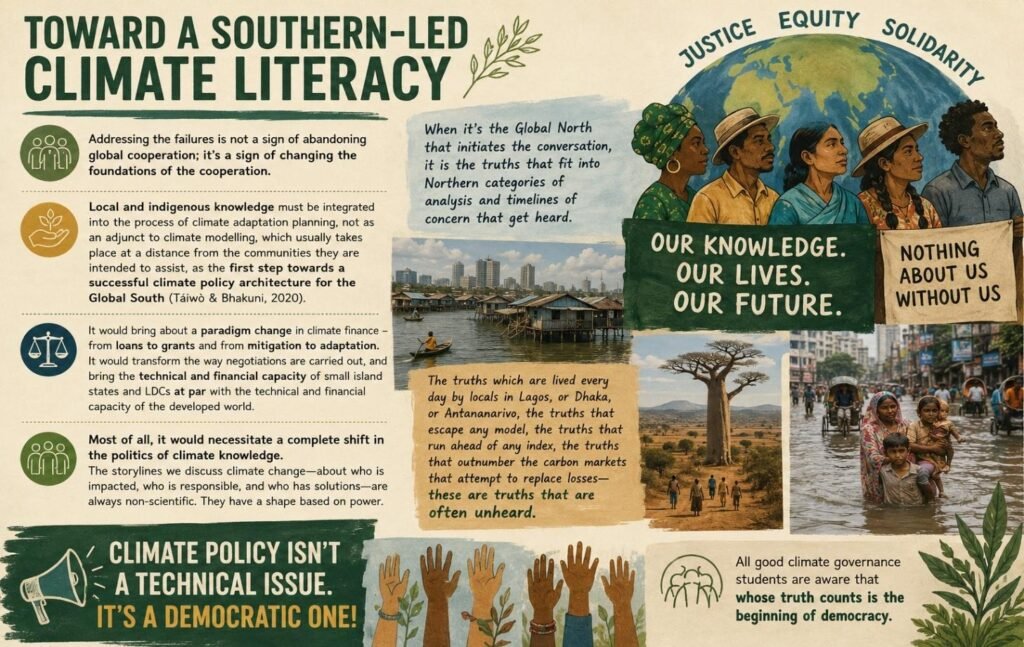
Figure 3: Global South-Led Climate Literacy
Keywords: Climate Diplomacy, Epistemic Injustice, Decolonising Climate Policy, Climate Finance
References:
Das, R. (2021). Journalism, climate change, and the Global South: Epistemic inequalities in environmental reporting. Journalism Studies, 22(10), 1321–1338. https://doi.org/10.1080/1461670X.2021.1923412
Dii Desert Energy. (2013). Desert power 2050: Perspectives on a sustainable power system for EUMENA. Dii GmbH.
Ganapathy, N. (2022). Decolonising climate communication: Southern perspectives on global media framing. Global Media and Communication, 18(1), 45–62. https://doi.org/10.1177/17427665221075890
International Energy Agency. (2019). Morocco 2019: Energy policy review. IEA Publications.
Koulaidis, V., & Christidis, C. (2021). Climate literacy: Conceptual frameworks and educational implications. Environmental Education Research, 27(4), 567–583. https://doi.org/10.1080/13504622.2020.1861241
Okereke, C., & Coventry, P. (2016). Climate justice and the international regime: Before, during, and after Paris. WIREs Climate Change, 7(6), 834–851. https://doi.org/10.1002/wcc.419
Roberts, J. T., & Weikmans, R. (2017). Postface: Fragmentation, failing trust and enduring tensions over what counts as climate finance. International Environmental Agreements, 17(1), 129–137. https://doi.org/10.1007/s10784-016-9347-4
Sabatier, P. A., & Weible, C. M. (2007). The advocacy coalition framework: Innovations and clarifications. In P. A. Sabatier (Ed.), Theories of the policy process (2nd ed., pp. 189–220). Westview Press.
Táíwò, O. O., & Bhakuni, H. (2020). Against epistemic cowardice in climate ethics. Climatic Change, 160, 1–7. https://doi.org/10.1007/s10584-020-02695-5

 Reston Dennis Juah
 Noor Ul Ain
 Hassan Barrie
 Hoby Nasandratra Andriamiandrisoa
66B cam kết không can thiệp vào kết quả trò chơi. Hệ thống RNG (Random Number Generator) được kiểm toán định kỳ bởi GLI – tổ chức kiểm định hàng đầu thế giới trong lĩnh vực iGaming. TONY07-03
I’ve tried a few sites recently but this one is definitely smoother. The interface is clean and the wins feel fair. Highly recommend checking out idslotaladin if you want a reliable spot.
I have been playing here for a while and the payouts are surprisingly fast. Definitely one of the best platforms I have tried recently. Check out vn78vin