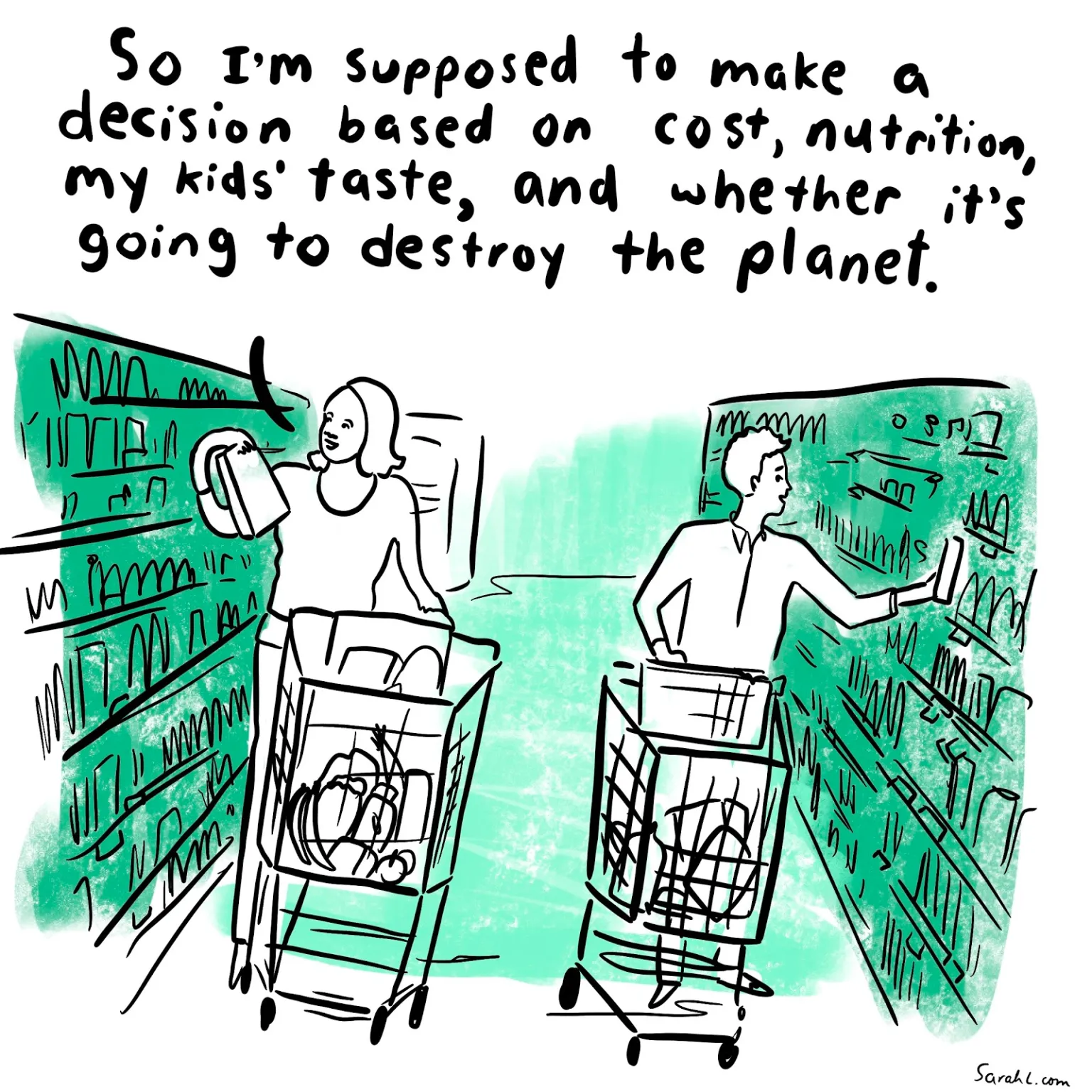

Over the past twenty years, climate activists, educators and policymakers have been working on an apparently unquestionable assumption; that if people only learn a little more about the science, they would act. This is what has been known as the deficit model of science communication and has been the underpin of billions of dollars in climate communication campaigning and national curriculum reforming. However, emerging literature in the fields of cognitive psychology, behavioral economics, and environmental education is making a painful discussion. What happens when climate literacy in its traditional form is not necessarily reliable to achieve meaningful climate action and what happens when, in the case of some populations, climate literacy in its conventional form actually works against the likelihood of engagement?
The empirical support of the evidence of this paradox is well justified. Scholars have always discovered factual knowledge of climatic science is a poor indicator of significant behavior change. In one of the first cross-national studies with nearly five thousand participants who lived in six different countries, the scholars proved that although basic climate knowledge was associated with a greater concern, it showed very little association with high-impact behaviors, such as a reduction in air travel or a switch to renewable energy providers. Equally, a randomized meta-analysis summary has found that climate knowledge only explains less than five percent of the variation in pro-environmental behavior. Theoretically, the person who is able to explain the greenhouse effect correctly is not more likely to live a lower-carbon lifestyle than someone who is not able to understand. This trend has been reproduced in various cultural settings and the implication is that the issue in question is an intrinsic characteristic of human cognition.
To get an idea as to why this paradox arises, one should refer to the psychology of risk perception and emotional regulation. It is climate change that researchers describe as a psychologically far threat. The impacts of increasing the concentration of carbon dioxide in the atmosphere are abstract, slow, and time remote, in contrast to an immediate threat like a fire. Climate literacy campaigns which overwhelm people with increasingly dire information, such as tipping points, worst-case scenario models, tend to trigger not motivation, but defensive avoidance. In a thorough review, it was argued that when the process of learning concentrates on factual information and neglects the emotional aspects, one can end up having what psychologists refer to as learned helplessness. Building upon this intuition, a group of communication researchers discovered that climate messaging that focused more on catastrophe risk as opposed to their provision of clear efficacy information reduced the levels of audience engagement over time. The person who truly realizes the horrifying magnitude of climate change can thus come to a conclusion in a perfectly rational manner that nothing he/she can do as an individual is going to make any difference whatsoever. What level of knowledge does in this frame is demobilizing and not mobilizing?
This dynamic is further complicated by motivated reasoning. As one of the most prominent study has shown, highly literate individuals do not objectively process climate information; they subjectively process it in a way that will support their already existing group identities and cultural values. Climate change knowledge in politically conservative, highly scientifically literate individuals, paradoxically predicts a lack of concern about the issue, just because accepting the scientific consensus would pose a threat to their cultural loyalty to free-market ideologies. This paradoxical result has been reproduced in various other independent studies. The issue of climate literacy, then, is not really an information problem at all. It is an issue of identity and social trust which cannot be resolved by means of factual communication.
An increasing number of researchers differentiate between two qualitatively distinct types of knowledge. Declarative knowledge is knowledge of facts regarding the climate system. Operational knowledge, on the other hand, is the knowledge of how to be effective in a social and political context in order to create tangible change. The latter has taken over the school curricula and international climate literacy scales. The latter has been more or less overlooked. A systematic review of more than fifty climate education programs in twelve countries found that interventions comprising only of scientific education resulted in no significant change in behavioral outcomes, but interventions that combined scientific instruction with explicit training on collective action produced measurable increases in both intention and actual behavior. Another systematic review found that the most effective interventions had a local relevance and authentic chances to engage in civic life meaningfully instead of the abstract facts about atmospheric chemistry. The critical difference was not the amount of knowledge taught but whether that knowledge was contextualized in a sense of agency.
The policy implication to climate diplomacy and education policy is far-reaching. Governments have invested enormous resources in climate literacy campaigns in terms of the percentage of the citizens who can correctly answer true or false questions about global warming. But these measures can be under active misrepresentation. A citizen who is able to correctly recognize carbon dioxide as the major greenhouse gas but believes there is nothing he/she can do to prevent the accumulation of carbon dioxide is not a win in climate education. She is a living example of the knowledge-action gap. Other researchers have suggested that the climate literacy movement has unconsciously played the role of responsibility diffusion. Its narrow concept of individual behavior change has enabled governments and large emitting industries to argue that the real problem is that people are ignorant about it. The climate citizen who is highly literate, sorts her trash and rides her bike to work is not preventing climate change. She is engaging in a ritual that makes her feel good as structural sources of emissions are not touched.
How would a more efficient alternative look like? The data is always inclined towards a model of climate literacy that is focused on efficacy and not on information per se. This implies that educational interventions should be designed which not only teach us the mechanics of the climate system but also teach us about the workings of political systems, and how ordinary citizens have been successful in organizing to bring about a change in the climate system. It involves replacing the rhetoric of apocalyptic warning that reliably produces despair with the rhetoric of achievable collective action that reliably produces hope. It involves the evaluation of success not in terms of quiz scores but in terms of the rates of civic participation. The climate literate country is not that one, the citizens of which can name three greenhouse gases on the spot. It is he, whose citizens understand how to create a community solar project and how to insist that their elected officials phase out fossil fuel infrastructure. It will keep on giving birth to generations of students who are not only fully aware of climate change, but also do practically little about it.
References:
- Bangay, C., & Blum, N. (2010). Education responses to climate change. Educational Review, 62(4), 373-384. https://doi.org/10.1080/00131911.2010.518187
- Druckman, J. N., & McGrath, M. C. (2019). The evidence for motivated reasoning in climate change. Nature Climate Change, 9(2), 111-119. https://doi.org/10.1038/s41558-018-0360-1
- Hornsey, M. J., & Fielding, K. S. (2020). Understanding inaction on climate change. Social Issues and Policy Review, 14(1), 3-35. https://doi.org/10.1111/sipr.12058
- Kahan, D. M. (2015). Climate-science communication and the measurement problem. Political Psychology, 36(S1), 1-43. https://doi.org/10.1111/pops.12244
- Monroe, M. C., Plate, R. R., Oxarart, A., Bowers, A., & Chaves, W. A. (2019). Effective climate change education strategies. Environmental Education Research, 25(6), 791-812. https://doi.org/10.1080/13504622.2017.1360842
- Moser, S. C. (2016). Reflections on climate change communication. WIREs Climate Change, 7(3), 345-369. https://doi.org/10.1002/wcc.403
- Ockwell, D., Whitmarsh, L., & O’Neill, S. (2009). Reorienting climate change communication. Science Communication, 31(2), 305-328. https://doi.org/10.1177/1075547008328969
- Rousell, D., & Cutter-Mackenzie-Knowles, A. (2020). A systematic review of climate change education. Environmental Education Research, 26(5), 625-653. https://doi.org/10.1080/13504622.2019.1692187
- Shi, J., Visschers, V. H. M., & Siegrist, M. (2016). Public perception of climate change. Nature Climate Change, 6(6), 586-591. https://doi.org/10.1038/nclimate2948
- Sturgis, P., & Allum, N. (2004). Re-evaluating the deficit model of public attitudes. Public Understanding of Science, 13(1), 55-74. https://doi.org/10.1177/0963662504042690
- Trope, Y., & Liberman, N. (2010). Construal-level theory of psychological distance. Psychological Review, 117(2), 440-463. https://doi.org/10.1037/a0018963
- Lazarovic, S. (2020, October 23). Climate literacy is essential for effective change. YES! Magazine. https://www.yesmagazine.org/opinion/2020/10/23/climate-literacy-effective-change






 Reston Dennis Juah
 Noor Ul Ain

 Hassan Barrie
 Hoby Nasandratra Andriamiandrisoa
I’ve been playing here for a few weeks and the payouts are actually legit. Really smooth experience so far. Check out krcasinowinoui for a great time!