
From Energy Crisis to Renewable Opportunity
Chile is sometimes praised as a success story of clean energy in the Global South. Market-based reforms and legal innovation have quickly scaled up renewables over two decades. However, there are ongoing issues to be addressed in terms of equity, governance and participation. This blog explores, using Chile as an example, the benefits of the clean energy transition, and its shortcomings.
The Chilean transition was forged by crisis. In the early 2000s, the country was energy insecure because of its reliance on imported fossil fuels, particularly natural gas from Argentina. When exports were cut and droughts lowered hydropower production, Chile resorted to costly diesel and coal. This revealed its vulnerability in the energy system. The strong demand from the mining industry led to government policy seeking diversification and thus the Chilean renewable transformation.
Legal and Regulatory Foundations
Regulatory reforms are the basis for Chile’s progress. A major law passed in 2008 mandated that a higher percentage of electricity be supplied from non-conventional renewable energy (NCRE) (solar, wind, biomass and small hydro). The goal was to reach 10% by 2024, but was met early and then increased to 20% by 2025. Investor confidence was further reinforced with the 2016 Energy Policy 2050 which set out a long-term carbon neutral future. For its part, Chile relied on technology neutral auctions and long-term power purchase agreements (PPAs) without subsidies. This reduced the cost of renewables and brought in billions in foreign investment.
[Figure 1: Growth of installed renewable energy capacity and foreign direct investment in Chile (2010–2022) – dual-axis line/bar chart]
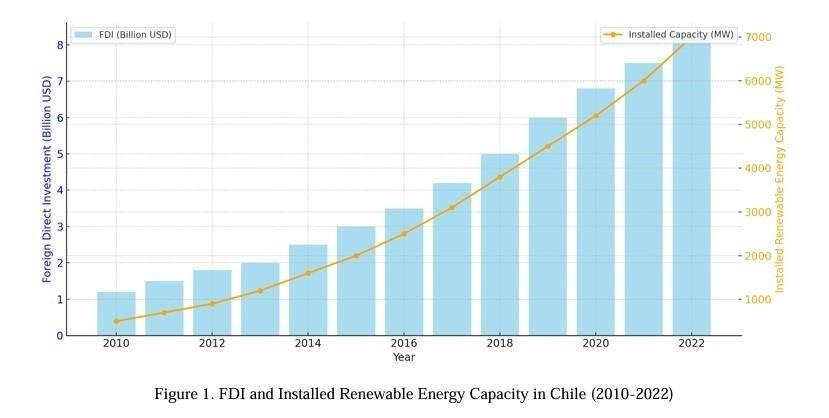
The regulation of the market is a cornerstone for Chile’s development. In 2008, a landmark law was passed mandating that electricity providers procure an increasing percentage of electricity from non-conventional renewable energy (NCRE), such as solar, wind, biomass and small hydropower. The initial target was 10 per cent by 2024 and was then increased to 20 per cent by 2025 and was achieved well ahead of schedule. The 2016 Energy Policy 2050 reinforced investors’ confidence by laying the groundwork for a long-term vision based on carbon neutrality. Chile has implemented a competitive, technology neutral power purchasing mechanism with long-term PPAs, instead of subsidy schemes. This strategy brought about a significant drop in renewable energy cost and significant foreign investments. These mechanisms have raised more than USD 15 billion, positioning Chile as one of the most competitive renewable markets in Latin America, between 2010 and 2022.
The challenge is to achieve market efficiency and to assess the social trade-offs.
Chilean liberalized market reduced costs and speeded up the deployment but introduced structural tensions. Only a few strong companies remain in the electricity sector, allowing little competition and public influence. The state’s role was strictly regulatory and social outcomes were left to the market. The financial risk of price volatility due to tariffs has been passed on to smaller renewable generators through price stabilization policies. These aberrations adversely affected the long-term investment signals. The Chilean case demonstrates that the market is not enough to ensure a socially fair transition.
Public–Private Partnerships: Progress with Limits
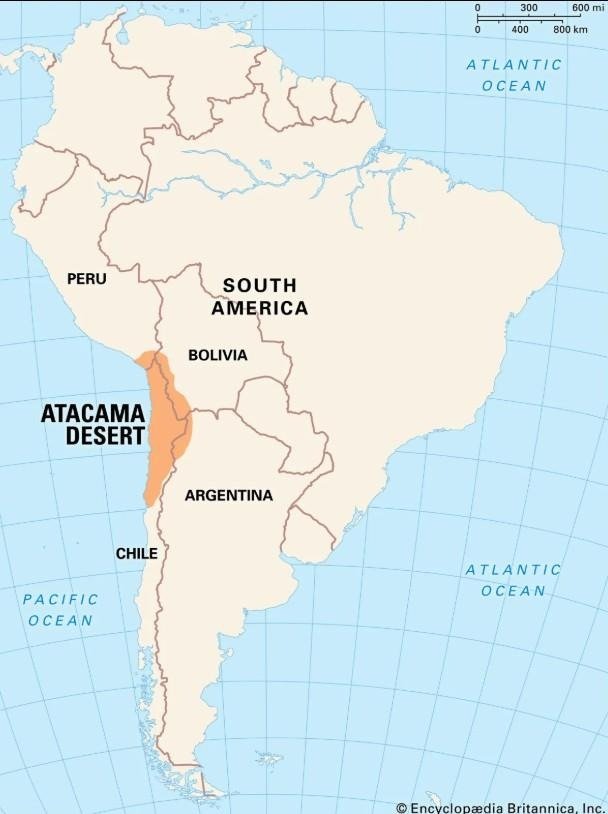
Much of the renewable expansion in Chile was achieved through public–private partnerships (PPPs). Technical ambition is seen in flagship projects such as Cerro Dominator (concentrated solar power and PV of 210MW), El Arrayán Wind Farm and massive solar parks in the Atacama Desert. These projects transferred risk to private entities and sped-up deployment. They did, however, point out governance gaps as well. The vast number of projects is far removed from demand centres and necessitates the expensive use of transmission lines. Lack of consultation and short-term gains have been regularly pointed out by local communities, particularly Indigenous communities. Community co-ownership and participatory governance are not widespread, although there are short-term jobs created during construction.
How much will it cost to make energy a social right? How much will it cost to be ambitious?
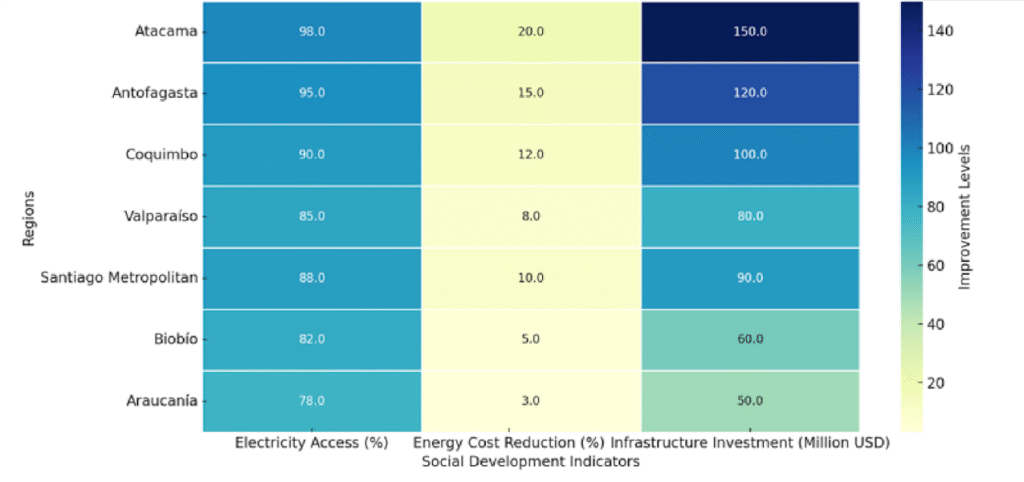
Over the last few years, energy access has been increasingly positioned in the social domain in Chile. The “right to energy” became more known in the 2016 Energy Policy 2050, and was mentioned in the 2021-2022 constitutional draft. The impact of the draft remains to be seen, but it clearly demonstrated the increasing awareness of energy as a public good and equity. Policy measures such as the 2021 Equitable Access to Sustainable Energy Policy and an Interministerial Committee on Just Socio-Ecological Transition demonstrate a transition towards a just governance approach. However, there are some inconsistencies in implementation. Even with the progress achieved nationally, the most vulnerable households in Chile pay over 15% of their income for energy, higher than the international poverty thresholds for energy expenditure.
[Figure 2: Regional disparities in energy infrastructure investment and access in Chile – choropleth map showing north-south divide]
The rise of new technologies and unfilled regulatory gaps. New technologies and regulatory voids.
Green hydrogen is Chile’s next frontier, with abundant solar and wind resources. The 2020 National Hydrogen Strategy aims to make Chile a top exporter by 2040. But, regulation has lagged behind. Although hydrogen is an energy vector and there are safety requirements, there are important gaps: definitions of “green” hydrogen, land use regulation, environmental protection measures, and community participation frameworks are still not consistent. Hydrogen hubs in northern areas where there is limited water availability have raised concerns about biodiversity loss and water stress. The Chilean experience is a crucial lesson: technological leadership can be potentially accompanied by regulatory lag, leading to future conflicts, as in lithium and mining governance.
What Chile Teaches the Global South
The Chilean transition provides good lessons to other countries in the Global South:
Enabling legal frameworks can quickly leverage private finance.
Market Mechanisms are strong but incomplete social mechanisms.
Equity and participation must be taken as a priority.
Energy transitions are not a technical matter, but also political and social.
Chile has been able to ramp up renewables rapidly but has been less successful in achieving equitable distribution.
Conclusion
Chile’s clean energy transition is not a complete success or failure. It provides a clear example of how an institutional framework and market design can accelerate decarbonization, even in a medium-income country where the fossil fuel supply is limited. It also illustrates the shortcomings of market-oriented transitions which fail to consider participation, regional equity, and social justice. The lesson of the Chilean experience is not to do exactly what Chile did, but to profit from the successes and failures. Resilient Energy Transition is not just about being green and efficient, it’s about being inclusive and fair as well.
Keywords: Clean energy transition, renewable energy, Chile, energy justice, market mechanisms, public-private partnerships, green hydrogen, regulatory reform, Global South, energy poverty







 Reston Dennis Juah
 Noor Ul Ain

 Hassan Barrie
 Hoby Nasandratra Andriamiandrisoa
+ There are no comments
Add yours